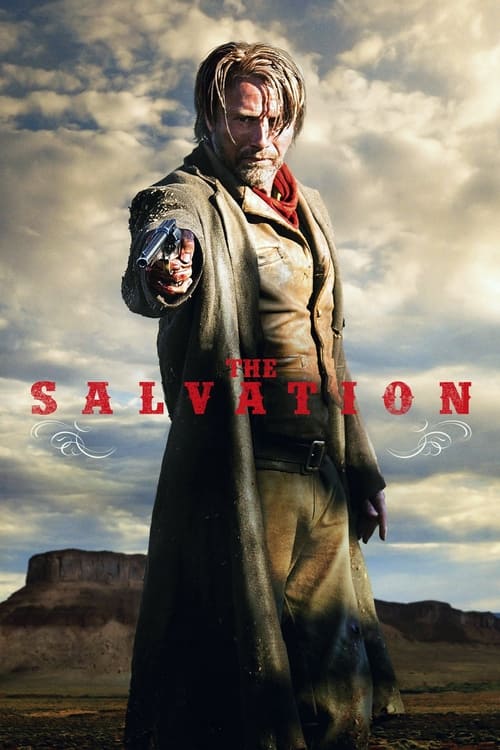
The Salvation (2014)
Directed by Kristian Levring
No — The Salvation is not woke, scoring 9 out of 100 on our wokeness meter.
The Salvation arrives as a Danish Western, which is a phrase that promises more novelty than the film ultimately provides.
Consciousness Markers
The Standard Atlantic Oil Company and corrupt mayor are villains exploiting the town for oil, but the critique is a conventional Western land-grab plot rather than a modern anti-capitalist thesis.
The cast is predominantly white European actors, with no deliberate inclusive or race-swapped casting choices.
No LGBTQ+ characters, relationships, or themes appear in the film.
Madelaine is a mute abuse victim who is largely acted upon; her final act of violence is revenge agency, not a feminist agenda.
Native Americans are only referenced as past enemies of Delarue; the film does not engage modern racial consciousness.
Oil is a plot device for corporate land theft, not a climate-change or environmental crusade.
No body-positivity themes or body-diverse representation are present.
Madelaine's muteness is presented as trauma and plot condition, not as neurodivergent identity or advocacy.
It is a fictional Western revenge story, not a revisionist historical narrative.
The film delivers its themes through genre violence and revenge, not didactic lecturing.
Why it received this score
The Salvation arrives as a Danish Western, which is a phrase that promises more novelty than the film ultimately provides. Mads Mikkelsen plays Jon, a veteran of the 1864 Schleswig war who emigrates, loses his wife and son to stagecoach criminals, and then spends the remainder of the running time killing people in an orderly fashion. The cast is uniformly white and European, drawn from Denmark, Britain, and France, and no effort is made to diversify it. There are no queer characters, no queer subtext, and no gesture toward such matters. Eva Green's Madelaine is mute, abused, and largely acted upon until the final reel, when she shoots a man. That is revenge, not an argument.
The villainy here is corporate and municipal. A gang leader and a corrupt mayor conspire with the Standard Atlantic Oil Company to seize land rich in crude. This is the oldest plot in the Western toolbox, the land grab, and it carries no modern critique of capital. Oil is a commodity to be stolen, not a climate to be mourned. Native Americans appear only as a footnote in Delarue's military past, enemies he once fought, and the film has no interest in them beyond that. Madelaine's muteness is a wound and a plot mechanism, never an identity to be affirmed.
The film offers craft instead. The widescreen compositions are handsome, the Morricone-adjacent guitars are present and accounted for, and Jeffrey Dean Morgan chews the scenery with genuine menace. The themes arrive through gunfire and betrayal, never through sermonizing. Nobody stands up to explain the moral of the story. This is, by the standards of the current cultural moment, an unusually quiet film, and its silence is not a virtue it intended. It is simply a Western made by people who wanted to make a Western.
Analysis generated by our Consciousness Algorithm


Synopsis
In 1870s America, a peaceful American settler kills his family's murderer which unleashes the fury of a notorious gang leader. His cowardly fellow townspeople then betray him, forcing him to hunt down the outlaws alone.
Questions about The Salvation
Is The Salvation woke?
No — The Salvation is not woke, scoring 9 out of 100 on our wokeness meter. That earns it a verdict of Ultra Based.
Does The Salvation have any woke elements?
Very few. None of the 10 markers reaches 30, the level where a marker counts as present; the highest is Eat the Rich at 15.
How does The Salvation compare to other 2014 movies?
It ranks #139 of the 303 films from 2014 we've scored; their average is 13. The wokest is Selma (68).
How is the Woke Score calculated?
An AI-assisted process researches the film and its reception, scores it 0–100 on ten markers, then combines those into one 0–100 Woke Score. It measures a specific set of 2020s cultural themes, not film quality.