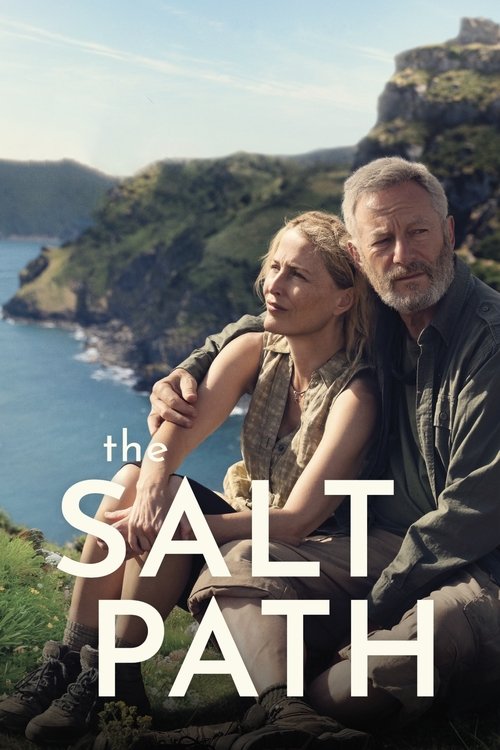
The Salt Path (2025)
Directed by Marianne Elliott
The Salt Path arrives as a BBC Film production adapted from a bestselling memoir, which is to say it arrives pre-approved by the cultural apparatus that specialises in stories about suffering people who nonetheless manage to find themselves.
Consciousness Markers
Moth's corticobasal degeneration, a rare neurodegenerative condition, is central to the film's emotional architecture. Both the cast and production framed the film partly as a vehicle for raising awareness of such conditions, and the portrayal of cognitive and physical decline as compatible with agency and adventure is a clear disability-positive stance.
The film depicts the couple's financial ruin, sudden homelessness, and survival on £40 per week as a direct consequence of a financial system that left them without recourse. Critics noted class themes and the indignities visited upon people who fall through the cracks of property ownership, though the film was also criticised for softening these realities into something more palatable.
The film received specific praise for portraying aging bodies, physical decline, and romantic intimacy between two people in their 50s without sentimentality or ageism. This is not body positivity in the conventional sense, but the deliberate, uncommentated depiction of older physical vulnerability carries a related sensibility.
The story is told from Raynor's perspective, adapted from her own memoir, and Gillian Anderson's portrayal places a middle-aged woman's interiority and agency at the centre of the narrative. The film does not editorialize about this, but the centering of female experience as the primary lens is consistent and deliberate.
Press materials and cast interviews positioned the film as a call for empathy toward the suddenly homeless and those living with neurodegenerative illness. The film itself is more restrained than its promotional apparatus, though the memoir-adaptation format carries an implicit 'this could happen to anyone' moral that critics found occasionally self-congratulatory.
The leads are two white British actors in their 50s, cast age-appropriately for a story about middle-aged displacement. The deliberate choice to centre older bodies experiencing vulnerability and physical decline was noted by critics, but this reflects the source material rather than a diversity mandate.
No LGBTQ+ themes, characters, or framing are present in the film or its surrounding discourse.
No racial consciousness themes, diverse casting commentary, or racial framing appear in the film or its critical reception.
The South West Coast Path provides a backdrop of natural beauty, but the film uses landscape as emotional mirror rather than environmental argument. No climate messaging is present.
The film makes no attempt to reframe historical events or challenge received historical narratives. It is a contemporary personal story.
Why it received this score
The Salt Path arrives as a BBC Film production adapted from a bestselling memoir, which is to say it arrives pre-approved by the cultural apparatus that specialises in stories about suffering people who nonetheless manage to find themselves. Marianne Elliott directs Gillian Anderson and Jason Isaacs as a middle-aged couple who lose their home and immediately embark on a 630-mile coastal walk, which is either a profound metaphor for resilience or a very expensive response to a housing crisis, depending on your tolerance for scenic cinematography as emotional argument. The film is earnest, handsomely shot, and positioned with the confidence of something that knows it will be discussed in book clubs.
The social consciousness here is of a specific, temperate variety. The film gestures toward the indignities of homelessness and the cruelty of financial ruin, then softens these gestures with footage of dramatic clifftops and the quiet heroism of people who own good walking boots. Critics observed that the result plays as an M&S-friendly meditation on precarity, which is not an insult so much as a precise description of the film's emotional register. The disability representation is more sincere: Moth's neurodegenerative condition is treated with genuine care, and the film's insistence that a body in decline can still be the protagonist of its own adventure is a position worth taking seriously. Anderson and Isaacs commit fully to the physical and emotional demands of the material, and their performances are the film's most defensible asset.
The production was subsequently engulfed by a memoir-debunking scandal of considerable energy, which raises questions the film cannot answer and was never designed to. Gillian Anderson encouraged audiences to treat the film as its own entity, separate from whatever may or may not be true about the source material, which is a reasonable request and also the exact thing someone would say in that situation. The film, assessed on its own terms, is a carefully assembled piece of British prestige cinema that advocates for empathy toward the displaced and the ill without ever raising its voice above a tasteful murmur. Its social messaging is real but mild. Its scenery is excellent.
Analysis generated by our Consciousness Algorithm
Synopsis
The profound story of husband and wife Raynor and Moth Winn, who embark on a 630-mile trek after being forcibly removed from their home. Hoping that in nature they will find solace and a sense of acceptance, they walk through the beautiful but rugged coastlines of South West England - a journey that is exhilarating, challenging, and liberating in equal measure. THE SALT PATH is a powerful portrayal of home, and how it can be lost and rediscovered in the most unexpected ways.