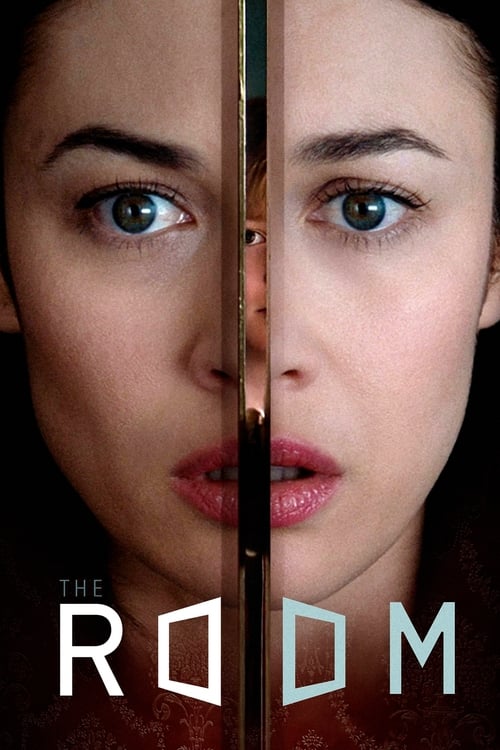
The Room (2019)
Directed by Christian Volckman
No — The Room is not woke, scoring 0 out of 100 on our wokeness meter.
There is a particular disappointment in a film that has no interest in being useful.
Consciousness Markers
The cast is predominantly white European and there is no evident intent toward inclusive or representative casting.
The film contains no LGBTQ+ characters, relationships, or themes.
Kate is a central character with agency, but the film does not advance or engage with feminist themes or agendas.
Race and racial issues are not addressed or explored in the film.
There is no environmental or climate-related messaging in the story.
The film briefly critiques hollow materialism through the wish-granting room, but it does not mount an anti-capitalist or eat-the-rich argument.
The film does not engage with body positivity, body image, or related themes.
There is no depiction or discussion of neurodivergence as a theme.
The film is not a historical work and does not revise or reinterpret historical events.
The film is a genre thriller and does not contain preachy or lecture-like messaging.
Why it received this score
There is a particular disappointment in a film that has no interest in being useful. The Room, Christian Volckman's 2019 thriller, concerns a young couple, Kate and Matt, who move into a house with a secret chamber that grants wishes. They wish for money, then for a child after two miscarriages. The child ages if he leaves the house. Violence follows. This is a tidy genre premise, executed with European restraint and a final shot that suggests the nightmare continues. It is also, from the standpoint of contemporary cultural analysis, a barren field. The cast is white, European, and uniformly unconcerned with representation as a project. No character announces a sexuality, a pronoun, or a chosen family. Race does not enter the frame. Neither does the climate, the body, or the spectrum of neurodivergence. These absences are not flaws. They are simply the film's texture.
Kate has agency. She makes choices, drives the plot, and suffers the consequences. That fact does not convert the film into a feminist statement, because the film never frames her struggle as a structural one. Her pain is domestic, biological, and personal. The room's magic offers a critique of materialism, but the critique is glancing. The couple quits work, acquires things, and finds the things hollow. That is a fable about desire, not a manifesto against capital. The story contains no rich villain to eat, no system to dismantle, no lecture about consumption. It is too busy with the child.
The film is not a history lesson, so it cannot revise history. It is not a sermon, so it cannot lecture. It is a haunted-house story with a miscarriage at its center and a wish-granting room as its engine. A viewer seeking progressive signifiers will find none. A viewer seeking a mood of mounting dread will find some. The film is culturally inert by the standards of the 2020s. That is not an insult. It is a measurement. The film wants to frighten us about grief and parenthood. It does not want to instruct us about society. There is something restful in that.
Analysis generated by our Consciousness Algorithm


Synopsis
Kate and Matt discover that a part of their house can grant wishes. In the wake of two miscarriages, what they want most is a child.
Questions about The Room
Is The Room woke?
No — The Room is not woke, scoring 0 out of 100 on our wokeness meter. That earns it a verdict of Ultra Based.
Does The Room have any woke elements?
No. All 10 markers score zero.
How does The Room compare to other 2019 movies?
It ranks #267 of the 284 films from 2019 we've scored; their average is 22. The wokest is Black Christmas (79).
How is the Woke Score calculated?
An AI-assisted process researches the film and its reception, scores it 0–100 on ten markers, then combines those into one 0–100 Woke Score. It measures a specific set of 2020s cultural themes, not film quality.