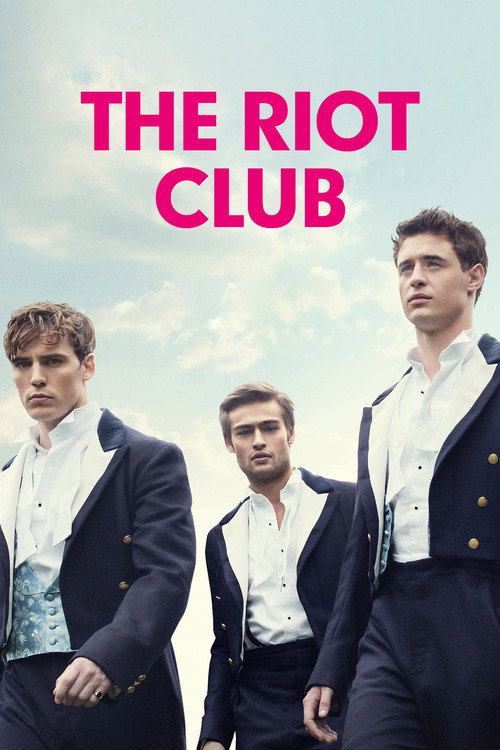
The Riot Club (2014)
Directed by Lone Scherfig
Partly — The Riot Club is somewhat woke, scoring 43 out of 100 on our wokeness meter.
The Riot Club arrives from 2014 with the confidence of a dinner guest who has already read the room and decided it is beneath him.
Consciousness Markers
The entire film is a scathing indictment of unearned wealth and entitlement: the club believes money can buy anything, Alistair delivers explicit political diatribes about the rich and the poor, and the landlord is beaten for calling them spoiled brats. This is the film's dominant ideological thrust.
The film wears its thesis of privilege on its sleeve, with Alistair's political monologues and the critics' note that it 'makes its points with power.' It is more dramatised indictment than direct preaching, keeping the lecture energy moderate.
The film stages a graphic sexual assault and the degradation of Lauren as part of its indictment of male entitlement and toxic masculinity, and it is directed by a woman (Lone Scherfig). However, the female characters function largely as victims or narrative devices within the men's story rather than as agents.
Hugo Fraser-Tyrwhitt is explicitly homosexual and harbours a romantic interest in Miles, and the pairing of Toby and Ed is depicted as an unusually close attachment. These elements exist but remain supporting character details rather than a central theme.
The club members repeatedly mock Dimitri's Greek heritage and nouveau-riche background, offering a faint thread of ethnic prejudice. The film's dominant critique is class-based rather than racial, so this marker is minimal.
The cast is overwhelmingly white and reflects the actual privileged, privately-educated demographic of Oxford's elite, which is the film's thematic point rather than a diverse ensemble. Only a Greek-heritage character (Dimitri) and a minor female banker provide any variation.
There is no climate or environmental content anywhere in the film.
There is no body-positivity content in the film.
No neurodivergence themes or characters are present.
The film is a fictional drama adapted from a stage play, not a reworking of historical events.
Why it received this score
The Riot Club arrives from 2014 with the confidence of a dinner guest who has already read the room and decided it is beneath him. Lone Scherfig directs Laura Wade's adaptation of her own play about an Oxford dining society of privately educated young men who believe money settles every account, and the film's animating idea is that unearned privilege is not merely rude but structurally protected. Alistair, the cold ideologue, delivers monologues about the rich and the poor that the film stages as argument, and when the landlord calls them spoiled brats, they beat him unconscious. The contempt for wealth here is the engine, not a garnish. This is the film's dominant register, and it commits to it.
Elsewhere the cultural ledger is thinner. A woman directs, and the film builds its indictment of male entitlement around the graphic degradation of Lauren, though she functions as a casualty inside the men's story instead of an agent of her own. Hugo is openly homosexual and carries a quiet, unrequited longing for Miles, and the pairing of Toby and Ed reads as an unusually intimate attachment, but these remain supporting textures. Dimitri's Greek parentage draws snide remarks about nouveaux riches, a thread of ethnic condescension that never becomes the film's subject. The cast is almost entirely white and privately schooled, which is the point being made, not an oversight.
The absences are instructive. There is no climate anxiety, no body-positive counterweight, no neurodivergent perspective, no revisionist reworking of the historical record. The sermonizing is present but dramatised, delivered through character and violence instead of a podium, which keeps the preachy impulse to a simmer. The result is a well-tailored tantrum against inherited power that never quite escapes the drawing room it despises. We have seen this anger before, and we will see it again, and it will still be wearing a dinner jacket.
Analysis generated by our Consciousness Algorithm
Part of


Synopsis
Two first-year students at Oxford University join a secret society and learn that their reputations can be made or destroyed over the course of one evening.
Questions about The Riot Club
Is The Riot Club woke?
Partly — The Riot Club is somewhat woke, scoring 43 out of 100 on our wokeness meter. That earns it a verdict of Woke-Adjacent.
What makes The Riot Club woke?
3 of the 10 markers register at 30 or above, led by Eat the Rich (78), Lecture Energy (45) and Feminist Agenda (32). On Eat the Rich: The entire film is a scathing indictment of unearned wealth and entitlement: the club believes money can buy anything, Alistair delivers explicit political diatribes about the rich and the poor, and the landlord is beaten for calling them spoiled brats.
How does The Riot Club compare to other 2014 movies?
It ranks #13 of the 303 films from 2014 we've scored; their average is 13. The wokest is Selma (68).
How is the Woke Score calculated?
An AI-assisted process researches the film and its reception, scores it 0–100 on ten markers, then combines those into one 0–100 Woke Score. It measures a specific set of 2020s cultural themes, not film quality.