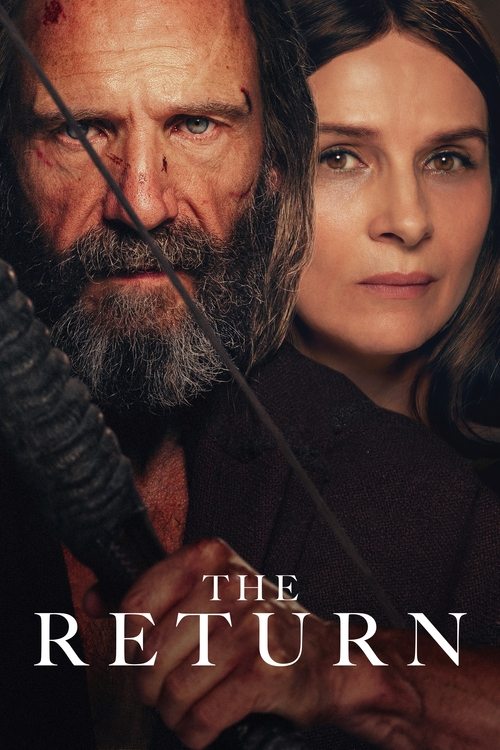
The Return (2024)
Directed by Uberto Pasolini
No — The Return is not woke, scoring 10 out of 100 on our wokeness meter.
Uberto Pasolini spent thirty years circling Homer, and the result treats the Odyssey's homecoming as a quiet psychological chamber piece.
Consciousness Markers
Penelope is given substantial screen presence and agency as she fends off suitors and ultimately desires peace over vengeance, but this largely follows Homer's existing characterization rather than imposing a modern feminist framework.
The cast is a largely white European ensemble (Fiennes, Binoche, Plummer, Molina) with a few Mediterranean/Middle Eastern actors (Kenzari, Tsakiroglou) cast naturally for a Greek setting; no deliberate diversity-driven casting agenda is evident.
The film strips the gods and supernatural from Homer's myth for psychological realism, a stylistic adaptation choice rather than a revisionist reinterpretation of historical events.
The approach is sombre, meditative, and 'stripped back,' with no overt moralizing or preachy messaging directed at the audience.
Enslaved characters (Eumaeus, Yias) appear, but their servitude is depicted as period-appropriate background rather than as a vehicle for racial commentary or consciousness.
There are no LGBTQ+ characters, relationships, or themes anywhere in this adaptation of the Odyssey's homecoming.
No environmental or climate themes appear in this ancient-Greece drama.
The film concerns kingship, honor, and violence, with no critique of capitalism or wealth inequality.
Fiennes's lean, weathered physique is pursued for gritty realism ('like a bit of old rope'), not as a body-positivity statement.
Odysseus is depicted as traumatized and dispirited, but this is framed as war-weariness rather than any neurodivergence theme.
Why it received this score
Uberto Pasolini spent thirty years circling Homer, and the result treats the Odyssey's homecoming as a quiet psychological chamber piece. Ralph Fiennes washes ashore naked, haggard, and largely silent, and the camera regards him with the patience of a hospice nurse. The supporting ensemble is European to its bones, with a handful of Greek and Mediterranean performers folded in because the story happens to be set in Ithaca. Nobody makes a fuss about it. There are no queer characters, no climate anxiety, no indictment of the wealthy, which here is not a moral failing but the plain consequence of adapting a Bronze Age poem about kingship and slaughter.
Juliette Binoche's Penelope gets real screen time and a measure of resolve, fending off suitors and choosing peace over vengeance at the climax. This tracks Homer closely enough that we cannot credit the film with importing a contemporary framework. The enslaved household, Eumaeus and Yias, is rendered as period furniture. Fiennes trained for months to look like old rope, a commitment to realism and not a statement about body image. His Odysseus is traumatized and hollowed out, though the film frames this as the ordinary wreckage of war, not as any kind of neurodivergence.
Stripping the gods from the poem is an aesthetic decision, not a revisionist reading of history. The tone is sombre and meditative throughout, and the film never turns to address the audience with a lesson. Here is prestige craftsmanship with almost no interest in the cultural arguments of its own moment. It is handsome, restrained, and content to let the ancients stay ancient.
Analysis generated by our Consciousness Algorithm


Synopsis
After twenty years away, Odysseus washes up on the shores of Ithaca, haggard and unrecognizable. The king has finally returned home, but much has changed in his kingdom since he left to fight in the Trojan war.
Questions about The Return
Is The Return woke?
No — The Return is not woke, scoring 10 out of 100 on our wokeness meter. That earns it a verdict of Ultra Based.
Does The Return have any woke elements?
Very few. None of the 10 markers reaches 30, the level where a marker counts as present; the highest is Feminist Agenda at 20.
How does The Return compare to other 2024 movies?
It ranks #137 of the 189 films from 2024 we've scored; their average is 22. The wokest is The Six Triple Eight (92).
How is the Woke Score calculated?
An AI-assisted process researches the film and its reception, scores it 0–100 on ten markers, then combines those into one 0–100 Woke Score. It measures a specific set of 2020s cultural themes, not film quality.