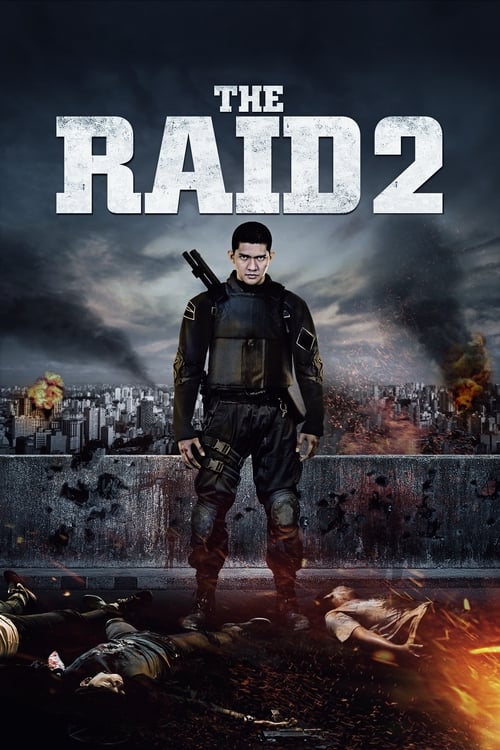
The Raid 2 (2014)
Directed by Gareth Evans
No — The Raid 2 is not woke, scoring 9 out of 100 on our wokeness meter.
There is a certain relief in encountering a film with no interest in improving us.
Consciousness Markers
The cast is entirely Indonesian and Japanese, but this reflects the film's native Jakarta setting and production rather than any deliberate diversity-casting agenda. No comment is made on representation.
Julie Estelle's 'Hammer Girl' is a striking female combatant, but she exists as a genre antagonist, not as a vehicle for any feminist argument. No gender politics are advanced.
No LGBTQ+ characters, themes, or subtext appear anywhere in the film.
The film is an Indonesian crime saga with no engagement with racial consciousness as a theme.
No environmental or climate themes are present.
Corruption and organized crime are depicted, but purely as genre machinery; there is no critique of capitalism or wealth as such.
No body-positivity themes or messaging.
No neurodivergent characters or themes.
The film is a fictional crime narrative with no historical revisionism.
The Raid 2 is a relentlessly physical action film that makes no attempt to lecture the audience on social or political matters.
Why it received this score
There is a certain relief in encountering a film with no interest in improving us. The Raid 2 runs two and a half hours and spends nearly all of it breaking bones across Jakarta's criminal underworld. Gareth Evans stages pencak silat with the patience of a watchmaker, then films it like a demolition crew. Rama goes undercover, infiltrates the Bangun syndicate, and the plot duly thickens, though the plot is mostly scaffolding holding up the next fight. Nobody pauses to explain what we should think. Nobody delivers a speech. The machetes do the talking, and they talk for a long time.
Julie Estelle arrives as the Hammer Girl, a combatant of real menace who swings two claw hammers with a technique that suggests genuine homework. Her presence registers as an interesting piece of casting. It does not register as an argument about gender. She is a killer in a film crowded with killers, and the film grants her no thesis. The ensemble is Indonesian and Japanese throughout, which reflects where the film was made and who made it. The result is a gallery of faces the American multiplex rarely bothers with, offered without a single line of self-congratulation. This is diversity as byproduct, not as platform.
For the student of cultural signalling, the pickings are slim, and that is the finding. There is no sermon, no villainous corporation standing in for capital, no climate anxiety, no history in need of correction. The corruption on display belongs to police and gangsters, which is genre furniture and not an indictment of markets. The film wants only to exhaust us, and it succeeds. We file it accordingly: a lean, brutal entertainment that minds its own business. The ledger stays clean. Almost nothing to report. Refreshing, in its way.
Analysis generated by our Consciousness Algorithm


Synopsis
After fighting his way through an apartment building populated by an army of dangerous criminals and escaping with his life, SWAT team member Rama goes undercover, joining a powerful Indonesian crime syndicate to protect his family and uncover corrupt members of his own force.
Questions about The Raid 2
Is The Raid 2 woke?
No — The Raid 2 is not woke, scoring 9 out of 100 on our wokeness meter. That earns it a verdict of Ultra Based.
Does The Raid 2 have any woke elements?
Very few. None of the 10 markers reaches 30, the level where a marker counts as present; the highest is Representation Casting at 18.
How does The Raid 2 compare to other 2014 movies?
It ranks #139 of the 303 films from 2014 we've scored; their average is 13. The wokest is Selma (68).
How is the Woke Score calculated?
An AI-assisted process researches the film and its reception, scores it 0–100 on ten markers, then combines those into one 0–100 Woke Score. It measures a specific set of 2020s cultural themes, not film quality.