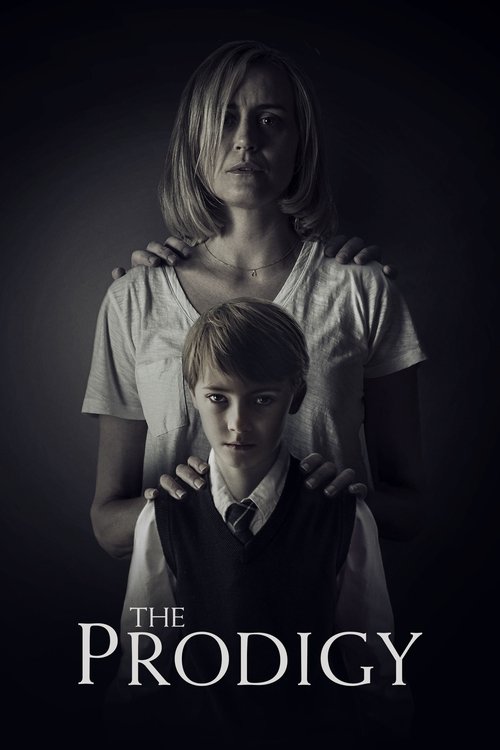
The Prodigy (2019)
Directed by Nicholas McCarthy
No — The Prodigy is not woke, scoring 7 out of 100 on our wokeness meter.
The Prodigy arrives in 2019 as a sturdy specimen of the bad seed picture, a genre with impeccable pre-2015 credentials and no evident interest in the cultural conversations of its own moment.
Consciousness Markers
The cast includes a handful of minority actors (Oluniké Adeliyi, Elisa Moolecherry, Martin Roach) in supporting roles, but their presence is incidental and never remarked upon. No deliberate representation agenda is evident.
The protagonist is a determined mother who drives the investigation and ultimately takes violent action, but this is standard horror-mom material rather than a feminist statement.
There is expository dialogue about reincarnation and past-life regression, but it functions as plot mechanics rather than moral instruction.
There are no LGBTQ+ characters, relationships, or themes anywhere in the film.
Race is never a subject of the film; the possession narrative is entirely colorblind.
No environmental or climate themes appear in the story.
The film contains no economic critique or class commentary of any kind.
Body image and body positivity are not addressed; the horror is about possession, not physical self-acceptance.
The child is evaluated by psychiatrists, but his condition is explicitly supernatural possession, not neurodivergence, and the film makes no effort to frame it as such.
The film is a fictional horror story and makes no attempt to revise or reinterpret historical events.
Why it received this score
The Prodigy arrives in 2019 as a sturdy specimen of the bad seed picture, a genre with impeccable pre-2015 credentials and no evident interest in the cultural conversations of its own moment. Nicholas McCarthy directs with patience, Taylor Schilling suffers with conviction, and a child named Miles says unsettling things in Hungarian. There is a metronome. There are maggots. A dog does not survive. The film knows what it is and does not reach beyond its station, which in the current climate registers as a small and unexpected courtesy.
We look, as always, for the marks of social consciousness and find them faint. Sarah Blume drives the investigation, administers the sleeping pills, and travels to a farmhouse with a gun in her purse, so a maternal agency is at work, though the genre has handed mothers a flashlight since the Reagan administration and we should not mistake tradition for a thesis. The supporting cast includes a few minority performers in professional roles, a doctor here, a colleague there, and the film regards them with the indifference of a story that has other business. The boy is dragged to a psychiatrist and then to a reincarnation specialist, and every diagnosis is routed toward the supernatural, leaving no room for a reading about a struggling child who needs accommodation. The regression sessions supply exposition and a few stern words about the soul, never a moral.
For a horror picture of the late 2010s this is a remarkably unbothered piece of work, content to frighten without commentary. No one eats the rich. Nothing mourns the planet. The farmhouse and the suburb and the stretch of rural Ohio carry no whisper of class grievance. Whether this amounts to artistic purity or a simple absence of ambition is a question the film declines to answer, and after ninety minutes of a boy carving a name into furniture, so do we.
Analysis generated by our Consciousness Algorithm


Synopsis
A mother concerned about her young son's disturbing behavior thinks something supernatural may be affecting him.
Questions about The Prodigy
Is The Prodigy woke?
No — The Prodigy is not woke, scoring 7 out of 100 on our wokeness meter. That earns it a verdict of Ultra Based.
Does The Prodigy have any woke elements?
Very few. None of the 10 markers reaches 30, the level where a marker counts as present; the highest is Representation Casting at 15.
How does The Prodigy compare to other 2019 movies?
It ranks #214 of the 284 films from 2019 we've scored; their average is 22. The wokest is Black Christmas (79).
How is the Woke Score calculated?
An AI-assisted process researches the film and its reception, scores it 0–100 on ten markers, then combines those into one 0–100 Woke Score. It measures a specific set of 2020s cultural themes, not film quality.