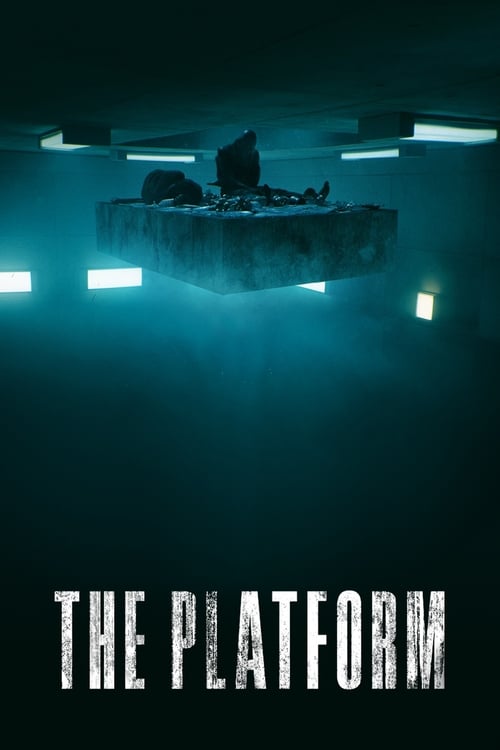
The Platform (2019)
Directed by Galder Gaztelu-Urrutia
No — The Platform is not especially woke, scoring 37 out of 100 on our wokeness meter.
The Platform arrives with the confidence of a film that knows precisely which nerve it intends to press.
Consciousness Markers
The vertical prison is a blunt allegory for capitalist stratification and unequal resource distribution; the director explicitly framed it as a call for fair wealth distribution.
The film is allegorical and didactic about solidarity and rationing, with characters openly debating social cooperation, but it delivers the message through genre thrills rather than a direct sermon.
The Spanish production features a naturally multiethnic cast, including Emilio Buale and Alexandra Masangkay, but diversity is incidental rather than a marketed representational thesis.
Women appear as a bureaucratic caregiver and a feral mother, but the film’s allegory is class-based rather than feminist.
No LGBTQ+ characters, themes, or subtext are present.
No racial commentary; the tower’s hierarchy is economic, not racial.
No climate or environmental themes are present.
No body-positivity themes; the film uses starvation and cannibalism as horror elements.
No neurodivergence themes or representation are present.
No historical revisionism; the film is a dystopian fiction with no historical setting.
Why it received this score
The Platform arrives with the confidence of a film that knows precisely which nerve it intends to press. A concrete tower, a descending slab of gourmet food, and a population of convicts who eat what they can before the platform sinks out of reach. The geometry does the arguing. Those above gorge, those below starve, and the whole apparatus runs on a distribution system that nobody designed to be fair and nobody has any incentive to repair. The director has said plainly that the point is the fair distribution of wealth. He is not being coy about it. This is a parable with its thesis stapled to the front door.
The sermonizing, such as it is, arrives wrapped in genre machinery. Prisoners debate rationing, solidarity, and the difference between civility and violence. A religious man and a reformed cannibal ride the platform down to enforce portions. A single panna cotta becomes a message to management. The film is happy to let characters state the theme aloud, though it prefers to punctuate those statements with blunt instruments and human flesh. The political content is unmistakable and unembarrassed, which places it firmly in the tradition of the vertical-class allegory. Elsewhere the film is content to be a thriller. A multiethnic cast fills the cells without commentary. Women appear as an administrator and a searching mother, serving the machinery of the plot instead of a thesis.
Much is simply absent. There is no environmental lament, no racial framework, no queer subtext, no celebration of bodies as they are (starvation here is a horror device, and the film treats flesh as meat). No neurodivergent reading suggests itself, and the setting is invented rather than historical, so nothing is being revised. What remains is a lean, ugly machine for making an argument about capital, and it makes that argument with rare efficiency. As a specimen of social consciousness, it is a single-issue voter, and it votes with real conviction.
Analysis generated by our Consciousness Algorithm


Synopsis
A slab of food descends down a vertical facility. The residents above eat heartily, leaving those below starving and desperate. A rebellion is imminent.
Questions about The Platform
Is The Platform woke?
No — The Platform is not especially woke, scoring 37 out of 100 on our wokeness meter. That earns it a verdict of Based.
Does The Platform have any woke elements?
2 of the 10 markers register at 30 or above, led by Eat the Rich (88) and Lecture Energy (55). On Eat the Rich: The vertical prison is a blunt allegory for capitalist stratification and unequal resource distribution; the director explicitly framed it as a call for fair wealth distribution.
How does The Platform compare to other 2019 movies?
It ranks #57 of the 284 films from 2019 we've scored; their average is 22. The wokest is Black Christmas (79).
How is the Woke Score calculated?
An AI-assisted process researches the film and its reception, scores it 0–100 on ten markers, then combines those into one 0–100 Woke Score. It measures a specific set of 2020s cultural themes, not film quality.