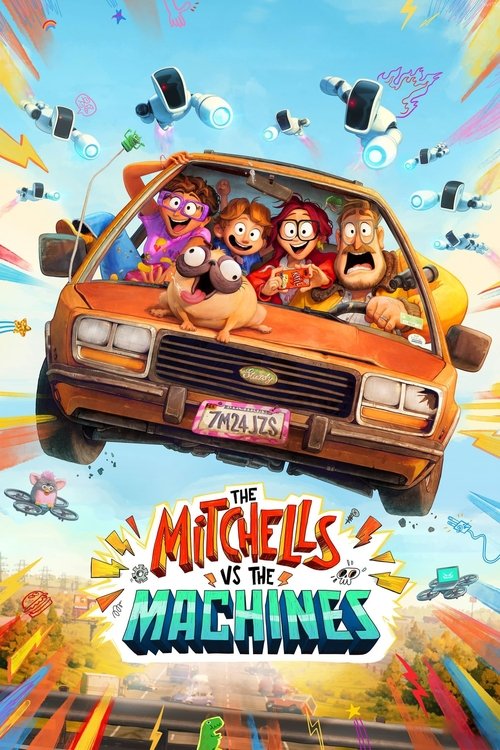
The Mitchells vs. the Machines (2021)
Directed by Mike Rianda
No — The Mitchells vs. the Machines is not especially woke, scoring 35 out of 100 on our wokeness meter.
The Mitchells vs. the Machines arrives as a Sony Pictures Animation production that was sold to Netflix during a pandemic, and it carries itself with the frantic energy of a family road trip that has gone sideways into a robot apocalypse.
Consciousness Markers
Katie Mitchell is openly queer and has a girlfriend, Jade, providing casual LGBTQ+ representation in a family film.
Diverse voice cast including Black actors and a queer main character, though the central family is white and representation is not a thematic focus.
Features a female protagonist pursuing her filmmaking dreams and a supportive mother, but lacks explicit feminist messaging.
Includes a climactic speech about family and connection, but the message is delivered with humor and heart rather than lecture.
Mild critique of tech billionaires and corporate AI, but not a systemic anti-capitalist message.
No exploration of racial issues or racial consciousness.
No environmental or climate-related themes.
No body positivity or body image themes.
No explicit depiction or discussion of neurodivergence.
No historical revisionism or reimagining of past events.
Why it received this score
The Mitchells vs. the Machines arrives as a Sony Pictures Animation production that was sold to Netflix during a pandemic, and it carries itself with the frantic energy of a family road trip that has gone sideways into a robot apocalypse. The film concerns Katie Mitchell, an aspiring filmmaker who clashes with her technophobic father Rick before the two are forced to reconcile while saving humanity. It is warm, visually inventive, and sincere. Our task here is classification, not enjoyment, though the two occasionally intersect.
On the matter of representation, the film assembles a reasonably diverse group of voices and gives Katie a girlfriend named Jade who appears without ceremony or explanation. This is the modern approach: the identity is present, unremarked upon, and folded into the texture of the story. Katie's creative ambitions and her supportive mother Linda supply a gentle feminine current, though nobody mounts a podium to explain it. The villain is a tech billionaire whose discarded AI turns on humanity, which gestures toward a critique of corporate power, but the film is more interested in the sentimental bond between parent and child than in dismantling capital.
The climax features a speech about connection and family that could have curdled into a sermon, yet the filmmakers keep it light and let the jokes carry the weight. There is no engagement with race, climate, body image, neurodivergence, or the rewriting of history. What we have is a well-made animated comedy with a handful of contemporary touches and no appetite for grievance. It is pleasant. It is also, for our purposes, mostly quiet.
Analysis generated by our Consciousness Algorithm
Part of


Synopsis
A quirky, dysfunctional family's road trip is upended when they find themselves in the middle of the robot apocalypse and suddenly become humanity's unlikeliest last hope.
Questions about The Mitchells vs. the Machines
Is The Mitchells vs. the Machines woke?
No — The Mitchells vs. the Machines is not especially woke, scoring 35 out of 100 on our wokeness meter. That earns it a verdict of Based.
Does The Mitchells vs. the Machines have any woke elements?
3 of the 10 markers register at 30 or above, led by LGBTQ+ Themes (60), Representation Casting (50) and Feminist Agenda (30). On LGBTQ+ Themes: Katie Mitchell is openly queer and has a girlfriend, Jade, providing casual LGBTQ+ representation in a family film.
How does The Mitchells vs. the Machines compare to other 2021 movies?
It ranks #57 of the 242 films from 2021 we've scored; their average is 23. The wokest is The Forever Purge (83).
How is the Woke Score calculated?
An AI-assisted process researches the film and its reception, scores it 0–100 on ten markers, then combines those into one 0–100 Woke Score. It measures a specific set of 2020s cultural themes, not film quality.