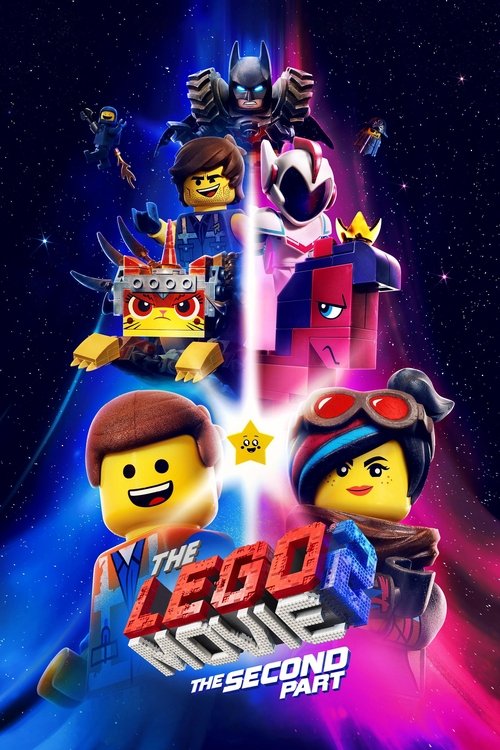
The Lego Movie 2: The Second Part (2019)
Directed by Mike Mitchell
No — The Lego Movie 2: The Second Part is not especially woke, scoring 31 out of 100 on our wokeness meter.
The Lego Movie 2: The Second Part arrives five years after the original, which in toy years is roughly a geological epoch.
Consciousness Markers
Lucy is a co-lead who ultimately saves Emmet, Queen Watevra and General Mayhem are powerful female characters, and the film critiques hyper-masculine posturing through Rex Dangervest while validating Bianca's imaginative play.
Features a diverse voice cast with prominent female and POC performers, including Tiffany Haddish, Stephanie Beatriz, and Maya Rudolph; production notes indicate an intent to include more women.
Delivers a mild moral about cooperation and being yourself, but avoids preachy sermonizing.
No LGBTQ+ themes or characters are present.
No racial themes or commentary.
No environmental or climate themes.
No anti-capitalist or class-conscious themes.
No body positivity themes.
No neurodivergence themes.
No revisionist history themes.
Why it received this score
The Lego Movie 2: The Second Part arrives five years after the original, which in toy years is roughly a geological epoch. Bricksburg has soured into Apocalypseburg, the Duplo invaders keep coming, and Emmet stays stubbornly cheerful while everyone around him perfects a grimace. It is a sequel, a musical, and a meditation on the creative friction between a brother and a sister in a suburban basement. The studio brings back the ensemble and adds a few names to the call sheet, because a franchise this size does not leave chairs empty.
On the matter of gender, the film takes a quiet but measurable step. Lucy graduates from sidekick to co-lead, and she is the one who ultimately rescues Emmet, a reversal the screenplay treats as unremarkable. Queen Watevra Wa'Nabi and General Sweet Mayhem are women who wield real authority, one a shape-shifting monarch, the other an enforcer with a blaster and a conscience. The film also deflates its own hero's machismo through Rex Dangervest, a raptor-training cowboy whose swagger curdles into nihilism before the credits. The real-world thread, meanwhile, hands Bianca, a girl, the imaginative reins.
The voice cast leans diverse, with Tiffany Haddish, Stephanie Beatriz, and Maya Rudolph in substantial roles, a choice the production reportedly made on purpose. Beyond that, the film keeps its sermons short. There is a moral about cooperation and being yourself, and it is over in under a minute, never swelling into a lecture. No climate parable, no class warfare, no body politics, no neurodivergent arc, no rewriting of the historical record, no romance that colors outside the heteronormative lines. The Lego Movie 2 knows what it is: a bright, expensive toy commercial with a heart of plastic. It is competent, occasionally clever, and content to leave the heavier cultural labors to other franchises.
Analysis generated by our Consciousness Algorithm


Synopsis
It's been five years since everything was awesome and the citizens are facing a huge new threat: LEGO DUPLO® invaders from outer space, wrecking everything faster than they can rebuild.
Questions about The Lego Movie 2: The Second Part
Is The Lego Movie 2: The Second Part woke?
No — The Lego Movie 2: The Second Part is not especially woke, scoring 31 out of 100 on our wokeness meter. That earns it a verdict of Based.
Does The Lego Movie 2: The Second Part have any woke elements?
2 of the 10 markers register at 30 or above, led by Feminist Agenda (55) and Representation Casting (45). On Feminist Agenda: Lucy is a co-lead who ultimately saves Emmet, Queen Watevra and General Mayhem are powerful female characters, and the film critiques hyper-masculine posturing through Rex Dangervest while validating Bianca's imaginative play.
How does The Lego Movie 2: The Second Part compare to other 2019 movies?
It ranks #75 of the 284 films from 2019 we've scored; their average is 22. The wokest is Black Christmas (79).
How is the Woke Score calculated?
An AI-assisted process researches the film and its reception, scores it 0–100 on ten markers, then combines those into one 0–100 Woke Score. It measures a specific set of 2020s cultural themes, not film quality.