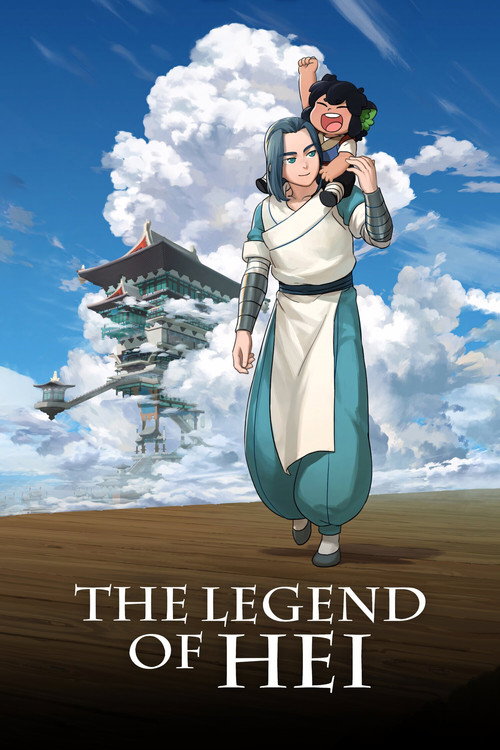
The Legend of Hei (2019)
Directed by MTJJ
No — The Legend of Hei is not especially woke, scoring 37 out of 100 on our wokeness meter.
The Legend of Hei opens by leveling a forest.
Consciousness Markers
The central conflict revolves around human deforestation destroying the spirits' home, making it a powerful environmental statement.
The narrative pits the natural world against human industrial encroachment and exploitation, aligning with anti-development themes.
The film presents a moral dilemma for the protagonist, but this is handled through character journey rather than didactic social commentary.
The film features a diverse cast of spirit creatures, but the focus remains on the conflict between nature and humanity rather than specific modern representation goals.
Female characters are present within the spirit community, but the film does not engage with a specific feminist agenda or critique of gender roles.
There is no evidence of LGBTQ+ themes or characters within the narrative or character development.
The conflict is framed as a struggle between species (spirits and humans) rather than a racial or ethnic one.
The film does not address body image, body types, or related social commentary.
There is no indication that any characters exhibit neurodivergent traits or that the film explores this theme.
As a work of fantasy animation, the film does not engage in the reinterpretation of historical events.
Why it received this score
The Legend of Hei opens by leveling a forest. Luo Xiaohei, a cat spirit, loses his home in the first minutes, and the remaining runtime is a long negotiation over who has the right to live where. The environmental argument is not subtext. It is the plot. Humans cut, build, and expand, and the spirits they displace are left to wander, bargain, or fight. For a 2019 Chinese animated feature, this is committed ecological storytelling, and it never softens the indictment of industrial encroachment.
Feng Xi and his faction want the land back by force, and the film gives them a fair hearing without endorsing their verdict. Wuxian, the human who abducts Xiaohei more or less by accident, supplies the counterweight: decency without apology. The struggle between development and the natural world carries a clear anti-exploitation charge, though the movie declines to deliver a speech about it. The moral arrives through Xiaohei's drifting and his gradual change of heart, which is the better method.
Elsewhere the film is quiet. There is no LGBTQ content, no ethnic framing (the divide is between species, not peoples), no commentary on body image, and no engagement with neurodivergence. Female spirits appear throughout without the film building a case about gender roles. The cast is a menagerie of creature designs, which we may charitably file under representational ambition, though the film itself never makes that claim. The sermonizing stays minimal. The film trusts its audience, which after two decades of animated features that do not, comes as a small relief.
A modest, well-mannered entry in the catalogue. It has a conscience about trees and very little to say about anything else, and it says even that with restraint. We log it and move on to the next screening.
{"thematic_tags": ["sequel"]}
Analysis generated by our Consciousness Algorithm


Synopsis
When cat spirit Luo Xiaohei's home is deforested by humans, he must find a new one. He runs into a group of other spirit creatures who take him under their wing with dreams of reconquering the land they say is rightfully theirs. However, they run into a human known as Wuxian who separates Luo Xiaohei from the other spirits and the two go on a journey, with the cat spirit learning to control his abilities as well as forming his own thoughts on whether or not he should ally with the spirits or the humans.
Questions about The Legend of Hei
Is The Legend of Hei woke?
No — The Legend of Hei is not especially woke, scoring 37 out of 100 on our wokeness meter. That earns it a verdict of Based.
Does The Legend of Hei have any woke elements?
2 of the 10 markers register at 30 or above, led by Climate Crusade (85) and Eat the Rich (60). On Climate Crusade: The central conflict revolves around human deforestation destroying the spirits' home, making it a powerful environmental statement.
How does The Legend of Hei compare to other 2019 movies?
It ranks #57 of the 284 films from 2019 we've scored; their average is 22. The wokest is Black Christmas (79).
How is the Woke Score calculated?
An AI-assisted process researches the film and its reception, scores it 0–100 on ten markers, then combines those into one 0–100 Woke Score. It measures a specific set of 2020s cultural themes, not film quality.