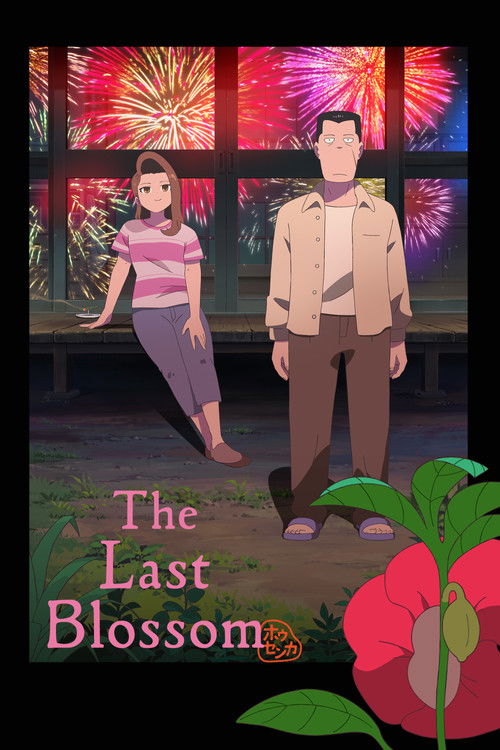
The Last Blossom (2025)
Directed by Baku Kinoshita
Baku Kinoshita's The Last Blossom presents us with a former yakuza footsoldier dying alone in solitary confinement, accompanied only by a talking flower.
Consciousness Markers
The film gestures toward systemic critique insofar as Akutsu commits crimes to fund medical care for a child who cannot otherwise afford it. This is a structural observation about healthcare access in 1980s Japan, though it is delivered as personal tragedy rather than political indictment.
The film's pacing is deliberately contemplative and its themes of regret, conscience, and moral reckoning are foregrounded. However, director Kinoshita's stated philosophy of quiet reflection over agenda means the sermonizing, such as it is, arrives as elegy rather than instruction. The flower does not cite statistics.
Nana, the single mother at the emotional center of the protagonist's backstory, is a figure of quiet resilience. However, the film frames her primarily as a recipient of Akutsu's self-sacrifice rather than as an agent of feminist critique. The gender dynamics here are traditionally Japanese, not programmatically progressive.
The film is a Japanese production with an all-Japanese cast portraying Japanese characters in a Japanese setting. There is no discernible casting agenda beyond narrative fit, and the single non-traditional family unit at the story's center reads as character motivation rather than representational statement.
No LGBTQ+ themes, characters, or subtext are present in any available material about the film.
The film operates entirely within a monocultural Japanese context and shows no interest in race as a social category. No racial consciousness markers are present.
Nature imagery, specifically the balsam flower, serves as a magical-realist device for introspection and companionship. It carries no environmental messaging and advances no climate agenda.
Body positivity as a modern progressive framework is entirely absent from the film's concerns.
No neurodivergent characters or related themes are present in the available research or plot summary.
The film is set in a specific historical milieu of 1980s Japanese yakuza culture and does not appear to revisit or reframe that history through a modern social justice lens.
Why it received this score
Baku Kinoshita's The Last Blossom presents us with a former yakuza footsoldier dying alone in solitary confinement, accompanied only by a talking flower. This is, by any measure, a premise. The film is not interested in making you feel good about society's progress. It is interested in making you feel the specific weight of a wasted life in a small room, which is a different and considerably less fashionable ambition.
The cultural awareness on display here is of the old-fashioned Japanese variety: guilt, duty, the gap between the life one intended and the life one lived. Akutsu's criminal career is not framed as systemic oppression or a failure of institutions, but as a series of choices made by a man of limited imagination and genuine, if misdirected, love. The film's closest approach to a progressive sensibility is its implicit observation that a child needing life-saving medical care and a man having no legal means to provide it is a bad arrangement. This is presented as grief, not as a policy platform. The flower, for its part, does not weigh in on healthcare reform.
What Kinoshita and screenwriter Kazuya Konomoto have made is a film that is conspicuously uninterested in being legible to contemporary culture-war taxonomy. It will not fit neatly into the discourse. It sits in a prison cell with a dying man and a balsam plant and declines to explain itself, which, in the current landscape, is itself a minor act of defiance. We may file it under "humanism, pre-algorithmic" and move on.
Analysis generated by our Consciousness Algorithm
Synopsis
An elderly inmate serving a life sentence awaits a lonely death in solitary—until a voice calls out to him. It belongs to a balsam flower, Housenka, that speaks like a human. Through their 'conversation', the old man reflects on the life he's led.