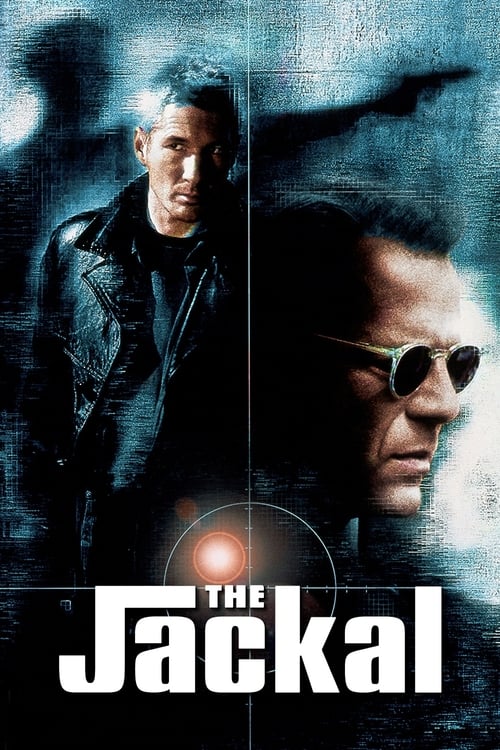
The Jackal (1997)
Directed by Michael Caton-Jones
No — The Jackal is not woke, scoring 15 out of 100 on our wokeness meter.
The Jackal arrives as a loose remake of a film that was itself an adaptation of a novel, and it carries the legal scars of that lineage.
Consciousness Markers
Sidney Poitier, Diane Venora, and Mathilda May fill prominent roles, but the casting is unremarkable for a late-90s international thriller and carries no representational commentary.
The Jackal poses as a gay man to access a target's garage and shares a same-sex kiss, but the framing is exploitative rather than affirming; GLAAD intervened only to soften a scene of a gay man being killed.
Diane Venora's Russian Major Koslova is a competent female authority figure, but she is fridged to taunt the male lead, and the First Lady exists chiefly as a target.
Poitier's Deputy Director and the international cast exist naturally within the plot with no engagement of racial themes or commentary.
A straightforward chase thriller with no preaching, moralizing, or message-delivery.
No environmental themes or climate content of any kind.
The plot revolves around a $70 million contract killing for a mafia kingpin; there is no critique of wealth, class, or capitalism.
No body-positive themes or messaging present.
The Jackal is described as psychopathic, but this is villain characterization rather than any neurodivergence advocacy or representation.
A loose remake of The Day of the Jackal, but it makes no revisionist claims about historical events.
Why it received this score
The Jackal arrives as a loose remake of a film that was itself an adaptation of a novel, and it carries the legal scars of that lineage. Frederick Forsyth and the makers of the 1973 picture objected loudly enough to force Universal into the phrase "inspired by," with sole credit going to Kenneth Ross's earlier screenplay. Michael Caton-Jones has since described the script as too long and confessed to making the film in the editing room. The results bear him out. It is a chase picture of competent gloom, the sort of thing Roger Ebert filed under the year's worst without breaking a sweat.
The casting offers a mild, unexamined inclusiveness. Sidney Poitier, in his final theatrical role, plays the deputy director with the weariness of a man who has done this before. Diane Venora's Major Koslova is a capable Russian authority figure right up until the screenplay decides she exists to be killed and to deliver a taunt about the hero's failure to protect women. That is the film's entire theory of gender. The Jackal's masquerade as a gay man, staged to reach a target's garage, produced a same-sex kiss that Bruce Willis personally fought to keep, alongside a test-screening audience that cheered when an innocent man was shot in a gay bar. GLAAD asked for a trim. The material is exploitative, never affirming.
No sermon is delivered here. The plot concerns a seventy million dollar contract killing for a mafia kingpin, and at no point does anyone pause to interrogate the economics of it. No climate anxieties. No body-positive messaging. No advocacy on behalf of the neurodivergent, though the villain is called a psychopath in the way such pictures always do. The film settles for being a straightforward thriller that wants nothing from us but our attention, and struggles to hold even that. We classify it accordingly, without pleasure and without malice, the way a coroner signs a routine form.
{"thematic_tags": ["remake"]}
Analysis generated by our Consciousness Algorithm
Part of


Synopsis
Hired by a powerful member of the Russian mafia to avenge an FBI sting that left his brother dead, a psychopathic hitman known only as The Jackal proves an elusive target for the people charged with the task of bringing him down: a deputy FBI director, a Russian MVK Major, and a jailed IRA terrorist who can recognize him.
Questions about The Jackal
Is The Jackal woke?
No — The Jackal is not woke, scoring 15 out of 100 on our wokeness meter. That earns it a verdict of Ultra Based.
Does The Jackal have any woke elements?
1 of the 10 markers register at 30 or above, led by Representation Casting (30). On Representation Casting: Sidney Poitier, Diane Venora, and Mathilda May fill prominent roles, but the casting is unremarkable for a late-90s international thriller and carries no representational commentary.
How does The Jackal compare to other 1997 movies?
It ranks #28 of the 109 films from 1997 we've scored; their average is 12. The wokest is Happy Together (65).
How is the Woke Score calculated?
An AI-assisted process researches the film and its reception, scores it 0–100 on ten markers, then combines those into one 0–100 Woke Score. It measures a specific set of 2020s cultural themes, not film quality.