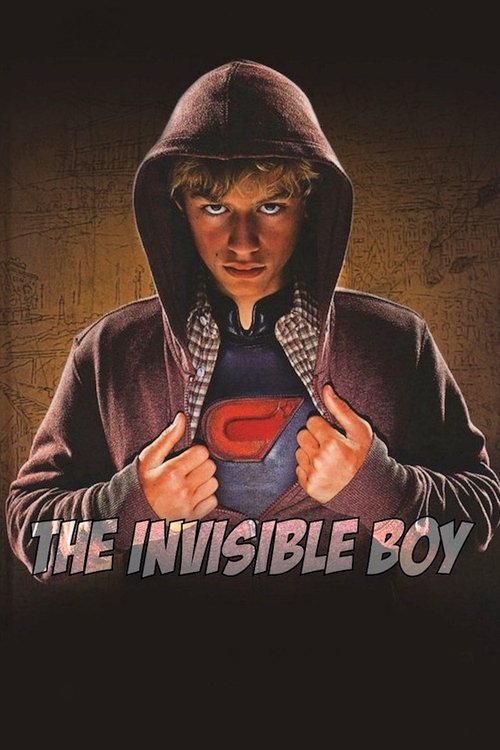
The Invisible Boy (2014)
Directed by Gabriele Salvatores
No — The Invisible Boy is not woke, scoring 3 out of 100 on our wokeness meter.
The Invisible Boy arrives from Italy in 2014, directed by Gabriele Salvatores, and concerns Michele, a thirteen-year-old in Trieste who is shy, unpopular, and quietly besotted with a classmate.
Consciousness Markers
The film features a European cast, but the focus remains on a standard coming-of-age narrative without specific modern representation demands.
The mother is a police inspector and the leader of the secret group, but this functions more as a conspiracy trope than a modern feminist critique.
The initial conflict revolves around a stolen 50-Euro note and cheap costumes, which is a minor, localized economic issue.
There is no evidence of LGBTQ+ themes or characters within the provided plot summary.
The film contains no commentary or focus on racial issues.
There is no environmental message or focus on climate change in the narrative.
The character's invisibility is a plot device, not a commentary on physical body image or acceptance.
While the protagonist is shy, the film does not frame his character traits through the lens of modern neurodivergence.
The film is a fictional fantasy/superhero narrative and does not challenge established historical facts.
The film is driven by action and fantasy rather than didactic social commentary.
Why it received this score
The Invisible Boy arrives from Italy in 2014, directed by Gabriele Salvatores, and concerns Michele, a thirteen-year-old in Trieste who is shy, unpopular, and quietly besotted with a classmate. A stolen fifty-Euro note denies him a proper superhero costume for the Halloween party, so he settles for a cheap outfit said to belong to an obscure Chinese hero with mystical properties. The wish he makes while wearing it comes true. He turns invisible. From there the film becomes a standard coming-of-age fantasy with a conspiracy plot bolted on, conducted with the modest ambitions of a family film that knows its audience.
On the matter of social consciousness, the film is nearly barren. Michele's mother is a police inspector who also leads a secret organization of powered individuals, which registers as a faint feminist gesture, though the story treats her authority as a plot mechanism, not a critique. The stolen banknote gestures at petty economic grievance, and nothing more. The cast is European, and the narrative includes a Moroccan thread in its closing moments, yet the film never pauses to interrogate race, identity, or belonging. There is no romantic or gender diversity of note, no environmental concern, no engagement with body image, and no framing of Michele's shyness as neurodivergence. His invisibility is a metaphor for adolescent obscurity, a very old one, and the film is content to leave it there.
The sequel, released in 2018, extends the mythology without deepening it. This is a pleasant, weightless fantasy, competently made, aimed at younger viewers, and innocent of any sermonizing. We classify it accordingly, with the mild regret of a sommelier presented a bottle that is entirely drinkable and entirely forgettable.
Analysis generated by our Consciousness Algorithm


Synopsis
Michele is thirteen year old, shy, unpopular at school, and in love with Stella. After wearing a costume for a Halloween party, he finds out that he's invisible.
Questions about The Invisible Boy
Is The Invisible Boy woke?
No — The Invisible Boy is not woke, scoring 3 out of 100 on our wokeness meter. That earns it a verdict of Ultra Based.
Does The Invisible Boy have any woke elements?
Very few. None of the 10 markers reaches 30, the level where a marker counts as present; the highest is Representation Casting at 10.
How does The Invisible Boy compare to other 2014 movies?
It ranks #256 of the 303 films from 2014 we've scored; their average is 13. The wokest is Selma (68).
How is the Woke Score calculated?
An AI-assisted process researches the film and its reception, scores it 0–100 on ten markers, then combines those into one 0–100 Woke Score. It measures a specific set of 2020s cultural themes, not film quality.