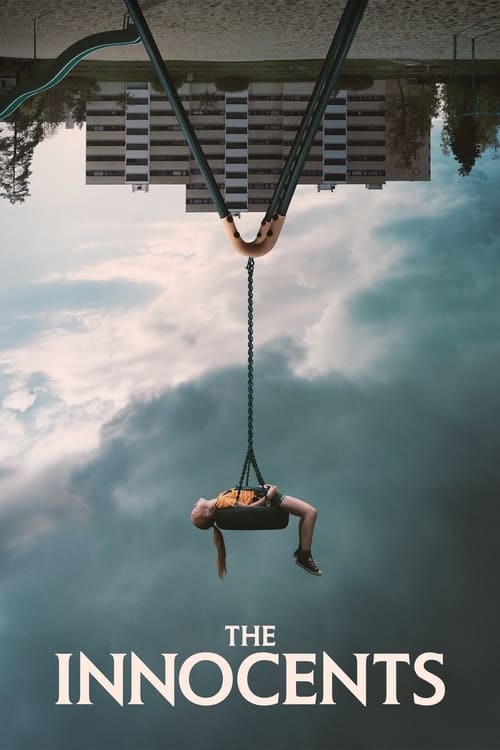
The Innocents (2021)
Directed by Eskil Vogt
No — The Innocents is not especially woke, scoring 27 out of 100 on our wokeness meter.
Eskil Vogt's The Innocents places four children in a Norwegian housing estate, hands them telekinesis, and then watches what childhood does with that kind of leverage.
Consciousness Markers
Anna's nonverbal autism is a central, sensitively handled element of the film, and her gradual acquisition of speech through a peer's support is a key emotional arc.
A notably multiethnic cast for a Norwegian production, with Sam Ashraf, Mina Yasmin Bremseth Asheim, and Kadra Yusuf in prominent roles, though their backgrounds are never remarked upon within the story.
The narrative centers on two sisters and a girl with powers who ultimately unite to defeat the violent male antagonist, but this emerges from the story rather than any articulated feminist thesis.
The film probes how children acquire morality, but it does so through dread and ambiguity rather than explicit moral instruction.
No LGBTQ+ characters, themes, or subtext appear anywhere in the film.
Despite a diverse cast, the film engages no racial themes, commentary, or social critique whatsoever.
No environmental or climate-related content is present.
The film contains no economic critique or anti-capitalist messaging.
No body-positivity themes or messaging are present.
The film is a contemporary supernatural fiction with no historical revisionism.
Why it received this score
Eskil Vogt's The Innocents places four children in a Norwegian housing estate, hands them telekinesis, and then watches what childhood does with that kind of leverage. The cast is notably multiethnic for a Norwegian production, and the film never says a word about it. Sam Ashraf, Mina Yasmin Bremseth Asheim, and Kadra Yusuf simply occupy their roles as neighbors and mothers and friends, which is either quiet confidence or indifference. We lean toward the former, though the film itself offers no racial commentary, no social critique, nothing to file under consciousness of any kind. The diversity is present. The argument is not.
The emotional center belongs to Anna, a nonverbal autistic girl played by Alva Brynsmo Ramstad. Her condition is treated with patience and specificity instead of pity, and her halting acquisition of speech, coaxed along by Aisha, supplies the film with its only genuine tenderness. This is the one place where the film's sensibility aligns with current cultural preoccupations, and it earns the alignment by observing rather than advocating. Elsewhere, the two sisters eventually combine forces to destroy the violent boy who terrorizes them, a resolution that reads as structural more than ideological. No thesis is spoken. None is needed.
The remainder of the checklist goes unfilled. No environmental lament, no economic grievance, no body politics, no queer subtext, no rewriting of the historical record. The film asks how children assemble a moral sense, and it answers with dread, ambiguity, and a dead cat. That is the correct approach. A lesser production would have told us what to think. This one shows us a boy on an overpass and lets the silence do the work.
Analysis generated by our Consciousness Algorithm


Synopsis
Four children become friends during the summer holidays, and out of sight of the adults they discover they have hidden powers. While exploring their newfound abilities in the nearby forests and playgrounds, their innocent play takes a dark turn and strange things begin to happen.
Questions about The Innocents
Is The Innocents woke?
No — The Innocents is not especially woke, scoring 27 out of 100 on our wokeness meter. That earns it a verdict of Based.
Does The Innocents have any woke elements?
2 of the 10 markers register at 30 or above, led by Neurodivergence (65) and Representation Casting (35). On Neurodivergence: Anna's nonverbal autism is a central, sensitively handled element of the film, and her gradual acquisition of speech through a peer's support is a key emotional arc.
How does The Innocents compare to other 2021 movies?
It ranks #71 of the 242 films from 2021 we've scored; their average is 23. The wokest is The Forever Purge (83).
How is the Woke Score calculated?
An AI-assisted process researches the film and its reception, scores it 0–100 on ten markers, then combines those into one 0–100 Woke Score. It measures a specific set of 2020s cultural themes, not film quality.