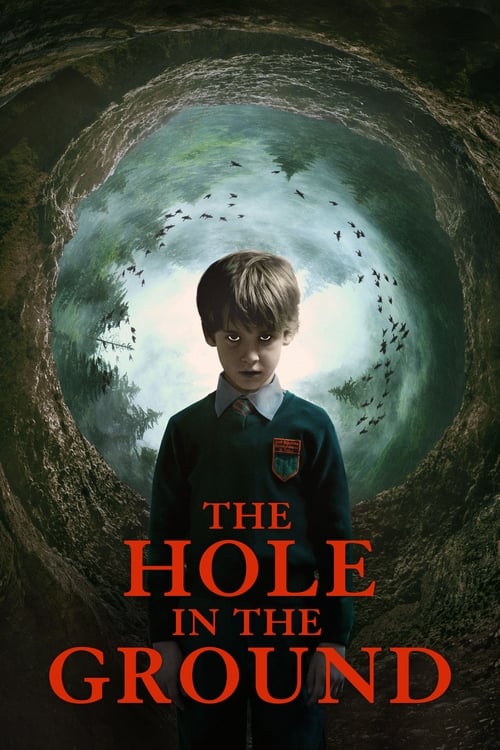
The Hole in the Ground (2019)
Directed by Lee Cronin
No — The Hole in the Ground is not woke, scoring 7 out of 100 on our wokeness meter.
The Hole in the Ground arrives bearing the standard kit of rural folk horror: a sinkhole in the woods, a suspicious old woman, a child who may have been swapped for something else, and a mother slowly losing her grip on the difference between a real boy and a convincing one.
Consciousness Markers
A single mother anchors the story and drives the action, but her maternal paranoia is a horror trope rather than a statement of feminist politics.
A small Irish production with a naturally assembled cast; the female lead and older supporting women reflect the story's needs rather than any deliberate diversity initiative.
No LGBTQ+ characters, themes, or subtext appear anywhere in the film.
The film engages no racial themes or commentary whatsoever; the rural Irish setting is uniformly white.
The sinkhole and forest are supernatural devices, not ecological allegory; no climate messaging is present.
No economic critique or class commentary; the antagonist is an otherworldly creature, not a system.
Bodies are treated as sites of horror and bodily invasion, the opposite of a body-positivity message.
Chris's shyness and arachnophobia are character texture, not a neurodivergence narrative.
The film draws on folk horror and changeling folklore without revising or reinterpreting any historical record.
A mood-driven horror piece that shows rather than tells; it has no thesis to deliver to the audience.
Why it received this score
The Hole in the Ground arrives bearing the standard kit of rural folk horror: a sinkhole in the woods, a suspicious old woman, a child who may have been swapped for something else, and a mother slowly losing her grip on the difference between a real boy and a convincing one. Lee Cronin directs with patience and damp Irish light, letting the dread accumulate in the corners of rooms instead of announcing itself. The film is a mood, held for ninety minutes, and it never stops to explain what it means. That restraint is its chief virtue.
On the matter of casting, the production draws on a small pool of Irish and Finnish performers, assembled for fit and availability. Seana Kerslake carries the picture as a woman rebuilding her life after a bad marriage, while Kati Outinen and Simone Kirby fill the periphery with weathered authority. A single mother drives both the plot and the paranoia, which earns a small nod, though maternal dread is a load-bearing beam of the genre and predates any recent cultural accounting. The film does not pause to make a point of it. It casts the people the story requires and moves on.
The film does not lecture. There is no thesis about the environment, no economic allegory in the pit, no racial or sexual politics folded into the soil. The creatures at the bottom of the hole are not a metaphor for capital; they are creatures, faceless and hungry. The horror is domestic and old, borrowed from changeling folklore that predates the modern vocabulary by several centuries. The result is a tidy, effective, faintly familiar genre exercise that trusts its audience enough to withhold the moral. In an era when cinema often mistakes a closing speech for a conclusion, that reticence is nearly a personality trait.
Analysis generated by our Consciousness Algorithm


Synopsis
Trying to escape her broken past, Sarah O’Neill is building a new life on the fringes of a backwood rural town with her young son Chris. A terrifying encounter with a mysterious neighbour shatters her fragile security, throwing Sarah into a spiralling nightmare of paranoia and mistrust, as she tries to uncover if the disturbing changes in her little boy are connected to an ominous sinkhole buried deep in the forest that borders their home.
Questions about The Hole in the Ground
Is The Hole in the Ground woke?
No — The Hole in the Ground is not woke, scoring 7 out of 100 on our wokeness meter. That earns it a verdict of Ultra Based.
Does The Hole in the Ground have any woke elements?
Very few. None of the 10 markers reaches 30, the level where a marker counts as present; the highest is Feminist Agenda at 15.
How does The Hole in the Ground compare to other 2019 movies?
It ranks #214 of the 284 films from 2019 we've scored; their average is 22. The wokest is Black Christmas (79).
How is the Woke Score calculated?
An AI-assisted process researches the film and its reception, scores it 0–100 on ten markers, then combines those into one 0–100 Woke Score. It measures a specific set of 2020s cultural themes, not film quality.