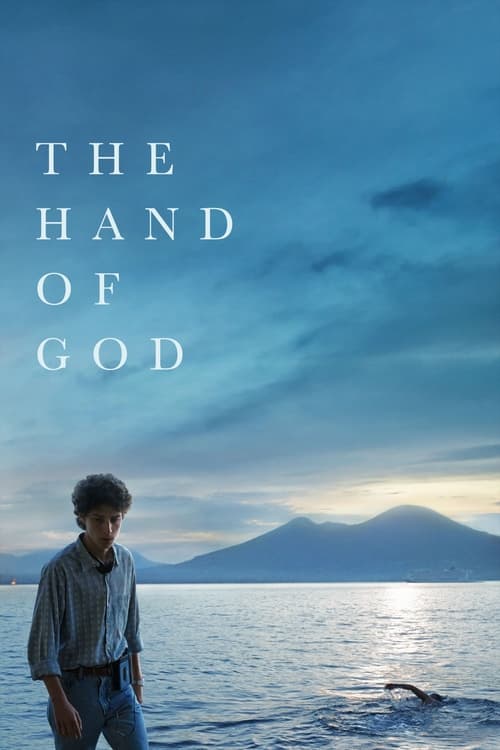
The Hand of God (2021)
Directed by Paolo Sorrentino
No — The Hand of God is not woke, scoring 5 out of 100 on our wokeness meter.
Paolo Sorrentino goes home to Naples, and the result is a loose, funny, sorrowful memoir of a boy, a football god, and a faulty heater.
Consciousness Markers
Women like Patrizia and the Baroness get vivid, sympathetic moments, but the film is a male coming-of-age memoir with no feminist thesis or critique of patriarchy.
The cast is almost entirely white Italian performers, reflecting the film's Naples setting rather than any deliberate diversity initiative. No meaningful representation casting.
Capuano's advice to embrace Naples rather than flee carries a mild thematic sermon, but the film is largely observational and non-preachy.
No LGBTQ+ characters, themes, or subtext appear anywhere in the narrative.
The film touches on Neapolitan poverty and crime but never engages racial consciousness or systemic racial themes.
The parents' death by carbon monoxide is a personal tragedy, not an environmental or climate statement.
Poverty and class texture the setting, but there is no eat-the-rich critique or anti-capitalist argument.
The sexual encounter with the elderly Baroness is about loneliness and initiation, not body-positivity messaging.
Patrizia's psychiatric hospitalization is treated as trauma and escape, not as a neurodivergence narrative.
The film is semi-autobiographical memory, not a revisionist reframing of historical events.
Why it received this score
Paolo Sorrentino goes home to Naples, and the result is a loose, funny, sorrowful memoir of a boy, a football god, and a faulty heater. Fabietto drifts through a family of eccentrics, survives a tragedy that claims both parents, and stumbles toward the cinema. The film observes. It does not argue. Sorrentino's camera adores faces, balconies, and the noise of a crowded apartment, and it trusts the audience to draw whatever conclusions it likes.
The women in this world are drawn with real affection. Patrizia, the aunt whose marriage curdles into abuse, recounts a miraculous pregnancy and a miscarriage, then chooses a psychiatric hospital as sanctuary. The elderly Baroness receives Fabietto with a tenderness that has nothing to do with instruction. These are portraits, not positions. The film is a young man's memory of the women who surrounded him, and memory of that sort does not organize itself into a critique. No thesis about patriarchy is on offer, and none is pretending to be.
The closest the film comes to a sermon is a director's advice that Fabietto should not flee Naples but embrace its stories. It lands softly. Elsewhere, poverty and petty crime are atmosphere, texture, the sound of the neighborhood. Nobody delivers a speech about capital or the climate, and the death of the parents is a private catastrophe, not a parable. We are left with a warm, beautifully shot, faintly self-indulgent coming-of-age picture that treats its setting as a place to live in, not a case to be made. A sommelier would note the vintage and move along. So do we.
A note on provenance. The film is semi-autobiographical, drawn from the director's own youth, which places it in the true-story tradition. It is not a sequel, not a remake, not adapted from any book, and it concerns no superheroes. It was nominated for an Academy Award but did not win one, and it did not top the domestic box office. The classification is therefore narrow, and the cultural temperature is cool. Some vintages are simply meant to be drunk young, without ceremony, and this is one of them. We record the findings and set down the glass.
That said, the picture earns its warmth honestly. It never lectures, never curates its cast for approval, and never asks the audience to applaud its own virtue. It simply remembers, with the occasional flourish, and lets the remembering stand. In an era of cinema that frequently mistakes instruction for art, this restraint is its own small distinction. The scorekeeper nods, closes the ledger, and moves to the next bottle. There is always a next bottle, and it is usually louder than this one.
Analysis generated by our Consciousness Algorithm


Synopsis
In 1980s Naples, an awkward teen struggling to find his place experiences heartbreak and liberation after he's inadvertently saved from a freak accident by football legend Diego Maradona.
Questions about The Hand of God
Is The Hand of God woke?
No — The Hand of God is not woke, scoring 5 out of 100 on our wokeness meter. That earns it a verdict of Ultra Based.
Does The Hand of God have any woke elements?
Very few. None of the 10 markers reaches 30, the level where a marker counts as present; the highest is Feminist Agenda at 12.
How does The Hand of God compare to other 2021 movies?
It ranks #214 of the 242 films from 2021 we've scored; their average is 23. The wokest is The Forever Purge (83).
How is the Woke Score calculated?
An AI-assisted process researches the film and its reception, scores it 0–100 on ten markers, then combines those into one 0–100 Woke Score. It measures a specific set of 2020s cultural themes, not film quality.