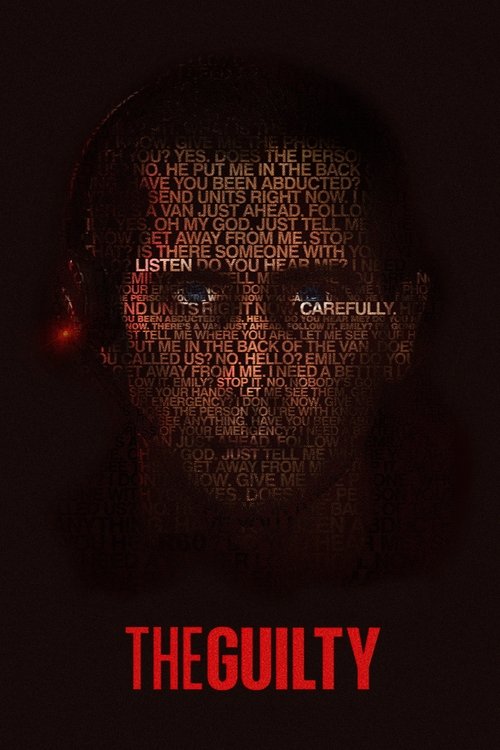
The Guilty (2021)
Directed by Antoine Fuqua
No — The Guilty is not especially woke, scoring 22 out of 100 on our wokeness meter.
Antoine Fuqua's The Guilty is a remake of a Danish film that was itself a tight, single-room exercise, and this version keeps the room and the receiver.
Consciousness Markers
The film features a diverse cast, including Black, Latino, and female actors in supporting and voice roles, though this diversity is not central to the narrative or explicitly commented upon.
The plot centers on a woman with untreated mental illness, but the portrayal leans toward thriller tropes rather than affirming neurodivergent representation.
The film embeds critiques of police accountability and mental health system failures within its thriller narrative, but avoids overt preaching.
A brief mention that the family could not afford psychiatric medication critiques healthcare costs, but this is not a central or sustained anti-capitalist theme.
There are no LGBTQ+ themes, characters, or references in the film.
The film does not engage with feminist themes or agendas; female characters serve primarily as victims or supporting figures.
The film does not explore racial consciousness or racial justice themes, despite having a diverse cast.
Wildfires appear only as background setting and are not used to convey a climate change message.
There is no engagement with body positivity or related themes.
The film is a fictional contemporary thriller and does not engage in historical revisionism.
Why it received this score
Antoine Fuqua's The Guilty is a remake of a Danish film that was itself a tight, single-room exercise, and this version keeps the room and the receiver. Jake Gyllenhaal plays Joe Baylor, a demoted LAPD officer working a 911 dispatch desk while awaiting a hearing over an incident on duty. Almost everything happens in his headset and his face. The wildfires burning outside Los Angeles serve as ambient orange light and nothing more, which is to say the film has no interest in assigning them a message.
The cast list is long and distinguished for a film where most of the performers are voices on the end of a line. Christina Vidal Mitchell, Da'Vine Joy Randolph, Eli Goree and David Castaneda appear around the call floor and in the earpiece, and the ensemble reflects a contemporary Los Angeles without pausing to remark on it. That is representation as texture, not as argument. The film's social attention arrives in smaller increments: a line about a family unable to afford psychiatric medication, and the slow reveal of Joe's own misconduct, which builds toward a confession the institution around him would prefer he not make. Neither thread is delivered as a sermon, though both are clearly meant to land.
The central figure is Emily, a woman in psychosis who has hurt her infant and is now fleeing the people trying to readmit her. The film treats her condition as a mechanism for suspense, complete with the snakes in the stomach and the withheld diagnosis, which is familiar thriller machinery dressed in clinical detail. It is effective and it is not, in any meaningful sense, a portrait of mental illness. The result is a lean, well-acted chamber piece that keeps its politics in the furniture. Nobody climbs on a soapbox. That restraint is the film's most disciplined quality.
Analysis generated by our Consciousness Algorithm


Synopsis
A demoted police officer assigned to a call dispatch desk is conflicted when he receives an emergency phone call from a kidnapped woman.
Questions about The Guilty
Is The Guilty woke?
No — The Guilty is not especially woke, scoring 22 out of 100 on our wokeness meter. That earns it a verdict of Based.
Does The Guilty have any woke elements?
2 of the 10 markers register at 30 or above, led by Representation Casting (45) and Neurodivergence (30). On Representation Casting: The film features a diverse cast, including Black, Latino, and female actors in supporting and voice roles, though this diversity is not central to the narrative or explicitly commented upon.
How does The Guilty compare to other 2021 movies?
It ranks #90 of the 242 films from 2021 we've scored; their average is 23. The wokest is The Forever Purge (83).
How is the Woke Score calculated?
An AI-assisted process researches the film and its reception, scores it 0–100 on ten markers, then combines those into one 0–100 Woke Score. It measures a specific set of 2020s cultural themes, not film quality.