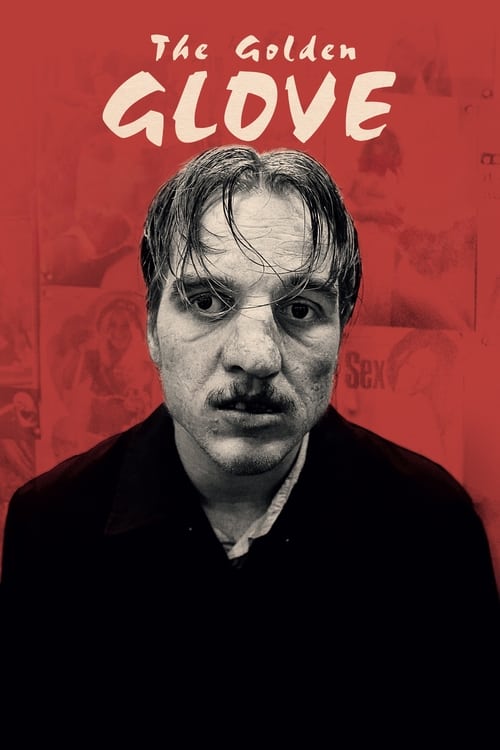
The Golden Glove (2019)
Directed by Fatih Akin
No — The Golden Glove is not woke, scoring 0 out of 100 on our wokeness meter.
Fatih Akin's The Golden Glove arrives with the grim tidings of Fritz Honka, a Hamburg night watchman who murdered four women in the 1970s and stored the remains in his apartment wall.
Consciousness Markers
The cast is entirely white German, reflecting the historically accurate 1970s Hamburg setting. No deliberate diversity casting or representational agenda is present.
No LGBTQ+ themes or characters. A scene in which Honka demands two women perform sex acts on each other is depicted as misogynistic abuse, not queer representation.
The film depicts relentless misogynistic violence against women without any feminist framing or critique. Critics largely condemned it for wallowing in degradation rather than interrogating it.
Race is entirely absent as a theme; the film concerns itself solely with a white killer and his white victims in the Hamburg underworld.
No environmental or climate themes of any kind.
While the film depicts poverty and squalor, it offers no critique of capitalism or wealth inequality as a systemic theme.
The film's presentation of disfigured, alcoholic, and physically broken bodies is grim naturalism, not a body-positivity or self-acceptance message.
No neurodivergence themes; the killer's pathology is portrayed as violent alcoholism and sadism rather than any neurodivergent identity.
The film adheres closely to the documented facts of the Fritz Honka case rather than revising or reframing history for ideological purposes.
The film delivers no moral instruction or social messaging; it is a deliberately unsavory, non-preachy descent into depravity.
Why it received this score
Fatih Akin's The Golden Glove arrives with the grim tidings of Fritz Honka, a Hamburg night watchman who murdered four women in the 1970s and stored the remains in his apartment wall. It is an adaptation of Heinz Strunk's novel, itself drawn from the documented case, and it approaches its subject with the enthusiasm of a man cleaning a drain. There is no uplift here, no redemptive arc, no lesson tucked into the final reel. We are simply deposited into a world of stale beer, wet wool, and unwashed flesh, and invited to watch.
The film's women are alcoholic, destitute, and physically broken, and Honka's brutality toward them is rendered in unflinching detail. Not once does the camera step back to editorialize. There is no feminist framing to organize the horror, no invitation to read the carnage as systemic commentary. The bodies on display are presented as grim naturalism, which is to say the opposite of any celebratory or affirmative posture. The cast is uniformly white, as the era and the milieu dictate, and the film makes no effort to correct the historical record or to reimagine it along more enlightened lines. Race, capital, climate, identity: these words would land here like a tray of glasses dropped on tile.
The result is a squalid, technically accomplished exercise in endurance, and the critics have largely hated it for exactly that. Akin refuses to lecture. He refuses to console. He simply shows us the pub, the man, the suitcase, and the locker, then lets the fire department find what is inside. On the scale of contemporary cultural instruction, this is close to a null result. It is a nasty piece of work, impeccably made, and it has nothing to teach us. Which, in its own bleak way, may be the point.
Analysis generated by our Consciousness Algorithm


Synopsis
A serial killer strikes fear in the hearts of residents of Hamburg during the early 1970s.
Questions about The Golden Glove
Is The Golden Glove woke?
No — The Golden Glove is not woke, scoring 0 out of 100 on our wokeness meter. That earns it a verdict of Ultra Based.
Does The Golden Glove have any woke elements?
No. All 10 markers score zero.
How does The Golden Glove compare to other 2019 movies?
It ranks #267 of the 284 films from 2019 we've scored; their average is 22. The wokest is Black Christmas (79).
How is the Woke Score calculated?
An AI-assisted process researches the film and its reception, scores it 0–100 on ten markers, then combines those into one 0–100 Woke Score. It measures a specific set of 2020s cultural themes, not film quality.