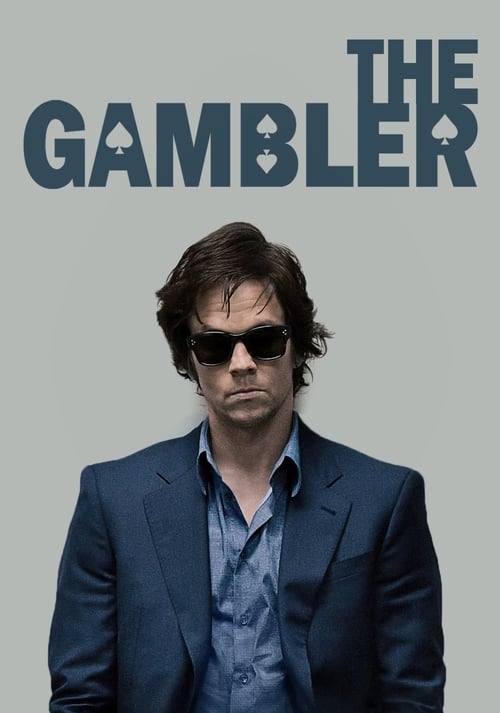
The Gambler (2014)
Directed by Rupert Wyatt
No — The Gambler is not woke, scoring 9 out of 100 on our wokeness meter.
The Gambler arrives as a remake of a 1974 film that itself nodded at Dostoevsky, and it carries the intellectual pretensions of that lineage without the corresponding debts of conscience.
Consciousness Markers
The protagonist, a literature professor, frequently delivers highly theoretical and didactic lectures on literary excellence and failure.
The film critiques predatory lending and the cycle of debt within the criminal underworld, though it does not offer a broad systemic critique of modern capitalism.
The film features a predominantly white cast and focuses on class and intellectual struggle rather than diverse representation.
The female characters are largely plot devices or romantic interests and do not drive a feminist agenda.
There are no discernible LGBTQ+ themes or representation in the provided summary or metadata.
The narrative focuses on class, debt, and intellectualism, with no significant commentary on race or systemic racism.
There is no mention of environmentalism or climate change concerns in the film's plot or themes.
There are no themes or discussions related to body positivity or diverse body types.
Jim Bennett's self-destructive tendencies are framed as a character flaw rather than a discussion of clinical neurodivergence.
The film is a fictional crime drama and does not challenge established historical narratives.
Why it received this score
The Gambler arrives as a remake of a 1974 film that itself nodded at Dostoevsky, and it carries the intellectual pretensions of that lineage without the corresponding debts of conscience. Mark Wahlberg plays Jim Bennett, a literature professor who lectures his students on the impossibility of excellence and then goes out and wagers his life to prove he is right about himself. The classroom scenes carry the heaviest load of sermonizing. Here is a man standing before people who paid tuition, delivering a thesis on failure. The film mistakes volume for argument and hopes we will not notice.
The social consciousness on display is modest and mostly economic. Predatory lending, loan sharks, and the geometry of debt get a workout, though the film treats them as atmosphere instead of indictment. Women exist to be threatened or to write checks. Brie Larson's Amy is a promising student and a waitress at the wrong establishment. Jessica Lange's Roberta is a rich mother with a checkbook and a grudge. Neither drives the story. The cast is white throughout, and the presence of Michael Kenneth Williams and Andre Braugher in supporting roles does not convert the proceedings into a document of racial reckoning. Nobody in this film has a body, a diagnosis, or a climate.
What remains is a study of a man who cannot stop. His self-destruction is presented as a flaw of character, not a condition to be named, and the film shows no interest in the vocabulary of diagnosis. The result is a lean, well-acted, faintly exhausting crime drama that wants credit for its literacy. Wahlberg carries it. The film does not quite earn the quotation marks around its title.
Analysis generated by our Consciousness Algorithm
Part of


Synopsis
Literature professor Jim Bennett leads a secret life as a high-stakes gambler. Always a risk-taker, Bennett bets it all when he borrows from a gangster and offers his own life as collateral. Staying one step ahead, he pits his creditor against the operator of an illicit gambling ring while garnering the attention of Frank, a paternalistic loan shark. As his relationship with a student deepens, Bennett must risk everything for a second chance.
Questions about The Gambler
Is The Gambler woke?
No — The Gambler is not woke, scoring 9 out of 100 on our wokeness meter. That earns it a verdict of Ultra Based.
Does The Gambler have any woke elements?
1 of the 10 markers register at 30 or above, led by Lecture Energy (30). On Lecture Energy: The protagonist, a literature professor, frequently delivers highly theoretical and didactic lectures on literary excellence and failure.
How does The Gambler compare to other 2014 movies?
It ranks #139 of the 303 films from 2014 we've scored; their average is 13. The wokest is Selma (68).
How is the Woke Score calculated?
An AI-assisted process researches the film and its reception, scores it 0–100 on ten markers, then combines those into one 0–100 Woke Score. It measures a specific set of 2020s cultural themes, not film quality.