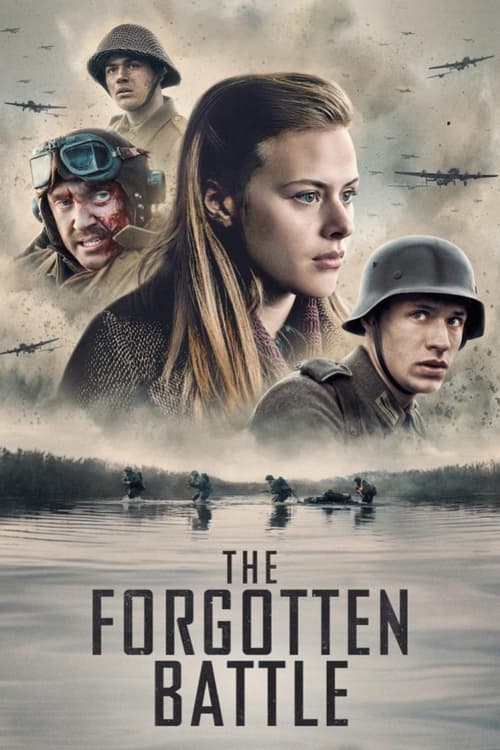
The Forgotten Battle (2021)
Directed by Matthijs van Heijningen Jr.
No — The Forgotten Battle is not woke, scoring 7 out of 100 on our wokeness meter.
There is a particular kind of fatigue that settles in when a war film arrives without an agenda, and The Forgotten Battle is that film.
Consciousness Markers
The ensemble includes a female Resistance lead, a Dutch Waffen-SS volunteer, and British glider pilots, but these reflect the historically documented makeup of the Battle of the Scheldt rather than any contemporary casting agenda.
Teuntje becomes a Resistance courier after her brother's execution, but her arc is a straightforward historical war narrative rather than an explicit feminist statement.
The film illuminates an overlooked WWII campaign and humanizes a disillusioned Dutch SS conscript, adding moral nuance, but does not reinterpret history through a modern ideological lens.
The film presents its anti-war themes through dramatized events and an epilogue about the liberation of the Netherlands rather than direct moralizing.
No LGBTQ+ characters or themes appear anywhere in the narrative.
The film concerns Dutch, British, and German combatants in 1944 and engages no racial themes.
Flooded terrain features as a tactical obstacle, not as environmental messaging.
No critique of capitalism or class warfare is present.
No body-positivity themes are present.
No neurodivergent characters or themes are depicted.
Why it received this score
There is a particular kind of fatigue that settles in when a war film arrives without an agenda, and The Forgotten Battle is that film. Matthijs van Heijningen Jr. takes the Battle of the Scheldt, a 1944 campaign that history textbooks have largely misplaced, and assembles it with the grim competence of a carpenter. Three strands: a Zeeland office clerk named Teuntje who drifts into the Resistance after her brother is executed, a Dutch Waffen-SS volunteer named Marinus who grows sick of the occupation he signed up for, and a British glider pilot named Sinclair wading through flooded polders after Market Garden collapses. They converge, as such people do, in mud and gunfire.
The ensemble reflects the documented makeup of the campaign, which is to say Dutch, British, Canadian, and German, and the film casts accordingly without ceremony. Teuntje's turn from bystander to courier is handled as plain historical circumstance, a woman doing what the moment required, and the film declines to frame it as a statement. Marinus is the more interesting gamble. The film grants a disillusioned SS conscript interiority, lets him kill a German to save Teuntje, and then lets him die of it. This is moral nuance, not reinterpretation. The camera does not lecture. It observes, and occasionally it drowns a man in a marsh.
What is absent is as telling as what is present. No romantic subplot is engineered across enemy lines. No modern vocabulary is retrofitted onto 1944 mouths. The flooded terrain is a tactical problem, not a metaphor for rising seas. The epilogue notes that Walcheren's capture reopened Antwerp and contributed to the liberation of the Netherlands in May 1945, then stops talking. The result is a film of considerable craft and almost no sermonizing, which in this climate reads as a small act of restraint. We are left with mud, a stolen tidal map, and the quiet sense that someone remembered a battle nobody else did. That is enough. It is more than enough.
Analysis generated by our Consciousness Algorithm


Synopsis
During WWII's crucial Battle of the Scheldt, the lives of a glider pilot, a Nazi soldier and a reluctant Resistance recruit tragically intersect.
Questions about The Forgotten Battle
Is The Forgotten Battle woke?
No — The Forgotten Battle is not woke, scoring 7 out of 100 on our wokeness meter. That earns it a verdict of Ultra Based.
Does The Forgotten Battle have any woke elements?
Very few. None of the 10 markers reaches 30, the level where a marker counts as present; the highest is Representation Casting at 15.
How does The Forgotten Battle compare to other 2021 movies?
It ranks #201 of the 242 films from 2021 we've scored; their average is 23. The wokest is The Forever Purge (83).
How is the Woke Score calculated?
An AI-assisted process researches the film and its reception, scores it 0–100 on ten markers, then combines those into one 0–100 Woke Score. It measures a specific set of 2020s cultural themes, not film quality.