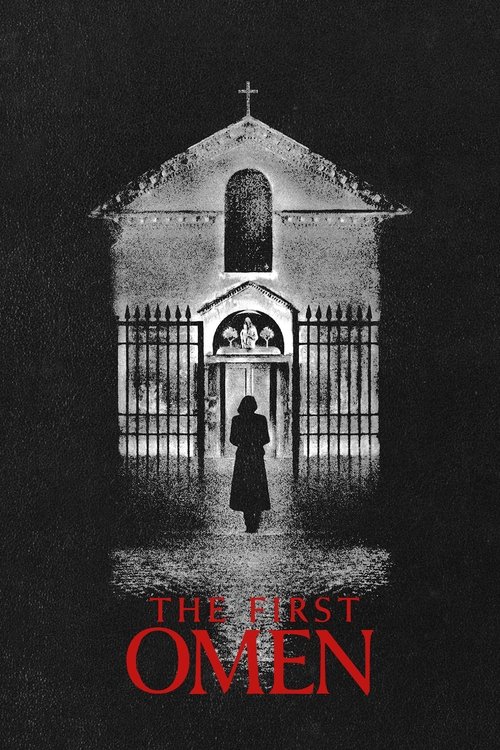
The First Omen (2024)
Directed by Arkasha Stevenson
No — The First Omen is not woke, scoring 19 out of 100 on our wokeness meter.
Arkasha Stevenson's feature debut arrives as a prequel to a franchise that began in 1976, and it carries that inheritance with a certain grim dignity.
Consciousness Markers
The film centers on a woman forcibly impregnated by a church conspiracy and reduced to a vessel, with critics explicitly framing it around female bodily autonomy in the wake of Roe v. Wade's overturning; the producer even decried a ratings double standard for female body horror.
The cast is notably international, including Brazilian actress Sônia Braga, Palestinian-Israeli actor Tawfeek Barhom, and Spanish actress María Caballero, though this largely reflects the film's Roman setting rather than a deliberate representational statement.
The film is a genre horror piece rather than a sermon, though its thematic undercurrent about institutional control of women's bodies carries a mild didactic charge noted by critics.
The film features a multiethnic cast but engages with no racial themes, commentary, or consciousness whatsoever.
No LGBTQ+ characters, themes, or subtext appear anywhere in the film.
No environmental or climate-related content exists in the film.
The conspiracy is driven by ecclesiastical power and secularism, not by capitalism or class critique; no eat-the-rich themes are present.
While the film is steeped in body horror, it offers no body-positivity messaging; the grotesque treatment of the body is the opposite of that marker.
No neurodivergent characters or themes are present.
The 1971 Roman setting and political protests are period backdrop for a supernatural horror plot, not a revisionist reframing of historical events.
Why it received this score
Arkasha Stevenson's feature debut arrives as a prequel to a franchise that began in 1976, and it carries that inheritance with a certain grim dignity. The setting is Rome, 1971, where political protests rumble in the streets and an American novice named Margaret is delivered to an orphanage to be quietly used. The conspiracy she uncovers involves forced impregnation, a satanic ritual she cannot recall, and a cabal of churchmen who wish to engineer the Antichrist because secularism has eroded their authority. This is genre machinery, well oiled and familiar, and the film does not pretend otherwise.
Where the picture acquires its charge is in the treatment of the female body as contested territory. The horror is institutional as much as supernatural: a woman reduced to a vessel by men who believe the ends justify the violation. Critics, writing in the wake of Roe's reversal, placed the film alongside Immaculate and read both as responses to religious law encroaching on bodily agency. The producer complained of a ratings double standard for female body horror, a grievance that has become part of the film's reception. This is thematic resonance, not sermonizing, and the film mostly resists the urge to lecture from the pulpit it depicts.
The cast is international in a way that reflects the Roman setting more than any deliberate statement, and the film engages no racial, environmental, or class concerns worth cataloguing. Body horror of this kind offers no comfort about the body, and no neurodivergent or historical-revisionist agenda surfaces across its runtime. What remains is a handsomely mounted exercise in ecclesiastical dread, competent, occasionally striking, and content to work within boundaries set half a century ago by a better film with a smaller budget and fewer bishops in supporting roles. It is a prequel, and it behaves like one: dutiful, atmospheric, and forever glancing backward at the thing it was built to precede. The viewer leaves unsettled, though chiefly by the realization that the franchise will continue regardless of anyone's consent, including ours. That, at least, is thematically consistent.
Here the classification concludes, without enthusiasm but without malice, as all classifications must. It is a horror film about a church that wants a baby and a woman who does not want to give it one. The rest is marketing, and the marketing is competent. The scorecard is closed. The verdict, such as it is, stands.
The final assessment, rendered with the weariness such labor demands, is that the film knows precisely what it is and declines to apologize for it. That is more than most of its franchise siblings can claim, and considerably less than its most ardent defenders insist. The gavel falls. We move on to the next screening, and the next, until the projectionist finally goes home. It is a living, or at least a serviceable, exercise in the form. The End, which is also, inevitably, a beginning.
Analysis generated by our Consciousness Algorithm
Part of


Synopsis
When a young American woman is sent to Rome to begin a life of service to the church, she encounters a darkness that causes her to question her own faith and uncovers a terrifying conspiracy that hopes to bring about the birth of evil incarnate.
Questions about The First Omen
Is The First Omen woke?
No — The First Omen is not woke, scoring 19 out of 100 on our wokeness meter. That earns it a verdict of Ultra Based.
Does The First Omen have any woke elements?
2 of the 10 markers register at 30 or above, led by Feminist Agenda (55) and Representation Casting (30). On Feminist Agenda: The film centers on a woman forcibly impregnated by a church conspiracy and reduced to a vessel, with critics explicitly framing it around female bodily autonomy in the wake of Roe v.
How does The First Omen compare to other 2024 movies?
It ranks #83 of the 189 films from 2024 we've scored; their average is 22. The wokest is The Six Triple Eight (92).
Is The First Omen the most woke The Omen movie?
Yes. It scores highest of the 4 The Omen films we've scored.