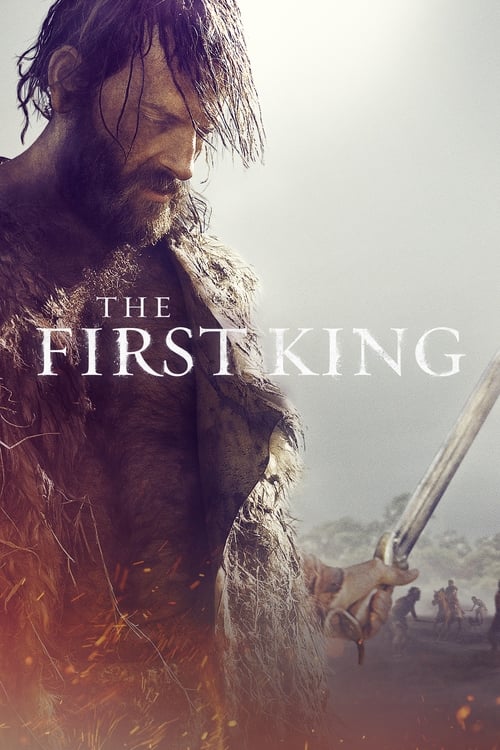
The First King (2019)
Directed by Matteo Rovere
No — The First King is not woke, scoring 2 out of 100 on our wokeness meter.
The First King arrives with mud on its boots and Latin on its tongue, an archaic reconstruction assembled by linguists at the University Guglielmo Marconi and fleshed out with Proto-Indo-European roots.
Consciousness Markers
The director explicitly stated no intent to comment on contemporary politics; the film is a grim mythological drama rather than a sermon.
The cast is entirely Italian, playing Latin and Sabine characters in an 8th-century BC setting. There is no modern representation-casting agenda at work.
No LGBTQ+ characters or themes appear anywhere in the narrative.
Female figures such as the Vesta priestess Satnei and the first Vestal exist within the mythological framework, but the film advances no feminist argument.
The film concerns the founding myth of Rome and engages no racial consciousness themes.
A flash flood serves as a plot catalyst, not an environmentalist statement.
The struggle is for power, kingship, and divine favor, with no economic critique of capitalism.
No body-positivity themes are present.
No neurodivergence themes are present.
The film dramatizes an ancient legend rather than revising established history for ideological purposes.
Why it received this score
The First King arrives with mud on its boots and Latin on its tongue, an archaic reconstruction assembled by linguists at the University Guglielmo Marconi and fleshed out with Proto-Indo-European roots. Matteo Rovere's camera follows Romulus and Remus, shepherd brothers swept from their pasture by a flash flood and sold into servitude in Alba Longa. They escape, steal the sacred fire of Vesta, and drag a priestess named Satnei along as a hostage. A prophecy follows, then a fratricide, then the founding of Rome. The film has no interest in making any of this comfortable.
The drama trades in pietas against power. Remus rejects a divine order that demands he kill his brother, then degrades his own people into slaves; Romulus rekindles the flame and appoints the first Vestal. Rovere has stated plainly that he intended no commentary on contemporary politics, and the film honors that restraint. Women appear as priestesses and firekeepers, embedded in the myth's machinery instead of standing outside it to make an argument. There is no economic critique, no racial reckoning, no body politics, no diagnosis of the mind. The struggle is for kingship and the favor of gods who do not negotiate.
The result is a grim, physical, occasionally punishing piece of filmmaking, two hours of hunger and blood and cold water. Its only faint contemporary tremor is the observation, offered by the director in interviews, that myths speak through symbols we reinterpret in our own light. The film itself never lectures. It watches brothers destroy each other and calls the wreckage a city. The end credits animate the growth of Roman territory to the reign of Trajan, a quiet reminder that the empire outlived everyone who built it. There is nothing here for the cultural commissars to claim. A somber artifact, well made, and ideologically inert. This is a film about the eighth century BC that has the good manners to stay there.
{"thematic_tags": []}
Analysis generated by our Consciousness Algorithm


Synopsis
Romulus and Remus, two shepherds and loyal brothers, end up taking part to a journey that will lead one of them to be the founder of the greatest nation ever seen. However, the fate of the chosen one will pass from killing his own brother.
Questions about The First King
Is The First King woke?
No — The First King is not woke, scoring 2 out of 100 on our wokeness meter. That earns it a verdict of Ultra Based.
Does The First King have any woke elements?
Very few. None of the 10 markers reaches 30, the level where a marker counts as present; the highest is Lecture Energy at 5.
How does The First King compare to other 2019 movies?
It ranks #264 of the 284 films from 2019 we've scored; their average is 22. The wokest is Black Christmas (79).
How is the Woke Score calculated?
An AI-assisted process researches the film and its reception, scores it 0–100 on ten markers, then combines those into one 0–100 Woke Score. It measures a specific set of 2020s cultural themes, not film quality.