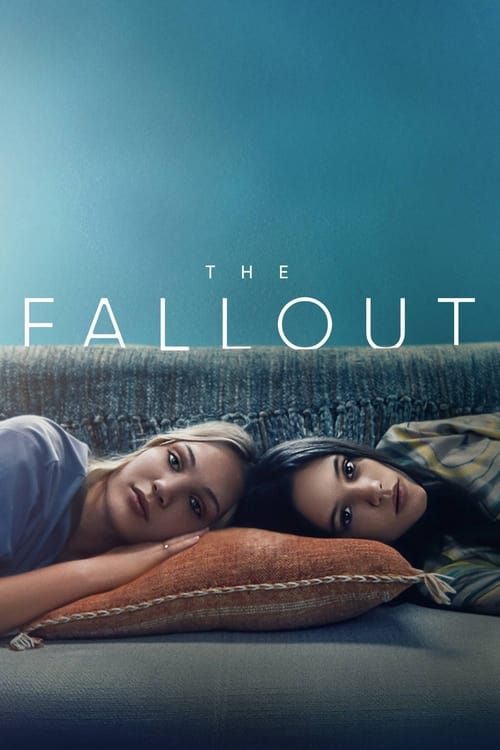
The Fallout (2021)
Directed by Megan Park
Partly — The Fallout is somewhat woke, scoring 42 out of 100 on our wokeness meter.
Megan Park's debut arrives with the quiet confidence of a filmmaker who has decided that restraint is a form of respect.
Consciousness Markers
The relationship between Vada and Mia is central: Mia confesses she is falling in love with Vada and the two have sex, constituting a substantive queer storyline, though the film treats it as one thread of Vada's broader recovery rather than a thesis.
Written and directed by Megan Park in her debut, with a female protagonist, a sister-sister relationship, and an intimate female friendship turned romance at its core — but the feminist sensibility is embedded rather than declared.
The cast is genuinely diverse — Jenna Ortega as the Latina lead, Niles Fitch as Quinton, and a multiracial ensemble of teens — but these characters exist naturally in the story without the film drawing attention to their identities.
The film grapples with school-shooting trauma via the therapist character and a pointed closing beat about the next shooting, but it largely dramatizes grief rather than delivering explicit political instruction.
Vada's PTSD — panic attacks, dissociative withdrawal, substance use as coping — is depicted at length and with clinical specificity, though the film frames this as trauma rather than naming neurodivergence.
Quinton is a Black character whose brother is killed in the shooting, and the ensemble is multiracial, but the film makes no explicit commentary on race or systemic inequity.
No environmental or climate content whatsoever.
No critique of capitalism, wealth, or class structures appears in the film.
The film touches on bodily matters such as Amelia's first period and Vada wetting her pants from trauma, but these are portrayals of bodily reality rather than body-positivity advocacy.
Not a historical film; no revisionist framing of past events is present.
Why it received this score
Megan Park's debut arrives with the quiet confidence of a filmmaker who has decided that restraint is a form of respect. Vada Cavell, played by Jenna Ortega with a held breath and a locked jaw, survives a school shooting by hiding in a bathroom stall, and the film spends its remaining runtime refusing to make a spectacle of that fact. There are no speeches about gun policy, no montage of candlelight vigils scored to a piano. Just a teenager wetting her pants at the sound of a crushed soda can. The camera watches. It does not editorialize.
Queer content here is substantive without becoming a thesis. Mia confesses she is falling in love with Vada, they sleep together, and the film folds this into the larger mess of recovery instead of isolating it as an arc. Park writes and directs, the protagonist is a young woman, and the emotional architecture rests on a sister-sister bond. The sensibility is present. It is also unadvertised, which in this climate reads almost as a stylistic choice. The cast is multiracial, and Quinton's grief over his dead brother carries real weight, yet the screenplay never pauses to explain anyone's identity to the audience. That omission is either a virtue or a missed opportunity, depending on which conference panel you attended.
Where the film does lean forward is in its clinical attention to post-traumatic collapse: the panic attacks, the dissociation, the ecstasy, the withdrawal. It names none of this as neurodivergence, and it offers no policy prescriptions. The closing beat, a phone notification about another shooting, lands as an observation about American repetition more than an argument. We are left with a portrait of grief that trusts its audience. That trust is rare, and it may be why this film outlasts the louder ones.
Analysis generated by our Consciousness Algorithm

Synopsis
In the wake of a school tragedy, Vada, Mia and Quinton form a unique and dynamic bond as they navigate the never linear, often confusing journey to heal in a world that feels forever changed.
Questions about The Fallout
Is The Fallout woke?
Partly — The Fallout is somewhat woke, scoring 42 out of 100 on our wokeness meter. That earns it a verdict of Woke-Adjacent.
What makes The Fallout woke?
3 of the 10 markers register at 30 or above, led by LGBTQ+ Themes (65), Feminist Agenda (50) and Representation Casting (45). On LGBTQ+ Themes: The relationship between Vada and Mia is central: Mia confesses she is falling in love with Vada and the two have sex, constituting a substantive queer storyline, though the film treats it as one thread of Vada's broader recovery rather than a thesis.
How does The Fallout compare to other 2021 movies?
It ranks #42 of the 242 films from 2021 we've scored; their average is 23. The wokest is The Forever Purge (83).
How is the Woke Score calculated?
An AI-assisted process researches the film and its reception, scores it 0–100 on ten markers, then combines those into one 0–100 Woke Score. It measures a specific set of 2020s cultural themes, not film quality.