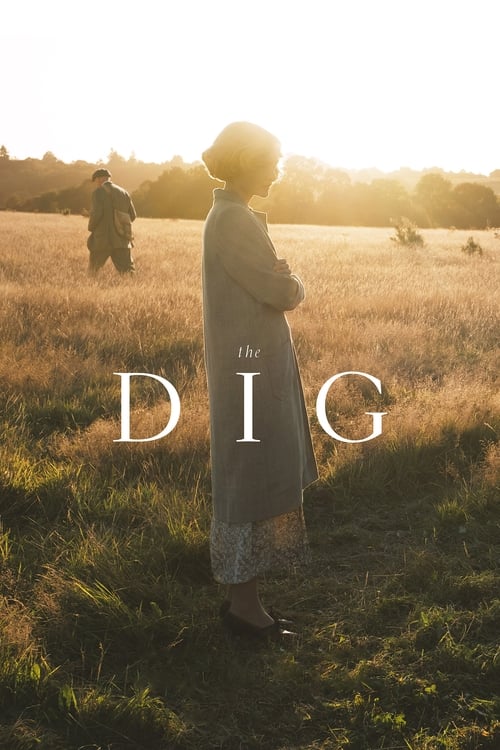
The Dig (2021)
Directed by Simon Stone
No — The Dig is not woke, scoring 10 out of 100 on our wokeness meter.
The Dig arrives with the solemnity of a film that knows it is about something, though the something turns out to be dirt, and the careful removal of it.
Consciousness Markers
Edith Pretty exercises agency as a landowner asserting her rights over the treasure, and Peggy Piggott is a working archaeologist, but the film undercuts her expertise and frames her largely through a romantic subplot rather than any feminist thesis.
A class-difference thread runs through the story — the self-taught, underpaid Basil Brown is sidelined and denied credit by Cambridge and British Museum institutions — but this is a mild critique of class and institutional credit-grabbing, not an anti-capitalist argument.
The film reimagines the Sutton Hoo dig with a fictional love interest (Rory Lomax), alters real figures' ages, and misrepresents Peggy Piggott's experience — but this is dramatization for romance rather than progressive ideological rewriting of history.
This is a restrained, melancholy period drama that shows rather than preaches; the only faint moralizing is the closing note that Brown was long denied recognition.
The cast is uniformly white British, appropriate to a 1939 Suffolk period piece; no diverse casting choices or commentary on representation are present.
There are no LGBTQ+ characters, themes, or subtext anywhere in the film.
The film contains no engagement with race, racial identity, or racial justice whatsoever.
No environmental or climate themes appear; the subject is an archaeological excavation on the eve of WWII.
No body-positivity themes or messaging are present.
No neurodivergent characters or themes are depicted or referenced.
Why it received this score
The Dig arrives with the solemnity of a film that knows it is about something, though the something turns out to be dirt, and the careful removal of it. Simon Stone's adaptation of John Preston's novel concerns the 1939 excavation of the Sutton Hoo burial mounds, a wealthy widow named Edith Pretty, and the self-taught excavator Basil Brown she hires to disturb her land. It is a quiet, melancholy picture, gorgeously shot, and almost entirely free of the cultural preoccupations that animate the contemporary release calendar. The cast is white, the themes are ancient, and nobody pauses to explain anything to the audience. This is not a complaint.
Where the film engages with the present at all, it does so gently. A class distinction runs beneath the excavation: Brown, who left school at twelve, is patronized by Cambridge men and eventually erased from the record, and the closing text notes that his name was absent from the British Museum for decades. That is a mild institutional grievance, not a manifesto. Peggy Piggott appears as a working archaeologist, though the script keeps her mostly occupied with a fictional RAF photographer and a bad marriage. Her competence registers, then recedes. The film has no thesis about her, which is its own small failure.
The historical liberties are romantic, not ideological. Real figures are aged up or down, a love interest is invented, and two women who actually photographed the site are written out so that a subplot may live. The result plays as heritage cinema with a soft heart. It shows more than it lectures, and the lone sermon arrives as end-credit text. A restrained vintage, this one. Barely a trace of the era's fermentation.
Analysis generated by our Consciousness Algorithm


Synopsis
As WWII looms, a wealthy widow hires an amateur archaeologist to excavate the burial mounds on her estate. When they make a historic discovery, the echoes of Britain's past resonate in the face of its uncertain future.
Questions about The Dig
Is The Dig woke?
No — The Dig is not woke, scoring 10 out of 100 on our wokeness meter. That earns it a verdict of Ultra Based.
Does The Dig have any woke elements?
Very few. None of the 10 markers reaches 30, the level where a marker counts as present; the highest is Eat the Rich at 15.
How does The Dig compare to other 2021 movies?
It ranks #176 of the 242 films from 2021 we've scored; their average is 23. The wokest is The Forever Purge (83).
How is the Woke Score calculated?
An AI-assisted process researches the film and its reception, scores it 0–100 on ten markers, then combines those into one 0–100 Woke Score. It measures a specific set of 2020s cultural themes, not film quality.