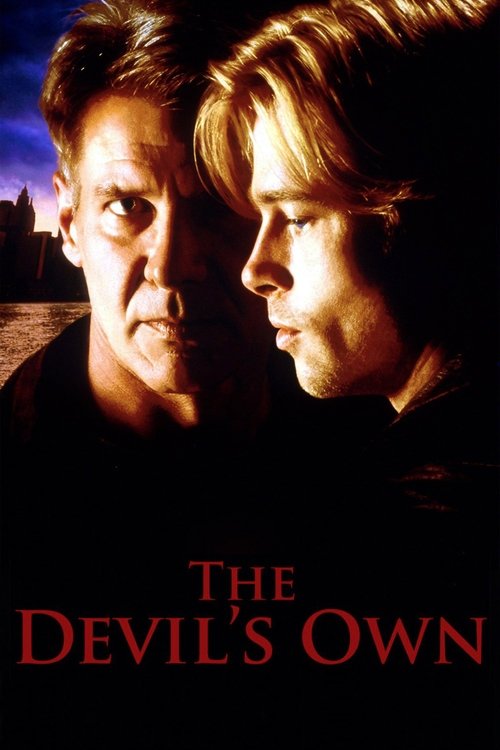
The Devil's Own (1997)
Directed by Alan J. Pakula
No — The Devil's Own is not woke, scoring 9 out of 100 on our wokeness meter.
Alan J. Pakula's final film arrives as a study in restraint, which is a generous way of saying it declines to have opinions.
Consciousness Markers
A 1997 studio thriller led by two white stars, with Rubén Blades as the Latino partner and a largely white supporting cast. Diversity is incidental rather than a stated aim.
The closing embrace and 'both fighting for causes they believe in' framing carry a mild moralizing tone, but the film mostly avoids preaching about the conflict.
The Eddie Diaz subplot touches on a police shooting of an unarmed man, but it is framed as a personal guilt story rather than a racial-justice commentary.
The film humanizes an IRA assassin and frames the Troubles as a clash of two legitimate moral codes, a soft revisionism that critics like Ebert faulted for sidestepping the actual history.
Margaret Colin and Natascha McElhone play capable women, and Megan is a functioning IRA operative, but the film is squarely a two-hander about men and their moral codes.
Black-market arms dealing and an Irish mobster appear, but the film treats them as plot machinery, not as a critique of capital.
No LGBTQ+ characters, themes, or subtext of any kind.
No environmental themes whatsoever.
No body-positivity themes or messaging.
No neurodivergent characters or themes.
Why it received this score
Alan J. Pakula's final film arrives as a study in restraint, which is a generous way of saying it declines to have opinions. Two white movie stars, Harrison Ford and Brad Pitt, circle each other for two hours while the supporting cast, Rubén Blades included, does the heavy lifting of simply being present. The picture was assembled under duress, with rewrites arriving mid-shoot and one of its leads publicly disowning the result, and the seams show. None of this generates much cultural charge. This is a 1997 studio thriller, and it behaves like one.
The Troubles serve as backdrop, and the film's handling of them is soft. Frankie McGuire is an assassin given a wife and three daughters to charm, and the movie invites us to weigh his cause against Tom O'Meara's decent cop instincts, a symmetry Roger Ebert found historically illiterate. He was right. Humanizing an IRA gunman is not revisionism in any strong sense; it is the ordinary business of thrillers, which require sympathetic killers. The Eddie Diaz subplot gestures at a police shooting of an unarmed man, then converts the whole thing into one officer's private guilt. A larger point about race sits there, unclaimed, and the film seems content to leave it.
Margaret Colin and Natascha McElhone play women with jobs and competence, and Megan runs IRA errands with a cold efficiency, but the movie belongs to the men and their codes. The closing embrace aboard the boat offers a small moral, that both were fighting for what they believed, and then the credits roll. It is a film that wants credit for ambiguity without paying for it. The black-market arms dealers are plot machinery, not an indictment of commerce. Nothing here crusades. It merely shrugs, handsomely, for two hours.
Analysis generated by our Consciousness Algorithm


Synopsis
Frankie McGuire, one of the IRA's deadliest assassins, draws an American family into the crossfire of terrorism. But when he is sent to the U.S. to buy weapons, Frankie is housed with the family of Tom O'Meara, a New York cop who knows nothing about Frankie's real identity. Their surprising friendship, and Tom's growing suspicions, forces Frankie to choose between the promise of peace or a lifetime of murder.
Questions about The Devil's Own
Is The Devil's Own woke?
No — The Devil's Own is not woke, scoring 9 out of 100 on our wokeness meter. That earns it a verdict of Ultra Based.
Does The Devil's Own have any woke elements?
Very few. None of the 10 markers reaches 30, the level where a marker counts as present; the highest is Lecture Energy at 18.
How does The Devil's Own compare to other 1997 movies?
It ranks #46 of the 109 films from 1997 we've scored; their average is 12. The wokest is Happy Together (65).
How is the Woke Score calculated?
An AI-assisted process researches the film and its reception, scores it 0–100 on ten markers, then combines those into one 0–100 Woke Score. It measures a specific set of 2020s cultural themes, not film quality.