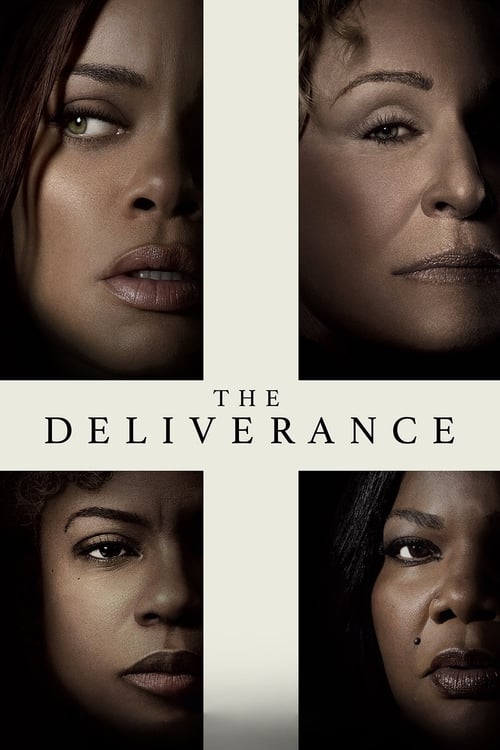
The Deliverance (2024)
Directed by Lee Daniels
No — The Deliverance is not especially woke, scoring 30 out of 100 on our wokeness meter.
Lee Daniels has spent his career treating domestic melodrama as a species of horror, so a possession picture was always going to come down to emphasis.
Consciousness Markers
A predominantly Black ensemble led by Andra Day, directed by Lee Daniels, centering a Black family in a genre historically dominated by white casts. The representation is substantial but largely organic to the story rather than foregrounded as a statement.
The recurring scrutiny of a Black family by Child Protective Services carries implicit commentary on the surveillance of Black motherhood, though the film never explicitly frames it in racial terms.
The narrative is driven by a single mother battling addiction, abuse, and demonic forces, with women (Ebony, Cynthia, the pastor) as the primary agents. This is character-driven melodrama rather than an articulated feminist thesis.
The film carries a pronounced Christian faith-and-redemption message, culminating in conversion and exorcism, but it delivers this through melodrama rather than direct moralizing at the audience.
Queer actor Miss Lawrence appears in the cast, but the film contains no LGBTQ+ themes, relationships, or commentary of any kind.
No environmental or climate-related content whatsoever.
Financial hardship and medical debt appear as plot mechanics, but the film offers no critique of capitalism or class structures.
No body-positivity themes or messaging present.
The children's psychiatric episodes are attributed to demonic possession, not neurodivergence, and no neurodivergent themes are explored.
The film is inspired by the Ammons haunting case but makes no attempt to revise or reinterpret historical narratives.
Why it received this score
Lee Daniels has spent his career treating domestic melodrama as a species of horror, so a possession picture was always going to come down to emphasis. In The Deliverance, the emphasis lands on Ebony Jackson, a single mother played by Andra Day, who is drinking, broke, and one bad night away from losing three children to the state. The demon in the basement is nearly an afterthought. Daniels has said as much himself, noting that the tension that interested him was whether Ebony would beat her kids, not the thing scratching behind the closet door. The streaming service wanted scares. He supplied a few. The finished object sits uneasily between the two impulses.
The cast is Black from top to bottom, and the film never announces this as an accomplishment. It simply is. Andra Day carries the picture with a performance of frayed, unglamorous endurance, flanked by Glenn Close doing something strange with a Pittsburgh accent and Mo'Nique as a caseworker nursing a grudge. The Child Protective Services thread is the sharpest instrument here, a low hum of institutional scrutiny that lands differently when the family under the microscope is Black, though the script declines to say so out loud. Miss Lawrence appears in the ensemble. No queer material follows her onto the screen.
Where the film raises its voice, it raises it in church. The climax is a full Pentecostal deliverance: speaking in tongues, anointing oil, a sinner's prayer, stigmata blooming on the teenagers' palms. This is melodrama aimed at the rafters, not instruction aimed at the audience, and that distinction keeps the sermonizing tolerable. The pacing sags. The theology is sincere. It is a messy, overstuffed, occasionally gripping piece of work from a director who has never met a restraint he respected. The house gets demolished in the end. Something in the area keeps knocking anyway.
Analysis generated by our Consciousness Algorithm


Synopsis
Ebony Jackson, a struggling single mother fighting her personal demons, moves her family into a new home for a fresh start. But when strange occurrences inside the home raise the suspicions of Child Protective Services and threaten to tear the family apart, Ebony soon finds herself locked in a battle for her life and the souls of her children.
Questions about The Deliverance
Is The Deliverance woke?
No — The Deliverance is not especially woke, scoring 30 out of 100 on our wokeness meter. That earns it a verdict of Based.
Does The Deliverance have any woke elements?
3 of the 10 markers register at 30 or above, led by Representation Casting (70), Racial Consciousness (35) and Feminist Agenda (30). On Representation Casting: A predominantly Black ensemble led by Andra Day, directed by Lee Daniels, centering a Black family in a genre historically dominated by white casts.
How does The Deliverance compare to other 2024 movies?
It ranks #34 of the 189 films from 2024 we've scored; their average is 22. The wokest is The Six Triple Eight (92).
How is the Woke Score calculated?
An AI-assisted process researches the film and its reception, scores it 0–100 on ten markers, then combines those into one 0–100 Woke Score. It measures a specific set of 2020s cultural themes, not film quality.