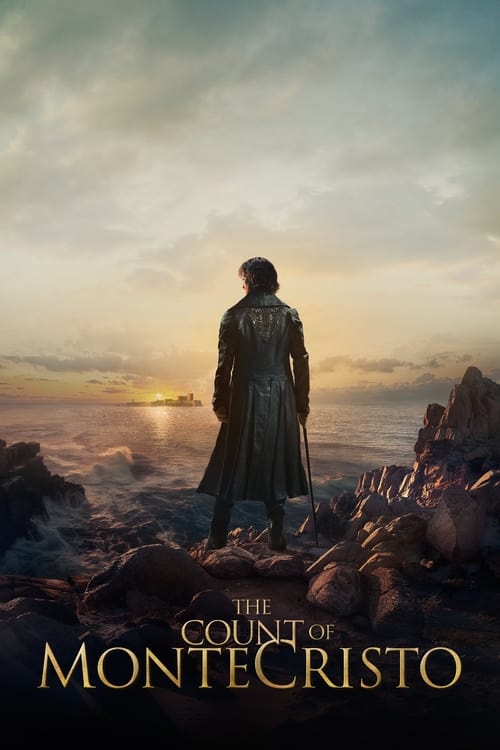
The Count of Monte Cristo (2024)
Directed by Alexandre de La Patellière
No — The Count of Monte Cristo is not woke, scoring 9 out of 100 on our wokeness meter.
The 2024 French adaptation of The Count of Monte Cristo arrives with a budget near forty-three million euros, the largest sum anyone has yet spent to remind us that revenge is a dish best served cold, at length, and in period costume.
Consciousness Markers
The plot involves Danglars' stock manipulation and aristocratic corruption, offering incidental critique of greed and finance, but framed as 19th-century revenge rather than a modern eat-the-rich polemic.
A faithful French-language adaptation of a 19th-century novel, cast with a predominantly white European ensemble. The non-European character Haydée exists in Dumas' source text and is not a modern diversity insertion.
Mercédès, Haydée, and Eugénie are present and given dramatic weight, but this is inherited from the 1844 novel rather than a feminist reworking of the material.
The film gestures at moral questions about revenge ('Wait and Hope'), but delivers them as swashbuckling drama rather than preachy instruction.
Haydée's backstory touches on her father Ali Pasha of Janina, but the film treats this as period plot mechanics rather than a modern racial-consciousness statement.
No LGBTQ+ characters, themes, or subtext appear in this swashbuckling revenge tale.
No environmental themes or climate messaging of any kind.
No body-positivity themes or messaging present.
No neurodivergent characters or themes are depicted.
A period adventure set in post-Napoleonic France, faithful to its historical setting and source novel; no revisionist reframing of history.
Why it received this score
The 2024 French adaptation of The Count of Monte Cristo arrives with a budget near forty-three million euros, the largest sum anyone has yet spent to remind us that revenge is a dish best served cold, at length, and in period costume. Pierre Niney plays Edmond Dantès with the correct brooding intensity, and the production trusts Alexandre Dumas instead of correcting him. A very long novel is compressed into something brisk without importing contemporary anxieties into post-Napoleonic Marseille. The ensemble is European, which is what the setting and the source suggest, and Haydée arrives from the 1844 text, not from a casting brief.
On the matter of social consciousness, the film is close to inert, and this reads as a choice. Mercédès, Haydée, and Eugénie carry real dramatic weight, though the weight was packed by Dumas and shipped intact. Racial awareness extends to Haydée's father, Ali Pasha of Janina, and stops there, treated as period plot machinery. The fall of Danglars, undone by forged reports and a loan he cannot repay, offers a glancing critique of finance and aristocratic rot. It is a nineteenth-century ruin, not a modern sermon about greed. Of environmental messaging, body positivity, neurodivergence, and queer themes there is nothing whatsoever. The film has other business.
The moral questions arrive through the mouth of Abbé Faria, who asks Edmond whether he will do good or let his heart fill with hate. That is a fine line, and it is delivered as drama. The closing words, wait and hope, function as a benediction for the audience, not an instruction manual. Here is a picture that wants to entertain us with betrayal, prison, treasure, and duels, and it succeeds. Those seeking a lecture will need to look elsewhere, and they will find plenty.
Analysis generated by our Consciousness Algorithm


Synopsis
Edmond Dantès becomes the target of a sinister plot and is arrested on his wedding day for a crime he did not commit. After 14 years in the island prison of Château d’If, he manages a daring escape. Now rich beyond his dreams, he assumes the identity of the Count of Monte-Cristo and exacts his revenge on the three men who betrayed him.
Questions about The Count of Monte Cristo
Is The Count of Monte Cristo woke?
No — The Count of Monte Cristo is not woke, scoring 9 out of 100 on our wokeness meter. That earns it a verdict of Ultra Based.
Does The Count of Monte Cristo have any woke elements?
Very few. None of the 10 markers reaches 30, the level where a marker counts as present; the highest is Eat the Rich at 18.
How does The Count of Monte Cristo compare to other 2024 movies?
It ranks #142 of the 189 films from 2024 we've scored; their average is 22. The wokest is The Six Triple Eight (92).
How is the Woke Score calculated?
An AI-assisted process researches the film and its reception, scores it 0–100 on ten markers, then combines those into one 0–100 Woke Score. It measures a specific set of 2020s cultural themes, not film quality.