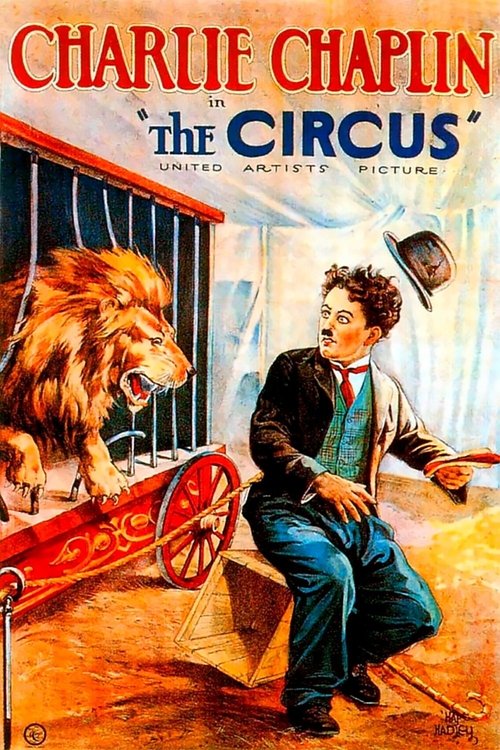
The Circus (1928)
Directed by Charlie Chaplin
No — The Circus is not woke, scoring 0 out of 100 on our wokeness meter.
The Circus arrives from 1928, a silent romantic comedy written, produced, and directed by Charlie Chaplin, and it presents our classification apparatus with a vintage of unusual difficulty.
Consciousness Markers
The cast is entirely white and the film features no meaningful racial or ethnic diversity.
There are no LGBTQ+ characters, themes, or subtext in the film.
Merna is a sympathetic figure mistreated by her stepfather, but the film resolves her story through marriage to a male rescuer rather than any feminist critique.
The film does not engage with race, racism, or racial identity in any form.
There is no environmental or climate-related content in the film.
The circus proprietor exploits the Tramp, but this is played for comedy and pathos rather than as a modern anti-capitalist critique.
The film contains no body-positivity themes or messaging.
There is no exploration or representation of neurodivergence.
The film is not a historical work and does not revise or reinterpret historical events.
The Circus is a silent romantic comedy with no preachy or didactic modern social messaging.
Why it received this score
The Circus arrives from 1928, a silent romantic comedy written, produced, and directed by Charlie Chaplin, and it presents our classification apparatus with a vintage of unusual difficulty. There is nothing here to measure against the contemporary cultural ledger. The film predates the ledger entirely. We approach it as a sommelier approaches a bottle from a cellar that has outlived the vineyard, with respect and a certain professional futility.
The plot concerns the Little Tramp, mistaken for a pickpocket, who stumbles into a circus ring and becomes the accidental star of a struggling show. The proprietor, a ringmaster with a cruel streak, hires him as an underpaid property man and stations him where the audience can see him improvise. The exploitation is real, and it is played for laughs. Meanwhile, the ringmaster's stepdaughter Merna suffers his blows, and the film's remedy for her is not an awakening but a marriage to Rex, the new tightrope walker. The Tramp, heartbroken, brings the couple together and walks off alone. The arrangement is presented as generous. It reads as tidy.
We searched for the familiar markers and found none. The cast is uniformly white. No character's identity is examined or announced. The circus is a workplace, and its owner is a brute, but the film treats this as comedy and pathos, not as an argument about capital. There is no environmental content, no body-positivity messaging, no neurodivergence, no reinterpretation of history, and no sermonizing of any kind. The film wants to make an audience laugh and then feel a small pang. On the scale we are obliged to apply, it registers a clean zero. That is not a verdict on its quality. It is a statement about the century that separates us from it.
Analysis generated by our Consciousness Algorithm


Synopsis
Charlie, a wandering tramp, becomes a circus handyman - soon the star of the show - and falls in love with the circus owner's stepdaughter.
Questions about The Circus
Is The Circus woke?
No — The Circus is not woke, scoring 0 out of 100 on our wokeness meter. That earns it a verdict of Ultra Based.
Does The Circus have any woke elements?
No. All 10 markers score zero.
How does The Circus compare to other 1928 movies?
It ranks #3 of the 4 films from 1928 we've scored; their average is 2. The wokest is The Passion of Joan of Arc (4).
How is the Woke Score calculated?
An AI-assisted process researches the film and its reception, scores it 0–100 on ten markers, then combines those into one 0–100 Woke Score. It measures a specific set of 2020s cultural themes, not film quality.