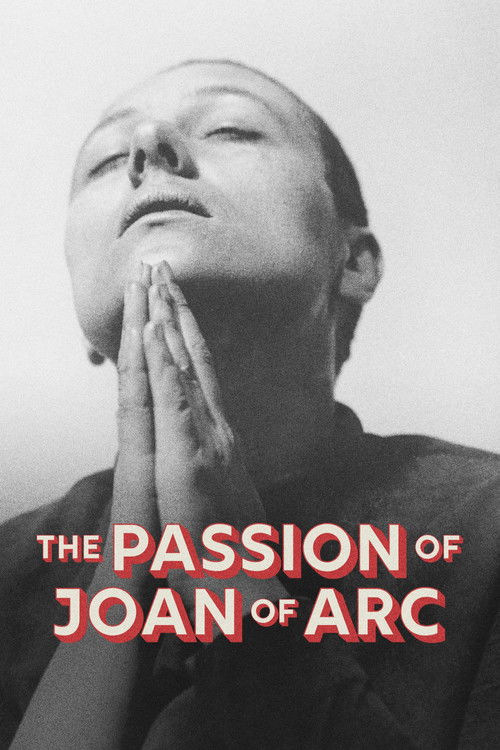
The Passion of Joan of Arc (1928)
Directed by Carl Theodor Dreyer
No · Ultra Based
How we score movies →Consciousness Markers
Features a female protagonist with agency and moral conviction who defies authority. However, this reflects sympathetic historical portrayal rather than modern feminist messaging or gender critique.
Some preachy quality in portraying institutional injustice and the conflict between individual conscience and authority, but restrained and artistically integrated rather than preachy.
Period-appropriate European cast portraying 15th-century French historical figures. No contemporary progressive casting sensibilities present.
No LGBTQ+ themes, content, or representation. The film is a religious historical drama.
No racial themes or consciousness. The film focuses on religious persecution and institutional authority in 15th-century Europe.
No environmental or climate themes present in this historical religious drama.
While depicting institutional corruption and abuse by church officials, the film does not frame this through anti-capitalist or class-consciousness rhetoric.
No body positivity messaging or body-related social commentary present.
No representation, discussion, or acknowledgment of neurodivergence.
The film adapts the historical trial records faithfully without contemporary revisionist reinterpretation.


Synopsis
A classic of the silent age, this film tells the story of the doomed but ultimately canonized 15th-century teenage warrior. On trial for claiming she'd spoken to God, Jeanne d'Arc is subjected to inhumane treatment and scare tactics at the hands of church court officials. Initially bullied into changing her story, Jeanne eventually opts for what she sees as the truth. Her punishment, a famously brutal execution, earns her perpetual martyrdom.
Why it received this score
Carl Theodor Dreyer's 1928 masterpiece exists in a cultural dimension so remote from contemporary progressive sensibilities that scoring it feels somewhat like examining a medieval tapestry for references to post-structuralism. The Passion of Joan of Arc is a solemn, almost liturgical work of cinema that happens to depict a woman who refuses institutional coercion, though any contemporary resonance here would be purely accidental. Maria Falconetti's performance captures a kind of spiritual anguish that transcends the specific political moment of its making, and the film's formal innovations in close-up cinematography remain genuinely unsettling.
The subject matter involves institutional abuse, religious persecution, and the destruction of a courageous individual by those in power. These are serious moral concerns, certainly, but they are not rendered through the particular cultural grammar of modern social consciousness. The film does not interrogate gender dynamics, nor does it invite us to read Joan's trial as a parable about systems of oppression in need of contemporary correction. It is instead a work of artistic and spiritual inquiry into faith, conscience, and human suffering. The absence of any contemporary cultural messaging is not a deficiency but rather a reflection of the work's historical distance from our current moment.
One observes that the film's restraint and artistic seriousness stand as a quiet rebuke to the preachy impulse. Dreyer trusts the material to speak for itself without annotation or guidance toward particular interpretive conclusions. The result is a film that has retained its power across nearly a century precisely because it does not date itself to any particular ideological moment, even as each generation projects its own concerns onto its austere frames.
Analysis generated by our Consciousness Algorithm
Critic Reviews
“A stark and intense film, Jeanne d'Arc is renowned for its sparse shooting style - which focuses in on Falconetti's face with such relentless fascination that everything else (sets, props, secondary characters) disappear from view.”
“To modern audiences, raised on films where emotion is conveyed by dialogue and action more than by faces, a film like The Passion of Joan of Arc is an unsettling experience--so intimate we fear we will discover more secrets than we desire.”
“The last silent film by Danish master Carl Theodor Dreyer, it largely eschewed traditional master shots for a dazzling range of expressive, character-probing close-ups: no historical biopic has ever felt quite so unnervingly intimate.”
“Here is a deadly tiresome picture that merely makes an attempt to narrate without sound or dialog an allegedly written recorded trial in the 15th or 16th century of Joan of Arc for witchery, leading to her condemnation and burning at the stake. [10 Apr 1929, p.25]”