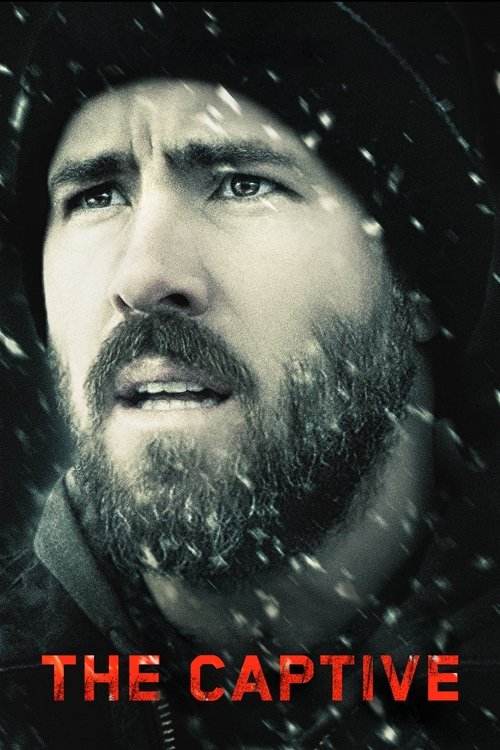
The Captive (2014)
Directed by Atom Egoyan
No — The Captive is not woke, scoring 0 out of 100 on our wokeness meter.
Atom Egoyan's The Captive arrives from 2014, a Canadian thriller set in a permanent Niagara winter where a contractor named Matthew leaves his nine-year-old daughter in a truck for the length of a pie purchase and spends the following eight years paying for it.
Consciousness Markers
No diversity-conscious casting; Rosario Dawson's presence as a detective is incidental and unremarked.
No LGBTQ+ characters or themes.
Female characters exist, but the film has no feminist agenda or gender-justice messaging.
Race is not addressed; the story is a child-abduction thriller.
No environmental or climate themes.
No critique of capitalism or wealth inequality.
No body-positivity themes.
No neurodivergence themes.
No historical revisionism.
No preachy social-justice messaging; it is a dark crime thriller.
Why it received this score
Atom Egoyan's The Captive arrives from 2014, a Canadian thriller set in a permanent Niagara winter where a contractor named Matthew leaves his nine-year-old daughter in a truck for the length of a pie purchase and spends the following eight years paying for it. The film is cold, deliberate, and structured nonlinearly enough that context alone separates the present from the flashback. Ryan Reynolds suffers handsomely. Rosario Dawson plays a child-exploitation detective with professional competence and no comment made upon her whatsoever. The camera watches everyone. Hidden cameras watch everyone twice.
The film's subject is surveillance, grief, and the way online predation hollows out a family, and it approaches these matters with the grim solemnity of a director who has read the Cornwall inquiry transcripts and wishes he had not. There is no social program on offer. The abductor is a solitary monster with a Mozart fixation, not a system. The detectives are flawed individuals, not institutions. Nobody delivers a speech about how things ought to be, and nobody is asked to check a box before the credits roll. The suffering is domestic, specific, and entirely uninterested in being instructive. Egoyan has said his characters make wrong choices, which is the closest the picture comes to a thesis, and it is a thesis about human weakness, not about society's failures.
Which leaves us with a curious artifact: a film about child sexual exploitation that generates no contemporary cultural friction at all. It was booed at Cannes, dismissed by critics as ludicrous, then rediscovered on Netflix a decade later by viewers chasing a different story entirely. The picture offers winter, guilt, and a kidnapped girl who skates. Nothing else. Our classification is therefore a clean sweep of zeroes, recorded without pleasure and without surprise. Some vintages are simply not built for the cellar.
Analysis generated by our Consciousness Algorithm


Synopsis
Eight years after their daughter Cassandra's abduction tore them apart, an estranged couple discover disturbing clues that indicate that she is still alive.
Questions about The Captive
Is The Captive woke?
No — The Captive is not woke, scoring 0 out of 100 on our wokeness meter. That earns it a verdict of Ultra Based.
Does The Captive have any woke elements?
No. All 10 markers score zero.
How does The Captive compare to other 2014 movies?
It ranks #271 of the 303 films from 2014 we've scored; their average is 13. The wokest is Selma (68).
How is the Woke Score calculated?
An AI-assisted process researches the film and its reception, scores it 0–100 on ten markers, then combines those into one 0–100 Woke Score. It measures a specific set of 2020s cultural themes, not film quality.