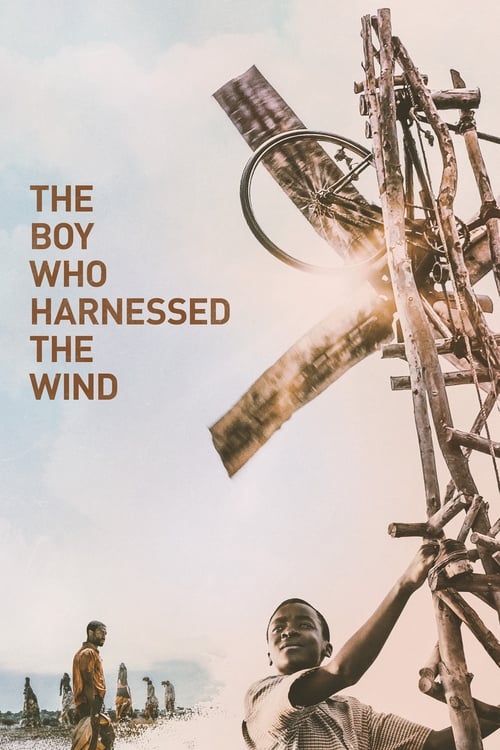
The Boy Who Harnessed the Wind (2019)
Directed by Chiwetel Ejiofor
No — The Boy Who Harnessed the Wind is not woke, scoring 0 out of 100 on our wokeness meter.
Chiwetel Ejiofor directs and stars in this 2019 adaptation of William Kamkwamba's memoir, a film about a Malawian boy who builds a windmill out of junkyard scrap and a dismantled bicycle.
Consciousness Markers
The cast is authentically Malawian, reflecting the film's setting rather than a deliberate diversity casting initiative; no modern representation agenda.
No LGBTQ+ characters or themes are present.
Female characters exist but the narrative does not advance a feminist agenda.
The film depicts African poverty and ingenuity but does not engage modern racial consciousness or social justice discourse.
Drought and a windmill for water pumping appear, but climate change is not framed as a crusade or explicit environmental message.
No critique of capitalism or wealth inequality is present.
No body positivity themes are present.
No neurodivergence themes are present.
Based on a true story but does not revise history for ideological purposes.
Inspirational but not preachy or lecture-driven on social issues.
Why it received this score
Chiwetel Ejiofor directs and stars in this 2019 adaptation of William Kamkwamba's memoir, a film about a Malawian boy who builds a windmill out of junkyard scrap and a dismantled bicycle. It is earnest, well-acted, and entirely sincere. It is also, from a classification standpoint, a barren field. The camera lingers on hunger and dust and a family tearing itself apart over a single sack of grain. Nothing in the frame is arranged to instruct us on how to live.
The cast is Malawian because the story is Malawian, not because a casting director was working through a checklist. Women in the film carry water, bury dogs, and urge husbands toward reason, which is what women in these circumstances would do. Race enters only as geography. The drought is weather, not a sermon on carbon emissions. There is no villainous corporation, no lecture on equity, no moment where a character turns to the camera to explain the correct position on anything. The film's politics are the politics of a village trying to eat.
We are left, then, with a film that scores nothing on any ledger we maintain. It is a true story told without revision, an inspirational arc delivered without a single note of preaching. There is a certain melancholy in this. After years of cataloguing, we find a work of genuine moral seriousness that declines to be sorted into any of our bins. Ejiofor's restraint is admirable and, for our purposes, useless. The windmill turns. The crops grow. The spreadsheet stays empty.
Analysis generated by our Consciousness Algorithm


Synopsis
Against all the odds, a thirteen year old boy in Malawi invents an unconventional way to save his family and village from famine.
Questions about The Boy Who Harnessed the Wind
Is The Boy Who Harnessed the Wind woke?
No — The Boy Who Harnessed the Wind is not woke, scoring 0 out of 100 on our wokeness meter. That earns it a verdict of Ultra Based.
Does The Boy Who Harnessed the Wind have any woke elements?
No. All 10 markers score zero.
How does The Boy Who Harnessed the Wind compare to other 2019 movies?
It ranks #267 of the 284 films from 2019 we've scored; their average is 22. The wokest is Black Christmas (79).
How is the Woke Score calculated?
An AI-assisted process researches the film and its reception, scores it 0–100 on ten markers, then combines those into one 0–100 Woke Score. It measures a specific set of 2020s cultural themes, not film quality.