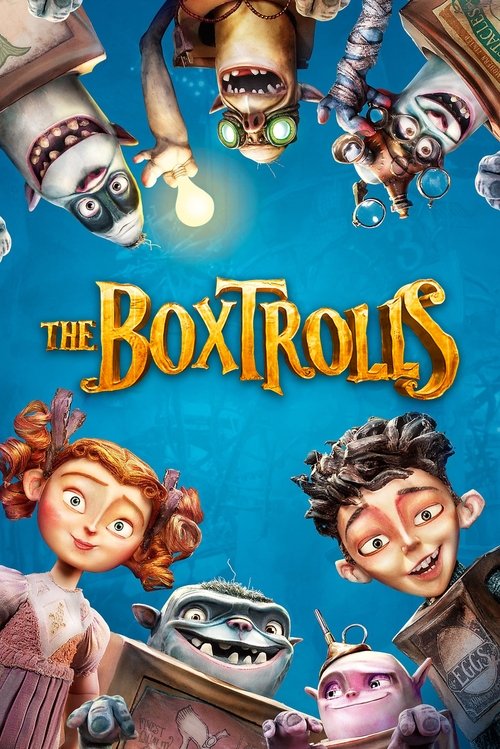
The Boxtrolls (2014)
Directed by Graham Annable
No — The Boxtrolls is not woke, scoring 15 out of 100 on our wokeness meter.
The Boxtrolls arrives from Laika in 2014, a stop-motion steampunk fable about Eggs, a boy raised by subterranean creatures who wear cardboard boxes, and the hilltop city of Cheesebridge that fears them.
Consciousness Markers
The film skewers the cheese-obsessed aristocratic White Hats and Snatcher's craving to join their elite ranks, offering mild class-warfare satire, though it targets snobbery more than capitalism itself.
The Boxtrolls are a scapegoated, feared underclass targeted for extermination, which gestures at mob prejudice and tolerance, but the allegory is species-based rather than racial and never explicitly framed as such.
The film carries a gentle moral about tolerance and not judging by appearance, delivered through story rather than sermon, with only light political skewering.
The voice cast is largely white British and American talent, with a few actors of color (Kingsley, Morgan, Ayoade) voicing characters not coded as minorities. No deliberate representation-driven casting agenda.
Winnie is a headstrong, adventure-seeking girl who aids the protagonist, but this is standard plucky-kid characterization rather than a feminist thesis.
No LGBTQ+ themes or characters. Snatcher's Madame Frou-Frou disguise is a comedic villain ruse, not queer representation.
No environmental or climate themes whatsoever.
Body size is used for comedic effect (the corpulent Mr. Trout, the diminutive Mr. Gristle, Snatcher's grotesque swelling), the opposite of a body-positivity message.
Herbert Trubshaw's madness is a plot device from trauma, not a depiction of neurodivergence as identity or advocacy.
Set in the wholly fictional country of Norvenia in 1897; no reworking of real historical events.
Why it received this score
The Boxtrolls arrives from Laika in 2014, a stop-motion steampunk fable about Eggs, a boy raised by subterranean creatures who wear cardboard boxes, and the hilltop city of Cheesebridge that fears them. Archibald Snatcher, the exterminator, wants a white hat and will wipe out the Boxtrolls to get one. The film carries a gentle moral about tolerance, and its progressive content is modest. The Boxtrolls function as a scapegoated underclass, targeted for extermination by a frightened mob, but the allegory is species-based. It gestures at prejudice without ever naming race. That distance keeps the story safely in fairy-tale territory.
The voice cast is largely white British and American talent. A few actors of color appear, yet their characters are not coded as minorities, and no representation-driven agenda is visible. Winnie is a headstrong girl who aids Eggs, which is standard plucky-kid characterization, not a feminist thesis. There is no LGBTQ content. Snatcher's Madame Frou-Frou disguise is a villain's ruse, not queer representation. Climate concerns are absent. Body size is used for comedy, from the corpulent Mr. Trout to the diminutive Mr. Gristle to Snatcher's grotesque swelling. Herbert Trubshaw's madness is trauma, not neurodivergence as identity. The setting is fictional Norvenia in 1897, so no real history is revised.
The class satire is present but mild. The cheese-obsessed White Hats are snobs, and Snatcher's craving to join them drives the plot. The target is snobbery, not capitalism. The moral about not judging by appearance arrives through story, with little sermonizing. Laika's craftsmanship is impressive, and the film's social consciousness is soft-spoken. It asks us to tolerate the odd, and it does so with wit. The result is charming enough, if not a landmark of progressive cinema. It is a modest vintage, best paired with a mild cheese and low expectations.
Analysis generated by our Consciousness Algorithm


Synopsis
An orphaned boy raised by underground creatures called Boxtrolls comes up from the sewers and out of his box to save his family and the town from the evil exterminator, Archibald Snatcher.
Questions about The Boxtrolls
Is The Boxtrolls woke?
No — The Boxtrolls is not woke, scoring 15 out of 100 on our wokeness meter. That earns it a verdict of Ultra Based.
Does The Boxtrolls have any woke elements?
1 of the 10 markers register at 30 or above, led by Eat the Rich (30). On Eat the Rich: The film skewers the cheese-obsessed aristocratic White Hats and Snatcher's craving to join their elite ranks, offering mild class-warfare satire, though it targets snobbery more than capitalism itself.
How does The Boxtrolls compare to other 2014 movies?
It ranks #88 of the 303 films from 2014 we've scored; their average is 13. The wokest is Selma (68).
How is the Woke Score calculated?
An AI-assisted process researches the film and its reception, scores it 0–100 on ten markers, then combines those into one 0–100 Woke Score. It measures a specific set of 2020s cultural themes, not film quality.