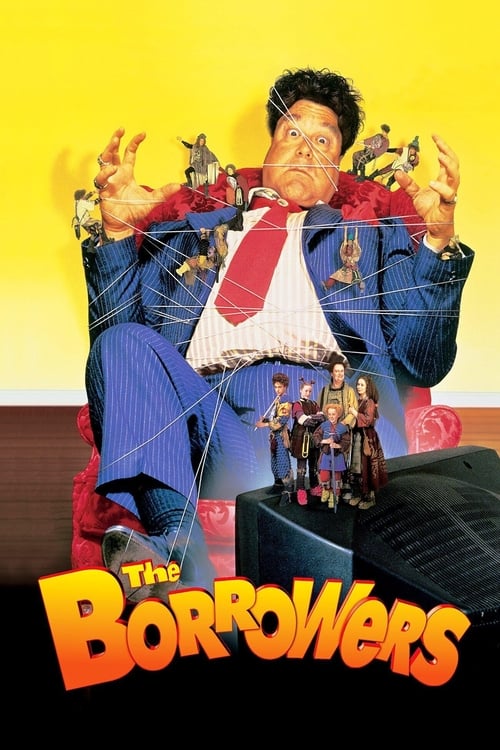
The Borrowers (1997)
Directed by Peter Hewitt
No — The Borrowers is not woke, scoring 8 out of 100 on our wokeness meter.
The Borrowers arrives from 1997, a period when a family four inches tall could carry an entire picture without anyone pausing to ask what they stood for.
Consciousness Markers
The villain is a crooked lawyer scheming to demolish a family home for condominium development, a mild 'greedy developer' trope, but it is a stock children's-story villain rather than a systemic critique of capital.
Arrietty is a plucky, adventurous daughter who takes initiative, but this is standard children's-story pluck rather than any articulated feminist agenda.
The cast is uniformly white British, with no diversity casting or commentary on representation whatsoever.
No LGBTQ+ characters, themes, or subtext appear anywhere in this children's adventure.
The film engages no racial themes; the human/borrower divide is a fantasy species distinction, not an allegory for race.
No environmental or climate themes are present; the demolition plot is about property, not ecology.
No body-positivity themes; the Borrowers' small stature is a fantasy premise, not a body-image message.
No neurodivergent characters or themes are present.
The film is a contemporary-set fantasy with no historical subject matter to revise.
The film is a brisk children's caper with no preachy messaging or moralizing monologues.
Why it received this score
The Borrowers arrives from 1997, a period when a family four inches tall could carry an entire picture without anyone pausing to ask what they stood for. Peter Hewitt directs with a brisk, unfussy hand. The result is a children's adventure of the old school: household traps, a chase through a dairy, a flatulent bloodhound, and John Goodman perspiring through a villain's wardrobe. Our classificatory duties here are mercifully light.
The lone flicker of ideological activity belongs to the antagonist. Ocious P. Potter is a crooked lawyer scheming to demolish a family home so he can raise condominiums on the lot. This is the greedy developer of nursery rhyme, a stock figure built to be foiled. The film distrusts one dishonest man; it holds no grudge against property itself. Arrietty, the daughter, is plucky and takes initiative, sneaking out alone and later commandeering an aerosol-propelled roller skate. That is the pluck of countless children's heroines before her. The screenplay never stops to congratulate itself, and no speech is delivered on the subject.
The cast is uniformly white and British, a fact the film regards as unremarkable, which it is. No romantic configuration strays from the conventional. The human and borrower divide is a matter of species and scale, not an allegory for anything civic. There is no environmental grievance, the demolition being a question of property law. Small stature is a fantasy premise, not a statement about bodies. Nobody is neurodivergent. There is no history to revise, the setting being present-day and invented. As for the moralizing, it is simply absent. The Borrowers wants only to entertain, and it succeeds with a cheerfulness that leaves the analyst little to do but note the silence of the pulpit and file the picture accordingly.
Analysis generated by our Consciousness Algorithm


Synopsis
The four-inch-tall Clock family secretly share a house with the normal-sized Lender family, "borrowing" such items as thread, safety pins, batteries and scraps of food. However, their peaceful co-existence is disturbed when evil lawyer Ocious P. Potter steals the will granting title to the house, which he plans to demolish in order to build apartments. The Lenders are forced to move, and the Clocks face the risk of being exposed to the normal-sized world.
Questions about The Borrowers
Is The Borrowers woke?
No — The Borrowers is not woke, scoring 8 out of 100 on our wokeness meter. That earns it a verdict of Ultra Based.
Does The Borrowers have any woke elements?
Very few. None of the 10 markers reaches 30, the level where a marker counts as present; the highest is Eat the Rich at 20.
How does The Borrowers compare to other 1997 movies?
It ranks #53 of the 109 films from 1997 we've scored; their average is 12. The wokest is Happy Together (65).
How is the Woke Score calculated?
An AI-assisted process researches the film and its reception, scores it 0–100 on ten markers, then combines those into one 0–100 Woke Score. It measures a specific set of 2020s cultural themes, not film quality.