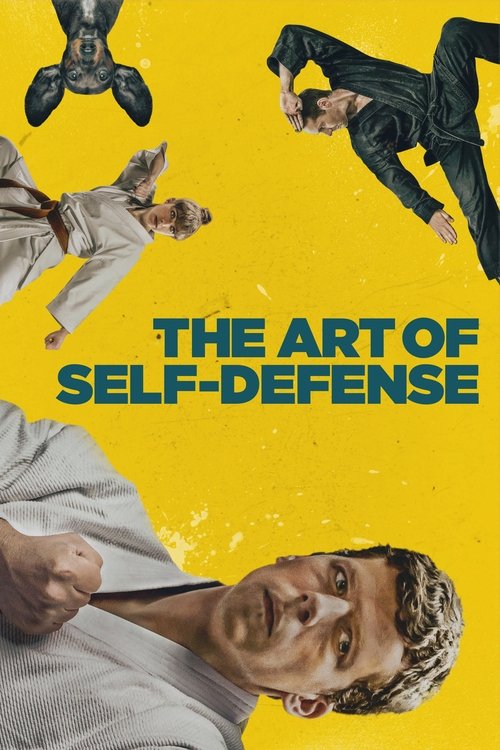
The Art of Self-Defense (2019)
Directed by Riley Stearns
No — The Art of Self-Defense is not especially woke, scoring 23 out of 100 on our wokeness meter.
The film opens with Casey, a timid accountant, being beaten by a motorcycle gang, and ends with him running a children's karate class.
Consciousness Markers
The film is a sustained satire of sexism and misogyny: Anna, the sole female student, is denied promotion because she is female, disqualified for aggression the Sensei rewards in men, and ultimately seizes leadership to install more compassionate teachings.
The film critiques hypermasculinity and sexism, but delivers its message through deadpan dark comedy and shock rather than explicit moralizing. The closing note of 'compassionate, defensive teachings' is the closest it comes to a sermon.
The cast is overwhelmingly white (Eisenberg, Nivola, Poots), with Steve Terada as the only notable non-white performer in a supporting role. No deliberate diversity casting push.
The dojo functions as an extortion racket and cult, but the film's target is toxic masculinity rather than capitalism or class. Only faint incidental critique.
No LGBTQ+ characters or themes appear anywhere in the film.
The film engages with gender and masculinity but has no racial consciousness themes or commentary.
No environmental or climate themes present.
No body positivity themes; the film's arc is about a weak man becoming 'masculine' through violence, not about body acceptance.
Casey is awkward and timid, but the film never frames this as neurodivergence or diagnoses him in any way.
No historical revisionism; the film is a contemporary fictional satire.
Why it received this score
The film opens with Casey, a timid accountant, being beaten by a motorcycle gang, and ends with him running a children's karate class. In between, Riley Stearns constructs a deadpan study of a dojo that operates as a cult, an extortion racket, and a finishing school for aggrieved men. The comedy is bone-dry. The violence is sudden and real. Jesse Eisenberg plays weakness with the same precision he brings to everything, and Alessandro Nivola's Sensei delivers his sermons on masculine virtue with the calm of a man who has already buried several problems in the crematorium behind his office.
The film's social consciousness is aimed squarely at gender. Anna, the only woman in the adult class, is passed over for black belt because she is female, then disqualified for aggression that Sensei rewards in his male students. Her eventual ascension, and her announcement that the dojo will teach compassion and defense, is the closest thing to a thesis statement the film permits itself. It arrives through shock and deadpan, not sermonizing. The satire has teeth and no interest in explaining them.
Elsewhere the film is content to be a nasty little genre exercise. The cast is white to an almost studied degree, the story engages gender and nothing else in the identity ledger, and the dojo's extortion scheme is a backdrop for the masculinity critique, not an argument about class. Casey's awkwardness is never named as anything clinical. What remains is a lean, mean, well-made film about men who mistake cruelty for strength, and one woman who takes the whole enterprise away from them. It is funny. It is not kind.
Analysis generated by our Consciousness Algorithm


Synopsis
Casey is attacked at random on the street and enlists in a local dojo led by a charismatic and mysterious Sensei in an effort to learn how to defend himself. What he uncovers is a sinister world of fraternity, violence and hypermasculinity and a woman fighting for her place in it.
Questions about The Art of Self-Defense
Is The Art of Self-Defense woke?
No — The Art of Self-Defense is not especially woke, scoring 23 out of 100 on our wokeness meter. That earns it a verdict of Based.
Does The Art of Self-Defense have any woke elements?
2 of the 10 markers register at 30 or above, led by Feminist Agenda (60) and Lecture Energy (30). On Feminist Agenda: The film is a sustained satire of sexism and misogyny: Anna, the sole female student, is denied promotion because she is female, disqualified for aggression the Sensei rewards in men, and ultimately seizes leadership to install more compassionate teachings.
How does The Art of Self-Defense compare to other 2019 movies?
It ranks #95 of the 284 films from 2019 we've scored; their average is 22. The wokest is Black Christmas (79).
How is the Woke Score calculated?
An AI-assisted process researches the film and its reception, scores it 0–100 on ten markers, then combines those into one 0–100 Woke Score. It measures a specific set of 2020s cultural themes, not film quality.