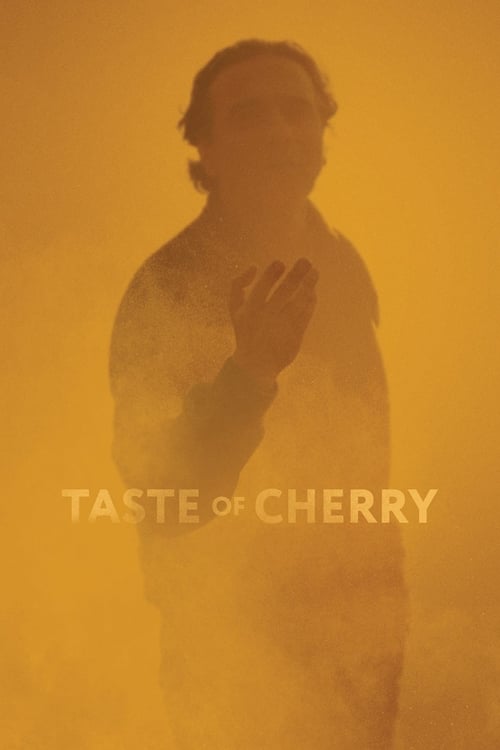
Taste of Cherry (1997)
Directed by Abbas Kiarostami
No — Taste of Cherry is not woke, scoring 0 out of 100 on our wokeness meter.
Taste of Cherry arrives from 1997, a Palme d'Or shared with The Eel, and presents itself as a minimalist road movie in which a Tehranian man named Badii drives the outskirts asking strangers to bury him after he swallows sleeping pills.
Consciousness Markers
The cast reflects the film's Iranian setting, with Kurdish, Afghan, and Azeri characters appearing naturally, but this is not modern representation-casting advocacy.
There are no LGBTQ+ themes; a critic's passing speculation about a character being misinterpreted as homosexual is not a textual element of the film.
The film has no feminist agenda; its concerns are existential, religious, and philosophical.
Race and racial justice are not thematic concerns of the film.
There is no climate crusade or environmental messaging in the film.
Money motivates a character's willingness to help, but the film does not advance an eat-the-rich or anti-capitalist thesis.
Body positivity is not a theme or concern of the film.
Suicidal depression is central, but it is treated as existential despair rather than as modern neurodivergence advocacy.
The film is not engaged in historical revisionism.
The film is meditative and conversational rather than preachy; its religious and philosophical dialogue does not function as a modern social lecture.
Why it received this score
Taste of Cherry arrives from 1997, a Palme d'Or shared with The Eel, and presents itself as a minimalist road movie in which a Tehranian man named Badii drives the outskirts asking strangers to bury him after he swallows sleeping pills. Kiarostami shoots in long takes, keeps his camera in the passenger seat, and refuses to explain why his protagonist wants to die. We are given a Kurdish soldier, an Afghan seminarian, an Azeri taxidermist, and a great deal of ambient noise. None of this is arranged as an argument about anything. The film's concerns are God, despair, mulberries, and the moon.
Bagheri, the taxidermist, agrees to the job because his child is sick and he needs the money, then spends the drive arguing for life on the grounds that he once tried to hang himself and was saved by the taste of fruit. It is a parable of the senses, delivered without a thesis. The seminarian objects on religious grounds. The soldier simply runs. Suicide here is treated as an existential problem, not a clinical diagnosis awaiting a public service announcement. There is no equity initiative in the car, no carbon footprint to offset, no structural critique of the taxidermy trade. Kiarostami is not interested in instructing us, which is precisely what makes the film so difficult to slot into a spreadsheet.
The final sequence abandons the grave for camcorder footage of the crew, Louis Armstrong on the trumpet, and a hillside of green. It is a lovely, disorienting gesture, and it clarifies nothing. Roger Ebert called the picture excruciatingly boring and hated it for the rest of his life. He was wrong, but he was wrong in an instructive way. This is a film about whether life is worth living, made by a director with no interest in telling us how to live it.
Analysis generated by our Consciousness Algorithm


Synopsis
A middle-aged Tehranian man, Mr. Badii is intent on killing himself and seeks someone to bury him after his demise. Driving around the city, the seemingly well-to-do Badii meets with numerous people, including a Muslim student, asking them to take on the job, but initially he has little luck. Eventually, Badii finds a man who is up for the task because he needs the money, but his new associate soon tries to talk him out of committing suicide.
Questions about Taste of Cherry
Is Taste of Cherry woke?
No — Taste of Cherry is not woke, scoring 0 out of 100 on our wokeness meter. That earns it a verdict of Ultra Based.
Does Taste of Cherry have any woke elements?
No. All 10 markers score zero.
How does Taste of Cherry compare to other 1997 movies?
It ranks #95 of the 109 films from 1997 we've scored; their average is 12. The wokest is Happy Together (65).
How is the Woke Score calculated?
An AI-assisted process researches the film and its reception, scores it 0–100 on ten markers, then combines those into one 0–100 Woke Score. It measures a specific set of 2020s cultural themes, not film quality.