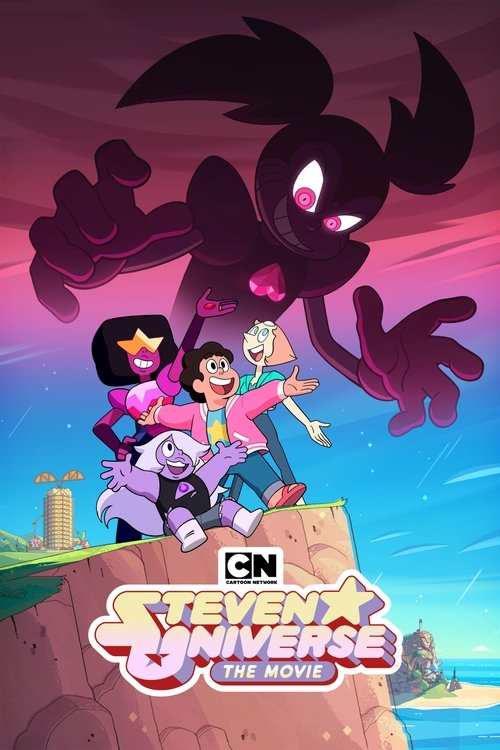
Steven Universe: The Movie (2019)
Directed by Rebecca Sugar
Yes — Steven Universe: The Movie is woke, scoring 60 out of 100 on our wokeness meter.
Steven Universe: The Movie arrives as a television musical sequel, two years after the series found its peace, and immediately sets about dismantling that peace with a scythe and a memory-erasing injector.
Consciousness Markers
Garnet is the fusion of Ruby and Sapphire, explicitly framed as spouses and a same-sex-coded relationship, and the franchise is a landmark of queer representation in animation under non-binary creator Rebecca Sugar.
The voice cast is notably diverse, headlined by Black British singer Estelle as Garnet and featuring Uzo Aduba, Michaela Dietz, and a multiracial ensemble, continuing the franchise's deliberate commitment to inclusive casting.
The Crystal Gems are predominantly female-presenting warrior figures who lead the narrative, though the film's emotional core centers on Steven's growth rather than an explicit feminist thesis.
Themes of change, growth, and not clinging to a static 'happily ever after' are delivered through song and emotional beats, occasionally edging toward moral instruction but largely staying in character-driven storytelling.
Characters such as Connie Maheswaran reflect a diverse world, but the film does not engage racial themes or commentary as a narrative concern.
The Gem character designs embrace a wide range of body shapes and sizes, a franchise hallmark, though the film does not foreground a body-positivity message.
Spinel's injector threatens to poison and kill all organic life on Earth, giving the plot a mild environmental stakes framing, but it functions as a generic doomsday device rather than a climate allegory.
No economic or class-based critique appears; the conflict is interpersonal and familial, not structural.
No character is framed through a neurodivergence lens; Spinel's erratic behavior is narratively explained by abandonment trauma, not neurotype.
The film is entirely fictional science-fantasy with no historical subject matter to revise.
Why it received this score
Steven Universe: The Movie arrives as a television musical sequel, two years after the series found its peace, and immediately sets about dismantling that peace with a scythe and a memory-erasing injector. The film is steeped in the franchise's established social consciousness. Its voice cast is a genuinely diverse assembly, with Estelle's Garnet anchoring the Crystal Gems and performers like Uzo Aduba and Michaela Dietz filling out a world that treats inclusion as a default rather than a novelty. The central relationship between Ruby and Sapphire, rendered as a devoted marriage and a literal fusion, remains one of animation's more matter-of-fact queer portraits. The Crystal Gems are female-presenting warriors who command the story, though the emotional arc belongs to Steven's adolescent reluctance to grow up.
Racial themes are present only through the diverse texture of Beach City and Connie's place in it, not as a subject the film interrogates. Environmental stakes arrive in the form of Spinel's injector, a device that will poison all organic life, but it functions as a doomsday clock instead of a climate parable. There is no economic critique to speak of. The villain's grievance is personal, familial, and six thousand years old. Body diversity among the Gem designs is a visual given, not a thesis. Spinel's erratic behavior is traced to abandonment and trauma, not to any neurodivergent framework. History is not revised because there is no history here, only fictional gem empires and their bad parenting.
The film's moral instruction is gentle and sung. It argues for change over a frozen happily ever after, and it does so through character beats and musical numbers that occasionally slide into sermon. Yet the sermon is warm, melodic, and aimed at children. The result is a polished, emotionally intelligent piece of franchise maintenance. It knows its congregation and preaches to them with a smile. Whether that constitutes cultural progress or simply very good brand management depends on the viewer's tolerance for choreographed sincerity.
Analysis generated by our Consciousness Algorithm


Synopsis
Two years after bringing peace to the galaxy, Steven Universe sees his past come back to haunt him in the form of a deranged Gem who wants to destroy the Earth.
Questions about Steven Universe: The Movie
Is Steven Universe: The Movie woke?
Yes — Steven Universe: The Movie is woke, scoring 60 out of 100 on our wokeness meter. That earns it a verdict of Woke.
What makes Steven Universe: The Movie woke?
4 of the 10 markers register at 30 or above, led by LGBTQ+ Themes (92), Representation Casting (72) and Feminist Agenda (55). On LGBTQ+ Themes: Garnet is the fusion of Ruby and Sapphire, explicitly framed as spouses and a same-sex-coded relationship, and the franchise is a landmark of queer representation in animation under non-binary creator Rebecca Sugar.
How does Steven Universe: The Movie compare to other 2019 movies?
It ranks #15 of the 284 films from 2019 we've scored; their average is 22. The wokest is Black Christmas (79).
How is the Woke Score calculated?
An AI-assisted process researches the film and its reception, scores it 0–100 on ten markers, then combines those into one 0–100 Woke Score. It measures a specific set of 2020s cultural themes, not film quality.