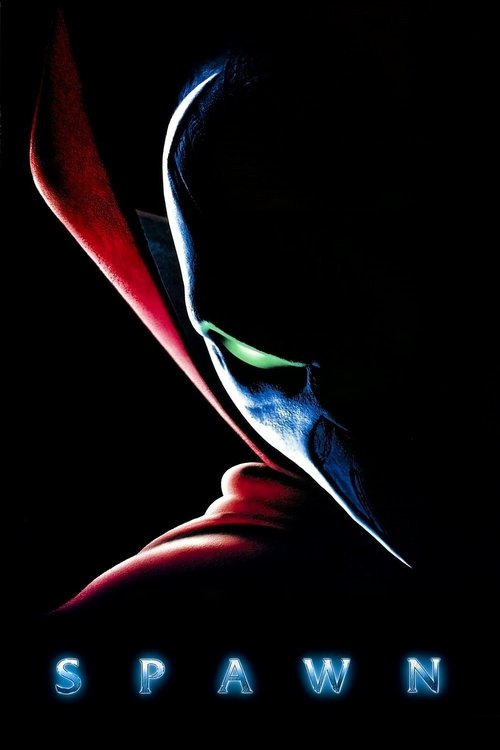
Spawn (1997)
Directed by Mark A.Z. Dippé
No — Spawn is not woke, scoring 15 out of 100 on our wokeness meter.
Spawn arrives in 1997 with a legitimate claim on the history books.
Consciousness Markers
Michael Jai White headlines as one of the first African-American actors to portray a major comic book superhero, a genuinely notable milestone; however, the studio deliberately recast the comics' Black best friend Terry Fitzgerald as white to avoid 'too many black leads,' capping the film's representational ambition.
The villain is a corrupt government operative turned arms dealer peddling biological weapons, giving the film a mild military-industrial-complex critique, though it is framed as personal betrayal rather than systemic indictment.
The film features a Black lead but engages in no racial commentary whatsoever; the only racial dimension is the behind-the-scenes whitewashing of Terry Fitzgerald, which the film itself never acknowledges.
Jessica Priest is a competent female assassin, but she is a disposable villain killed off, while Wanda functions purely as the damsel and object of the hero's longing.
The film is a style-driven effects spectacle with no preachy messaging; its moralizing is limited to a generic 'justice over vengeance' closing note.
No LGBTQ+ characters, themes, or subtext appear anywhere in the film.
No environmental or climate themes are present; the biochemical weapon plot is about apocalypse-by-villainy, not ecology.
No body-positivity themes; the film is built around a hyper-muscular, prosthetically sculpted superhero physique.
No neurodivergent characters or themes are present.
The film is a supernatural comic-book fantasy with no historical subject matter to revise.
Why it received this score
Spawn arrives in 1997 with a legitimate claim on the history books. Michael Jai White takes the title role, making him one of the first African American actors to carry a major comic book superhero on his shoulders, and that fact deserves its place in the record. The record also contains a footnote the film never mentions. Terry Fitzgerald, Al Simmons's best friend and in the comics a Black man, was recast as white, reportedly because the studio feared that too many Black leads would signal a film aimed only at Black audiences. A milestone, then, with a studio thumb pressed on the scale.
Elsewhere the ledger runs thin. Jessica Priest is a capable assassin who exists to be killed and forgotten, while Wanda spends the running time as the damsel and the object of a dead man's longing. No queer presence registers. No ecological anxiety intrudes, since the biochemical weapon is apocalypse by villainy, not by carbon. The villain, a corrupt operative turned arms dealer, invites a mild grumble about the military-industrial complex, though the film treats it as one bad man's betrayal instead of a system. The hero's physique is prosthetic and mountainous, which leaves no room for a body-positive reading. Neurodivergence goes unexamined. There is no history here to revise, only Hell.
The remainder is a visual effects reel with a cape and a grudge. Roger Ebert found it unforgettable as pure image, and he was not wrong about the imagery. The moral instruction, confined to a closing line about justice over vengeance, amounts to a shrug. We have classified it. We move on.
THEMATIC TAGS: superhero, book_adaptation (based on the Image Comics character; no Oscar wins, no sequel, no remake, not a true story, and it opened at number two behind Air Force One).
Analysis generated by our Consciousness Algorithm


Synopsis
After being murdered by corrupt colleagues in a covert government agency, Al Simmons makes a pact with the devil to be resurrected to see his beloved wife Wanda. In exchange for his return to Earth, Simmons agrees to lead Hell's Army in the destruction of mankind.
Questions about Spawn
Is Spawn woke?
No — Spawn is not woke, scoring 15 out of 100 on our wokeness meter. That earns it a verdict of Ultra Based.
Does Spawn have any woke elements?
1 of the 10 markers register at 30 or above, led by Representation Casting (60). On Representation Casting: Michael Jai White headlines as one of the first African-American actors to portray a major comic book superhero, a genuinely notable milestone; however, the studio deliberately recast the comics' Black best friend Terry Fitzgerald as white to avoid 'too many black leads,' capping the film's representational ambition.
How does Spawn compare to other 1997 movies?
It ranks #28 of the 109 films from 1997 we've scored; their average is 12. The wokest is Happy Together (65).
How is the Woke Score calculated?
An AI-assisted process researches the film and its reception, scores it 0–100 on ten markers, then combines those into one 0–100 Woke Score. It measures a specific set of 2020s cultural themes, not film quality.