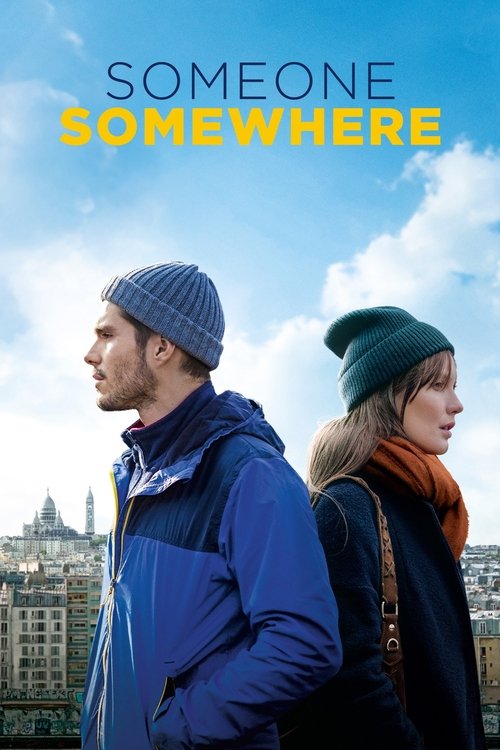
Someone, Somewhere (2019)
Directed by Cédric Klapisch
No — Someone, Somewhere is not woke, scoring 14 out of 100 on our wokeness meter.
Cédric Klapisch has spent a career arranging Parisians into configurations of mild longing, and Someone, Somewhere continues the project with two thirty-year-olds living on the same floor of adjacent houses, never meeting.
Consciousness Markers
The film centers on depression, loneliness, and psychotherapy, with both leads undergoing therapy to uncover the roots of their malaise — mental-health representation, though not framed through a neurodivergence-advocacy lens.
The cast includes actors of Armenian, Black, and North African descent (Simon Abkarian, Eye Haïdara, Zinedine Soualem) in supporting roles, but their presence is natural and unremarked upon, reflecting ordinary Parisian demographics rather than a casting statement.
Mélanie is a woman working in scientific research and the film treats her inner life with equal weight to Rémy's, but it offers no explicit feminist critique or agenda.
The film is a gentle, observational romantic drama that explores therapy and connection without preaching or delivering explicit social messaging.
Rémy's unskilled job and the anomie of metropolitan Paris life carry a faint undercurrent of alienation, but the film never frames this as a critique of capitalism or the wealthy.
No LGBTQ+ characters or themes appear anywhere in the film's narrative.
Race is never a subject of the film; the diverse supporting cast exists without any commentary on identity or systemic issues.
There is no environmental or climate-related content in the film.
Body image and body positivity are not themes the film engages with.
The film is a contemporary character drama with no historical subject matter to revise.
Why it received this score
Cédric Klapisch has spent a career arranging Parisians into configurations of mild longing, and Someone, Somewhere continues the project with two thirty-year-olds living on the same floor of adjacent houses, never meeting. Rémy works an unskilled job. Mélanie works in scientific research. Both are lonely, both scroll through apps, both eventually sit in therapists' offices and talk about it. The film observes these two lives with patience and a soft comic touch, and it never raises its voice.
The supporting cast includes actors of Armenian, Black, and North African descent, and the film treats their presence as ordinary Parisian fact, which it is. No identity is interrogated. No system is named. Mélanie's professional life is granted the same interior weight as Rémy's, a quiet parity that stops well short of argument. The script's real preoccupation is mental health: depression, isolation, the slow excavation of childhood wounds under professional supervision. This is earnest and sometimes affecting, though it arrives as character work, not advocacy.
The film's faintest political tremor is a vague metropolitan alienation, the sense that modern labor and modern cities leave people unmoored. It is atmosphere, not thesis. Klapisch has no sermon to deliver, which in this cultural moment reads as almost eccentric restraint. What we have, then, is a gentle romance about two people learning to speak to therapists before they learn to speak to each other. Charming, well-acted, and ideologically nearly silent. For the archive: a low-yield vintage, clean on the palate, with no lingering aftertaste of instruction.
Analysis generated by our Consciousness Algorithm


Synopsis
Rémy and Mélanie live next door to each other in Paris but have never met. The two thirty-year-old Parisians search for connections online, but never have much success. Falling deeper into loneliness and depression, both decide to start attending regular therapy. With the help of their therapists, they uncover the real roots of their issues, and find that the connection they were both searching for is much closer than they thought.
Questions about Someone, Somewhere
Is Someone, Somewhere woke?
No — Someone, Somewhere is not woke, scoring 14 out of 100 on our wokeness meter. That earns it a verdict of Ultra Based.
Does Someone, Somewhere have any woke elements?
1 of the 10 markers register at 30 or above, led by Neurodivergence (30). On Neurodivergence: The film centers on depression, loneliness, and psychotherapy, with both leads undergoing therapy to uncover the roots of their malaise — mental-health representation, though not framed through a neurodivergence-advocacy lens.
How does Someone, Somewhere compare to other 2019 movies?
It ranks #152 of the 284 films from 2019 we've scored; their average is 22. The wokest is Black Christmas (79).
How is the Woke Score calculated?
An AI-assisted process researches the film and its reception, scores it 0–100 on ten markers, then combines those into one 0–100 Woke Score. It measures a specific set of 2020s cultural themes, not film quality.