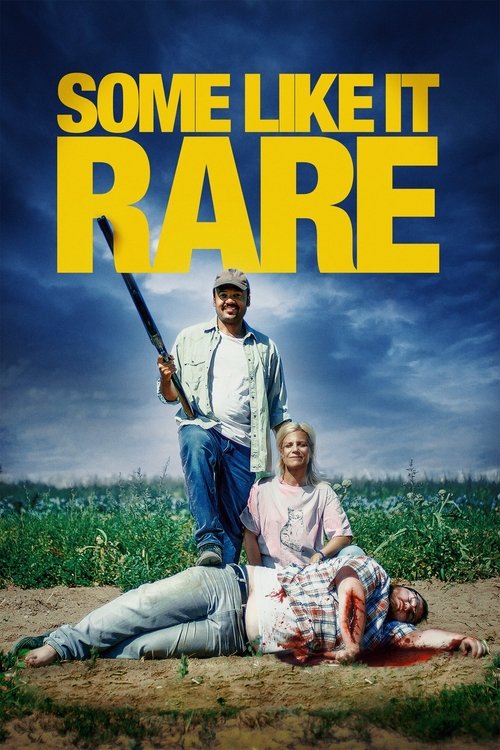
Some Like It Rare (2021)
Directed by Fabrice Eboué
No — Some Like It Rare is not woke, scoring 7 out of 100 on our wokeness meter.
Some Like It Rare arrives with a premise engineered to offend every sensibility the current decade holds dear, and then declines to do so in any of the expected ways.
Consciousness Markers
The cast is overwhelmingly white French, with Stéphane Soo Mongo appearing in a minor supporting role as a gendarme. No deliberate diverse casting agenda is evident.
Marina Foïs co-leads as Sophie, a co-owner of the butcher shop, but the film offers no feminist critique or agenda; she is a complicit partner in the killings.
The film is a dark satire that mocks vegan activists rather than lecturing the audience; its commentary is deliberately provocative and anti-preachy.
The premise involves a struggling small butcher shop on the brink of bankruptcy, but this is a comedic setup rather than an anti-capitalist critique of wealth or class.
No LGBTQ+ characters, themes, or subtext appear in the film.
The film engages no racial themes or commentary whatsoever.
While veganism features prominently, the film satirizes and mocks vegan activists rather than advancing any environmental or climate crusade.
No body positivity themes are present; the film's humor revolves around butchering and consuming human flesh.
No neurodivergent characters or themes are depicted.
The film is a contemporary fictional satire with no historical subject matter to revise.
Why it received this score
Some Like It Rare arrives with a premise engineered to offend every sensibility the current decade holds dear, and then declines to do so in any of the expected ways. A bankrupt butcher shop, a marriage in freefall, a vegan vandal dispatched by accident, and a profitable new line of charcuterie sourced from the departed. This is the comedy of bad taste, practiced by the French with a straight face and no interest in moral instruction. The film has no thesis to advance. It has a punchline to land.
The cast is white and French to its bones, with Stéphane Soo Mongo appearing briefly as a gendarme and vanishing again. Marina Foïs co-owns the shop and swings the cleaver alongside her husband, but the arrangement is comedic, not a statement. There is no feminist reading on offer here, and none of the characters would survive one. The vegan activists who wander into the frame exist to be hunted, which means the film's satirical blade points firmly at the earnest, the righteous, and the preachy. Any viewer hoping for a climate sermon or a lesson about the meat industry will leave hungry.
What the film offers instead is a brisk, gruesome farce about a small business finding its niche. The class politics are incidental, the social commentary is deliberately thin, and the whole thing is content to be a nasty little joke told well. It is not trying to improve anyone. In an era of cinema that frequently mistakes a lecture for a plot, that restraint is almost quaint. Three stars, and a clean plate.
Analysis generated by our Consciousness Algorithm


Synopsis
Sophie and Vincent’s small butcher shop is on the brink of bankruptcy and their marriage is falling apart. Their lives are turned upside down when Vincent accidentally kills a vegan activist who vandalized their shop. Overwhelmed and terrified of being accused of murder, their only solution is to get rid of the body by turning it into ham. To their surprise the ham is so popular that it may save their business… that is if they’re ready to keep “hunting"!
Questions about Some Like It Rare
Is Some Like It Rare woke?
No — Some Like It Rare is not woke, scoring 7 out of 100 on our wokeness meter. That earns it a verdict of Ultra Based.
Does Some Like It Rare have any woke elements?
Very few. None of the 10 markers reaches 30, the level where a marker counts as present; the highest is Feminist Agenda at 12.
How does Some Like It Rare compare to other 2021 movies?
It ranks #201 of the 242 films from 2021 we've scored; their average is 23. The wokest is The Forever Purge (83).
How is the Woke Score calculated?
An AI-assisted process researches the film and its reception, scores it 0–100 on ten markers, then combines those into one 0–100 Woke Score. It measures a specific set of 2020s cultural themes, not film quality.