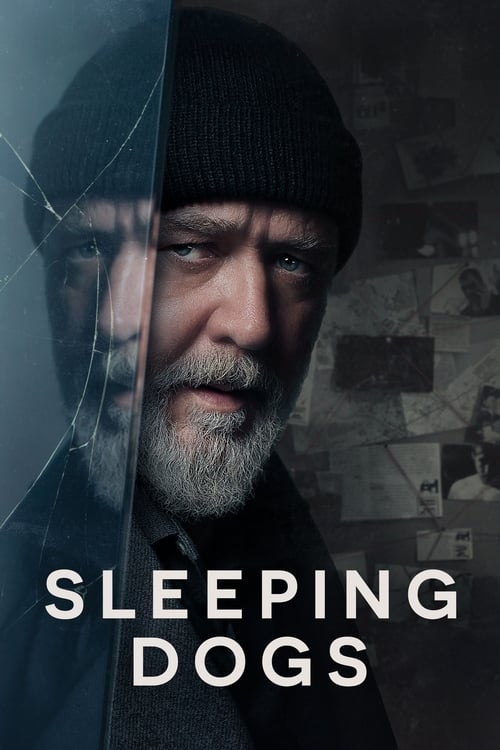
Sleeping Dogs (2024)
Directed by Adam Cooper
No — Sleeping Dogs is not woke, scoring 9 out of 100 on our wokeness meter.
Adam Cooper's Sleeping Dogs arrives with the grim determination of a film that knows exactly what it is and has no intention of apologizing for it.
Consciousness Markers
The cast is overwhelmingly white, with Pacharo Mzembe as the wrongfully convicted inmate Isaac Samuel being the notable exception. His presence is a natural story element rather than a deliberate diversity showcase.
Karen Gillan's Laura Baines is a researcher denied credit for her work by a male mentor, a mild grievance that motivates her scheming. The film never frames this as a systemic feminist critique.
A Black man, Isaac Samuel, is wrongfully imprisoned for a decade, but the film treats this purely as a plot mechanism of the cover-up rather than engaging with racial injustice or the carceral system.
The film is a twisty genre thriller that mostly entertains rather than preaches, though it gestures faintly at the tragedy of wrongful conviction without lecturing.
There are no LGBTQ+ characters, relationships, or themes anywhere in the film.
No environmental or climate themes appear in the film.
The film has no economic or class-based critique; its conflicts are personal and criminal.
No body positivity themes or messaging are present.
The protagonist's Alzheimer's disease is a neurodegenerative illness used as a narrative device for fractured memory, not a celebration of neurodivergent identity.
The film is a contemporary crime thriller with no historical subject matter to revise.
Why it received this score
Adam Cooper's Sleeping Dogs arrives with the grim determination of a film that knows exactly what it is and has no intention of apologizing for it. Russell Crowe plays Roy Freeman, a retired homicide detective whose Alzheimer's disease has left him with a memory like a colander, and who must reassemble a decade-old murder case before an innocent man is put to death. The machinery is familiar: cold cases, a buried baseball bat, unreliable recollections, a final twist that reconfigures everything we thought we knew. It is competent, moody, and entirely uninterested in the culture wars.
The progressive inventory here is thin and largely incidental. Pacharo Mzembe appears as Isaac Samuel, the wrongfully convicted inmate whose ten years on death row supply the plot's ticking clock. His race goes unexamined, and the carceral system functions as a backdrop, not a target. Karen Gillan's Laura Baines is a researcher denied credit for her work by a male mentor, a grievance that fuels her scheming without ever being framed as a broader indictment. There is no LGBTQ content, no environmental sermon, no class critique, no celebration of bodily difference. Crowe's character suffers a neurodegenerative illness, which the film deploys for narrative disorientation, not as a platform for identity.
What remains is a genre exercise that mostly wants to entertain, and for stretches it does. The wrongful conviction subplot carries a faint whiff of tragedy, though the film never stops to lecture us about it. Crowe shuffles through Melbourne with admirable weariness, and the pleasures on offer are the old ones: suspicion, revelation, the slow click of a mechanism. Films like this used to be the bread and butter of the multiplex. Now they arrive quietly, do their job, and vanish. There is something almost quaint about a thriller this indifferent to the moment. It means well by nobody in particular, and that, in its modest way, is a kind of relief.
Analysis generated by our Consciousness Algorithm


Synopsis
Roy Freeman, an ex-homicide detective with a fractured memory, is forced to revisit a case he can't remember. As a man's life hangs in the balance on death row, Freeman must piece together the brutal evidence from a decade-old murder investigation, uncovering a sinister web of buried secrets and betrayals linking to his past. With only instincts to trust, he faces a chilling truth - sometimes, it's best to let sleeping dogs lie.
Questions about Sleeping Dogs
Is Sleeping Dogs woke?
No — Sleeping Dogs is not woke, scoring 9 out of 100 on our wokeness meter. That earns it a verdict of Ultra Based.
Does Sleeping Dogs have any woke elements?
Very few. None of the 10 markers reaches 30, the level where a marker counts as present; the highest is Feminist Agenda at 15.
How does Sleeping Dogs compare to other 2024 movies?
It ranks #142 of the 189 films from 2024 we've scored; their average is 22. The wokest is The Six Triple Eight (92).
How is the Woke Score calculated?
An AI-assisted process researches the film and its reception, scores it 0–100 on ten markers, then combines those into one 0–100 Woke Score. It measures a specific set of 2020s cultural themes, not film quality.