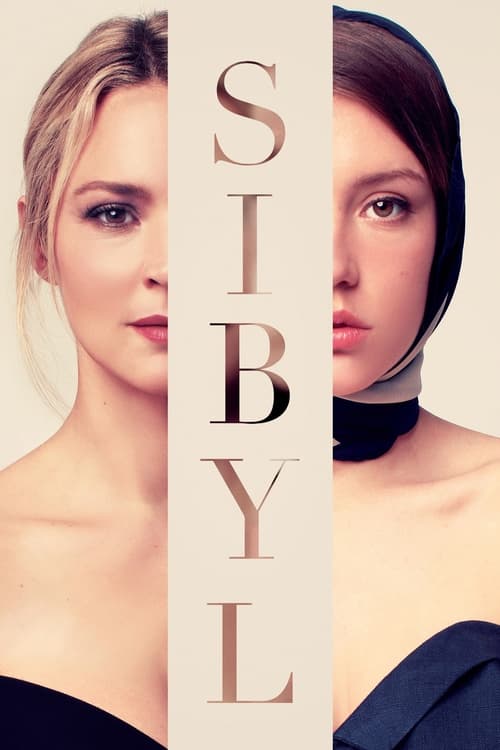
Sibyl (2019)
Directed by Justine Triet
No — Sibyl is not woke, scoring 11 out of 100 on our wokeness meter.
Justine Triet's Sibyl concerns a psychotherapist who abandons her patients for the novel she has long meant to write, then discovers that one patient, a fretful actress named Margot, makes better material than any fiction.
Consciousness Markers
A female director and a female-centric narrative exploring a woman's psychology, desire, and professional reinvention give it a mild feminist character, though it offers no explicit ideological program.
The cast is a largely white French ensemble with no evident diversity-casting agenda; roles appear cast on conventional grounds rather than representational intent.
No LGBTQ+ themes, characters, or subtext are present in the narrative.
Race and racial dynamics play no role in the story or its themes.
No environmental or climate themes are present.
The film offers no critique of capitalism, wealth, or class structures.
No body-positivity themes or messaging are present.
Despite its psychotherapy framing, the film does not engage neurodivergence as a theme or identity.
The film is a contemporary fictional drama with no historical revisionism.
This is a character-driven, morally ambiguous drama that does not lecture the audience on social issues.
Why it received this score
Justine Triet's Sibyl concerns a psychotherapist who abandons her patients for the novel she has long meant to write, then discovers that one patient, a fretful actress named Margot, makes better material than any fiction. The film is a comedy of professional bad behavior, and it takes a certain pleasure in watching its heroine behave badly. A woman directs it. A woman co-wrote it, alongside Arthur Harari. A woman carries nearly every scene. That configuration grants the picture a mild feminist character, the kind that arrives by default when the camera stays fixed on a complicated woman and declines to apologize for her. There is no program attached.
Nor is there much else of the contemporary cultural furniture. The cast is a white French ensemble, assembled on conventional grounds. Race never enters the frame as a subject. Neither does climate, nor class grievance, nor the body as a political site, nor the vocabulary of neurodivergence, though the heroine spends her working life inside other people's heads. The film is set in Paris, on a film shoot, and briefly on Stromboli, and its concerns are adultery, ambition, abortion, and the slow erosion of a woman's self-control. These are old materials. Triet handles them without a thesis.
The result is a morally ambiguous drama that trusts the audience to draw its own conclusions, which is to say it does not lecture. Characters drink too much and lie too readily, and the film simply watches. For a critic employed in the classification of such things, this is a quiet evening. The vintage is dry, well made, faintly sour. Nothing in it demands our approval, and nothing in it asks us to vote.
Analysis generated by our Consciousness Algorithm


Synopsis
Sibyl, a jaded psychotherapist, returns to her first passion: writing. But her newest patient Margot, a troubled up-and-coming actress, proves to be a source of inspiration that is far too tempting. Fascinated almost to the point of obsession, Sibyl becomes more and more involved in Margot’s tumultuous life, reviving volatile memories that bring her face to face with her past.
Questions about Sibyl
Is Sibyl woke?
No — Sibyl is not woke, scoring 11 out of 100 on our wokeness meter. That earns it a verdict of Ultra Based.
Does Sibyl have any woke elements?
Very few. None of the 10 markers reaches 30, the level where a marker counts as present; the highest is Feminist Agenda at 28.
How does Sibyl compare to other 2019 movies?
It ranks #178 of the 284 films from 2019 we've scored; their average is 22. The wokest is Black Christmas (79).
How is the Woke Score calculated?
An AI-assisted process researches the film and its reception, scores it 0–100 on ten markers, then combines those into one 0–100 Woke Score. It measures a specific set of 2020s cultural themes, not film quality.