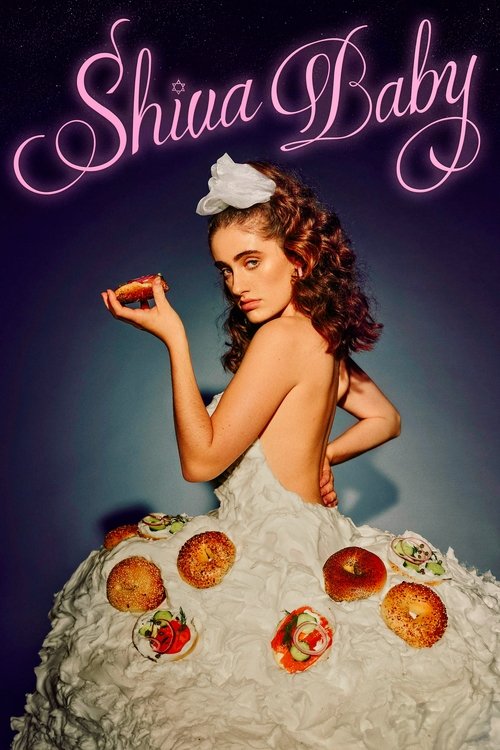
Shiva Baby (2021)
Directed by Emma Seligman
Yes — Shiva Baby is woke, scoring 60 out of 100 on our wokeness meter.
Shiva Baby arrives as a compact anxiety engine set almost entirely in one Brooklyn house during a shiva.
Consciousness Markers
Danielle is explicitly bisexual, and her past relationship with Maya and their rekindled attraction are central to the film's emotional arc.
The film deliberately centers Jewish and bisexual representation, with a largely Jewish cast and a woman director, though the lead actress is neither Jewish nor queer, which drew some criticism.
A woman-directed, female-led story about sexual autonomy, mother-daughter pressure, and young female insecurity, though it is not explicitly polemical.
Themes of bisexuality, Jewish identity, and female pressure are embedded in a cringe-comedy format rather than delivered as a lecture.
No meaningful engagement with racial consciousness or racial justice themes.
No climate or environmental themes are present.
The sugar-daddy plot involves money and transactional intimacy, but the film does not mount an anti-capitalist or eat-the-rich critique.
Food and eating appear as anxiety motifs, not as body-positivity messaging.
The film depicts anxiety and claustrophobia, but it does not frame these as neurodivergence.
No historical revisionism or reimagining of historical events.
Why it received this score
Shiva Baby arrives as a compact anxiety engine set almost entirely in one Brooklyn house during a shiva. Emma Seligman directs with the precision of a sommelier decanting a difficult vintage. The film deliberately centers Jewish and bisexual life, and its casting largely draws from Jewish performers and a woman director. That said, the lead actress is neither Jewish nor queer, a fact that generated criticism. The representation is intentional, but not seamless. The title refers both to Danielle and to the baby, a neat compression of the film's twin anxieties.
The emotional core belongs to Danielle's bisexuality. Her history with Maya is not subtext; it is the film's romantic and psychological hinge. Their prom memory, their flirtation, their final hand-hold carry the movie's longing. This is a woman-led, woman-directed study of sexual autonomy, maternal pressure, and the suffocating comparison between daughters. It observes rather than preaches. The feminist current is present in the mother-daughter negotiations and in Danielle's attempts to wield sex as power, then discovering the limits of that power. Seligman treats queer desire as ordinary, which is its own quiet achievement.
Other progressive markers are absent. Race is not a subject here. Climate does not enter the frame. The sugar daddy arrangement involves money and transactional intimacy, but no anti-capitalist critique follows. Food functions as an anxiety motif, not a body-positivity statement. Danielle's claustrophobia reads as social panic, not neurodivergence. History is not revised. The film's themes are embedded in cringe comedy, so the lecture energy is minimal. It prefers discomfort to sermon. The camera stays close, the score scrapes, and the social field tightens. The result is a sharp, humid, funny chamber piece that earns its social consciousness through character, not proclamation.
Analysis generated by our Consciousness Algorithm


Synopsis
College student Danielle must cover her tracks when she unexpectedly runs into her sugar daddy at a shiva - with her parents, ex-girlfriend and family friends also in attendance.
Questions about Shiva Baby
Is Shiva Baby woke?
Yes — Shiva Baby is woke, scoring 60 out of 100 on our wokeness meter. That earns it a verdict of Woke.
What makes Shiva Baby woke?
3 of the 10 markers register at 30 or above, led by LGBTQ+ Themes (85), Representation Casting (60) and Feminist Agenda (55). On LGBTQ+ Themes: Danielle is explicitly bisexual, and her past relationship with Maya and their rekindled attraction are central to the film's emotional arc.
How does Shiva Baby compare to other 2021 movies?
It ranks #12 of the 242 films from 2021 we've scored; their average is 23. The wokest is The Forever Purge (83).
How is the Woke Score calculated?
An AI-assisted process researches the film and its reception, scores it 0–100 on ten markers, then combines those into one 0–100 Woke Score. It measures a specific set of 2020s cultural themes, not film quality.