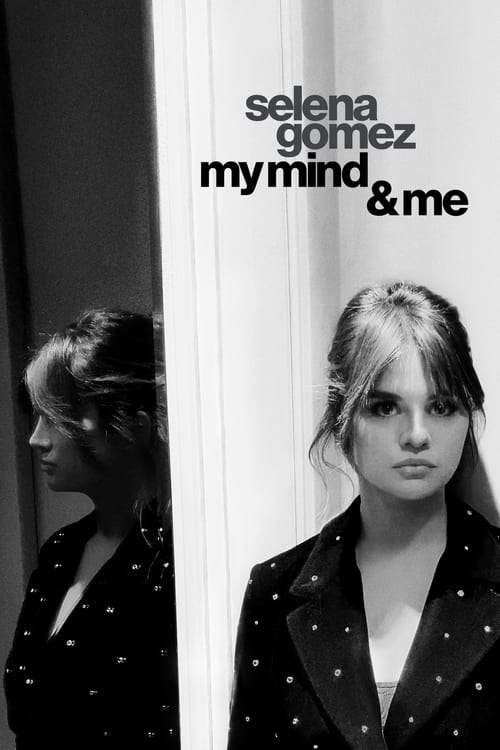
Selena Gomez: My Mind & Me (2022)
Directed by Alek Keshishian
No — Selena Gomez: My Mind & Me is not especially woke, scoring 28 out of 100 on our wokeness meter.
Alek Keshishian's Selena Gomez: My Mind & Me is a music documentary that declines the usual victory lap.
Consciousness Markers
The documentary explicitly documents Gomez's diagnosis with bipolar disorder and her mental health struggles, making neurodivergence a central theme.
The documentary centers on Selena Gomez, a Mexican-American woman, but her ethnicity is not a focal point of the narrative or casting choices.
The film advocates for mental health transparency and destigmatization, but its diaristic style is more personal than preachy.
The film follows a female superstar and touches on pressures of fame, but it does not advance a feminist agenda or critique patriarchy.
The film hints at the toll of the celebrity machine, but it is not an anti-capitalist critique.
No LGBTQ+ themes or characters are present in the documentary.
No evidence of racial consciousness or exploration of systemic racism.
No environmental or climate-related themes are present.
No body positivity themes or discussions of body image are present.
No revisionist history or reimagining of historical events is present.
Why it received this score
Alek Keshishian's Selena Gomez: My Mind & Me is a music documentary that declines the usual victory lap. It follows Gomez across six years, through lupus, bipolar disorder, and the grinding machinery of pop stardom. Her Mexican-American heritage is present but never becomes the film's organizing principle. There is no LGBTQ thread, no climate sermon, no racial reckoning. The camera stays close to one woman's exhaustion. That narrowness is the film's limitation and its quiet strength.
The feminist dimension is mild. Gomez is a female superstar under enormous pressure, yet the film does not build an argument about patriarchy. It notices the cost of fame and lets the occasional sigh stand in for a critique of capital. This is not an eat-the-rich tract. It is a diaristic shrug at the celebrity machine, which is a different animal. Body positivity never enters the frame. The documentary has other concerns, and it pursues them with a stubborn intimacy.
Where the film earns its keep is in its treatment of neurodivergence. Gomez's bipolar diagnosis is not a footnote. It is the spine of the project. She talks about medication, psychosis, self-harm, and the daily labor of staying alive in public. The advocacy is real but soft-pedaled. This is not a lecture. It is a confession with a release date. The result is moving without being preachy, and that restraint keeps the whole thing from collapsing into a public service announcement. Keshishian understands that an unflattering close-up can do more work than a thesis. The film never rewrites history or mounts a political campaign. It simply sits with a famous person while she struggles, and finds something honest in the mess.
Analysis generated by our Consciousness Algorithm


Synopsis
After years in the limelight, Selena Gomez achieves unimaginable stardom. But just as she reaches a new peak, an unexpected turn pulls her into darkness. This uniquely raw and intimate documentary spans her six-year journey into a new light.
Questions about Selena Gomez: My Mind & Me
Is Selena Gomez: My Mind & Me woke?
No — Selena Gomez: My Mind & Me is not especially woke, scoring 28 out of 100 on our wokeness meter. That earns it a verdict of Based.
Does Selena Gomez: My Mind & Me have any woke elements?
1 of the 10 markers register at 30 or above, led by Neurodivergence (65). On Neurodivergence: The documentary explicitly documents Gomez's diagnosis with bipolar disorder and her mental health struggles, making neurodivergence a central theme.
How does Selena Gomez: My Mind & Me compare to other 2022 movies?
It ranks #64 of the 223 films from 2022 we've scored; their average is 22. The wokest is Bros (92).
How is the Woke Score calculated?
An AI-assisted process researches the film and its reception, scores it 0–100 on ten markers, then combines those into one 0–100 Woke Score. It measures a specific set of 2020s cultural themes, not film quality.