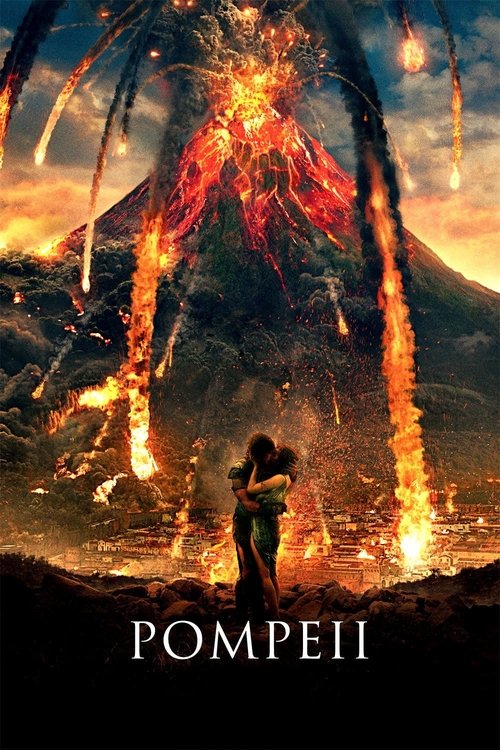
Pompeii (2014)
Directed by Paul W. S. Anderson
No — Pompeii is not woke, scoring 9 out of 100 on our wokeness meter.
Pompeii arrives in the grand tradition of the historical disaster romance, a genre that has never pretended to carry the weight of its own subject matter.
Consciousness Markers
The film features a prominent Black gladiator, Atticus, played by Adewale Akinnuoye-Agbaje, as a major sympathetic character, alongside other non-white supporting cast. However, this diversity is not accompanied by any explicit commentary on representation.
Cassia shows some agency by defying a forced marriage, saving Milo and Atticus with a thumbs-up, and freeing herself from Corvus. Yet her role remains largely defined by the romantic plot and damsel-in-distress tropes.
The film takes liberties with historical accuracy, including modernized portrayals of women and a fictionalized diverse cast, but it does not systematically rewrite history for ideological purposes.
There are no LGBTQ+ characters, themes, or subtext in the film.
The film includes a Black gladiator, but it does not engage with racial identity, systemic racism, or racial consciousness in any explicit way.
The volcanic eruption is a historical natural disaster used for spectacle, not a climate-change allegory or environmental crusade.
The film depicts slavery and corrupt Roman elites, but these are ancient class and power dynamics rather than a modern anti-capitalist or eat-the-rich message.
There is no body-positivity theme; the film emphasizes conventional gladiator physiques and romanticized beauty.
No characters or themes related to neurodivergence are present.
The film is a straightforward action-disaster romance and does not lecture the audience on social or political issues.
Why it received this score
Pompeii arrives in the grand tradition of the historical disaster romance, a genre that has never pretended to carry the weight of its own subject matter. Paul W. S. Anderson stages the eruption of Vesuvius with genuine technical care and surrounds it with a love story, a gladiator rivalry, and a sneering senator who exists chiefly to be incinerated. The film wants to entertain. It does so with a straight face and a fireball budget, asking nothing of the audience beyond two hours of attention.
The casting offers a Black gladiator, Atticus, played with real dignity by Adewale Akinnuoye-Agbaje, who becomes the film's moral center and earns his freedom in the final reel. This is diversity of presence, not of argument. The film never comments on it, which keeps the representation modest. Cassia, the merchant's daughter, defies a forced marriage, saves two men with a thumbs-up, and frees herself from her captor, gestures of agency that sit awkwardly beside the fact that her function is to be rescued and kissed. The historical record bends slightly to accommodate modern tastes in dress and demeanor, though the film rewrites no ideology and preaches nothing. There is no lecture here. The slaves suffer, the elites scheme, and the volcano settles all accounts without a single speech about the systems that produced them.
What remains is a film of conventional pleasures: chariots, lava, a doomed embrace preserved in plaster. Its progressive gestures are decorative, applied like set dressing, and it seems content to leave them there. I found this neither offensive nor invigorating. I found it, as I find most of these exercises, a sturdy piece of craftsmanship with no opinions worth reporting.
Analysis generated by our Consciousness Algorithm


Synopsis
In 79 A.D., Milo, a slave turned gladiator, finds himself in a race against time to save his true love Cassia, the beautiful daughter of a wealthy merchant who has been unwillingly betrothed to a corrupt Roman Senator. As Mount Vesuvius erupts in a torrent of blazing lava, Milo must fight his way out of the arena in order to save his beloved as the once magnificent Pompeii crumbles around him.
Questions about Pompeii
Is Pompeii woke?
No — Pompeii is not woke, scoring 9 out of 100 on our wokeness meter. That earns it a verdict of Ultra Based.
Does Pompeii have any woke elements?
1 of the 10 markers register at 30 or above, led by Representation Casting (30). On Representation Casting: The film features a prominent Black gladiator, Atticus, played by Adewale Akinnuoye-Agbaje, as a major sympathetic character, alongside other non-white supporting cast.
How does Pompeii compare to other 2014 movies?
It ranks #139 of the 303 films from 2014 we've scored; their average is 13. The wokest is Selma (68).
How is the Woke Score calculated?
An AI-assisted process researches the film and its reception, scores it 0–100 on ten markers, then combines those into one 0–100 Woke Score. It measures a specific set of 2020s cultural themes, not film quality.