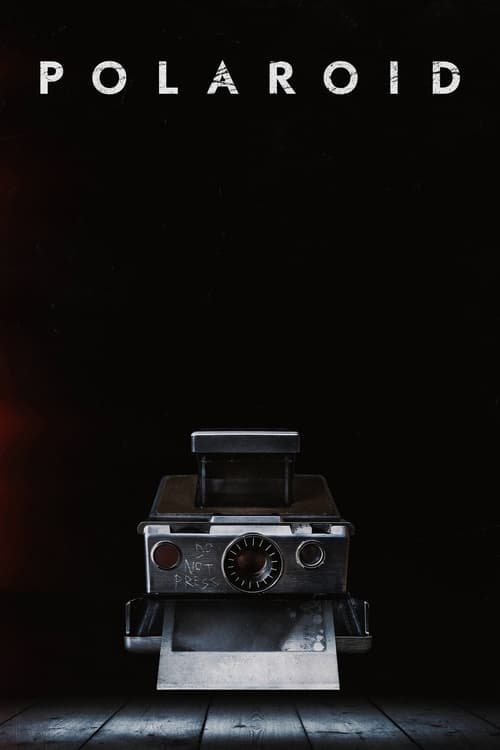
Polaroid (2019)
Directed by Lars Klevberg
No — Polaroid is not woke, scoring 10 out of 100 on our wokeness meter.
Polaroid arrives as the final production of Dimension Films, a studio that did not so much close as dissolve, and there is a certain grim symmetry in a movie about a cursed camera that photographs people shortly before they die.
Consciousness Markers
The cast includes several actors of color in prominent roles, though the film makes no explicit commentary on representation.
A female lead anchors the survival plot, but the film does not engage with feminist themes or commentary.
There are no LGBTQ+ characters, themes, or subtext.
Race is not addressed or thematized in the film.
There is no environmental or climate-related content.
The film contains no critique of capitalism or wealth inequality.
There is no body positivity messaging or body-diversity theme.
A developmentally disabled character appears in backstory, but the film does not explore neurodivergence as a theme.
The film does not revise or reinterpret historical events.
The film is a straightforward supernatural horror with no preachy or didactic tone.
Why it received this score
Polaroid arrives as the final production of Dimension Films, a studio that did not so much close as dissolve, and there is a certain grim symmetry in a movie about a cursed camera that photographs people shortly before they die. The premise is elemental. A vintage SX-70 passes through a garage sale, a high school loner named Bird takes some pictures, and the resulting images acquire a shadow that migrates from face to face until everyone in the frame has been folded, snapped, or set on fire. The entity follows the rules of photographic development, sensitive to heat and light, which is the sort of detail that suggests someone in the writers' room once skimmed an article about darkrooms and decided that was sufficient research.
The film is led by a young woman who does the surviving, the researching, and the eventual photo-crushing, and the ensemble around her is notably varied without ever mentioning it. Race and identity go unremarked. Nobody delivers a speech. There is no cause attached to the carnage, no lesson tucked into the third act, no moment where a character pauses the supernatural mayhem to explain how the audience ought to feel about the world. The camera is haunted. The teenagers die. The credits roll. In an era that treats entertainment as a delivery mechanism for instruction, this absence registers as almost archaeological, like finding a rotary phone in a drawer.
The result is a lean and largely inept exercise in jump scares, dismissed by critics with a thoroughness usually reserved for tax fraud, and yet it carries no ideological freight whatsoever. It is not a good film. It is not a film with anything on its mind. Those are two different failures, and only one of them is interesting to catalog. I note the emptiness without admiration and without complaint. Some vintages are simply thin.
Analysis generated by our Consciousness Algorithm


Synopsis
High school loner Bird Fitcher has no idea what dark secrets are tied to the mysterious Polaroid vintage camera she stumbles upon, but it doesn't take long to discover that those who have their picture taken meet a tragic end. Bird and her friends must survive one more night as they race to solve the mystery of the haunted Polaroid before it kills them all.
Questions about Polaroid
Is Polaroid woke?
No — Polaroid is not woke, scoring 10 out of 100 on our wokeness meter. That earns it a verdict of Ultra Based.
Does Polaroid have any woke elements?
Very few. None of the 10 markers reaches 30, the level where a marker counts as present; the highest is Representation Casting at 20.
How does Polaroid compare to other 2019 movies?
It ranks #187 of the 284 films from 2019 we've scored; their average is 22. The wokest is Black Christmas (79).
How is the Woke Score calculated?
An AI-assisted process researches the film and its reception, scores it 0–100 on ten markers, then combines those into one 0–100 Woke Score. It measures a specific set of 2020s cultural themes, not film quality.