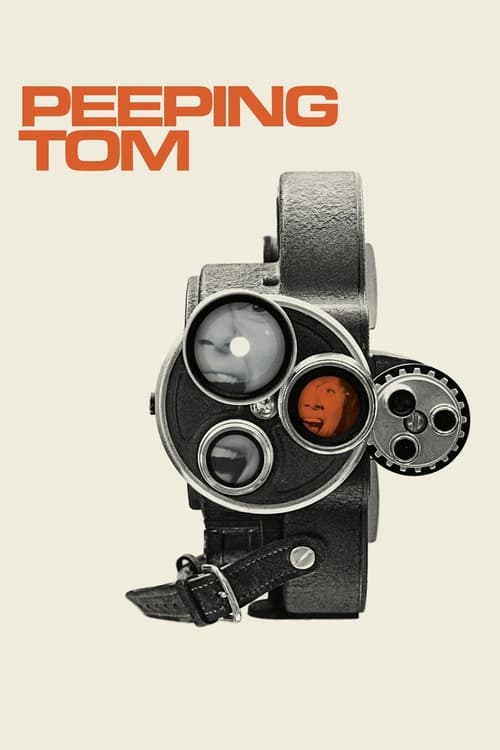
Peeping Tom (1960)
Directed by Michael Powell
No — Peeping Tom is not woke, scoring 0 out of 100 on our wokeness meter.
Michael Powell's Peeping Tom arrived in 1960 and was met with such revulsion that it effectively ended his career in Britain.
Consciousness Markers
The cast is overwhelmingly white British and European, with no meaningful racial or ethnic diversity and no modern representation-casting agenda.
There are no LGBTQ+ characters, themes, or subtext in the film.
Although the film depicts voyeurism and violence against women, it does not advance a modern feminist agenda or explicit gender-equity critique.
The film has no racial consciousness or engagement with racial justice themes.
There is no climate or environmental theme in the film.
The film does not critique capitalism, class exploitation, or wealth inequality in any meaningful way.
The film uses nudity and disfigurement for horror and voyeuristic tension, not body-positivity messaging.
Mark’s trauma and psychological disturbance are framed as horror pathology, not as modern neurodivergence advocacy.
The film is not engaged in revising or reframing historical narratives for contemporary social justice purposes.
Its self-reflexive commentary concerns cinema, voyeurism, and fear, not social-justice moralizing.
Why it received this score
Michael Powell's Peeping Tom arrived in 1960 and was met with such revulsion that it effectively ended his career in Britain. The plot concerns Mark Lewis, a focus puller at a film studio who moonlights photographing pin-up girls and, at night, murders women with a blade concealed in his tripod while his camera runs. He is assembling a documentary on fear, and the fear he wants is the fear on his victims' faces as they watch themselves die in a mirror mounted on the lens. The film was banned in Finland until 1981 and rated morally objectionable in part by the National Legion of Decency, which remains a more honest piece of criticism than most of what followed it.
The picture's interests are formal and psychological. Mark is the product of a father who filmed him through childhood experiments, including his mother's deathbed, and that inheritance is presented as horror pathology, not as a plea for sympathy or a case study in care. Women in the film exist as subjects of the camera's predation, and the film knows it. Helen, the final girl, is drawn to the morbid gaze herself. There is no equity critique on offer, no representation agenda, no environmental sermon, no economic grievance. The nudity is deployed for discomfort, the disfigurement for shock, and the trauma for dread. Anyone arriving with a modern checklist will leave empty-handed.
Its reputation has since reversed. The British Film Institute ranks it the 78th greatest British film, and it is credited as a progenitor of the slasher and found-footage traditions. The radicalism lies in the address to the audience, the suggestion that sitting in the dark and watching is its own complicity. That is a provocation about cinema, not a program for society, and the distinction holds. We are left with a nasty, brilliant object that refuses to instruct anyone in anything.
Analysis generated by our Consciousness Algorithm


Synopsis
Loner Mark Lewis works at a film studio during the day and, at night, takes racy photographs of women. Also he's making a documentary on fear, which involves recording the reactions of victims as he murders them. He befriends Helen, the daughter of the family living in the apartment below his, and he tells her vaguely about the movie he is making.
Questions about Peeping Tom
Is Peeping Tom woke?
No — Peeping Tom is not woke, scoring 0 out of 100 on our wokeness meter. That earns it a verdict of Ultra Based.
Does Peeping Tom have any woke elements?
No. All 10 markers score zero.
How does Peeping Tom compare to other 1960 movies?
It ranks #12 of the 17 films from 1960 we've scored; their average is 7. The wokest is Rocco and His Brothers (29).
How is the Woke Score calculated?
An AI-assisted process researches the film and its reception, scores it 0–100 on ten markers, then combines those into one 0–100 Woke Score. It measures a specific set of 2020s cultural themes, not film quality.