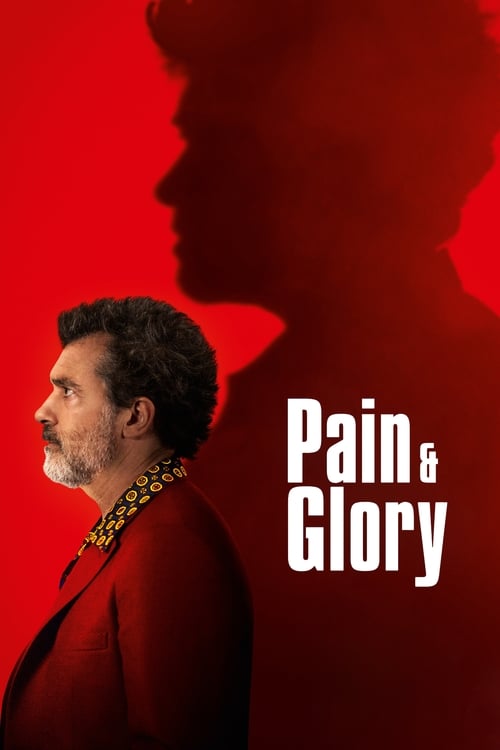
Pain and Glory (2019)
Directed by Pedro Almodóvar
No — Pain and Glory is not woke, scoring 16 out of 100 on our wokeness meter.
Pedro Almodóvar's film is a filmmaker remembering himself, which means it is largely a man on a bed recalling other beds.
Consciousness Markers
Gay identity is central: Salvador is a gay filmmaker, his 1980s relationship with Federico drives a key subplot, and his childhood sexual awakening upon seeing Eduardo naked is a pivotal memory. It is rendered as lived, artistic experience rather than activist statement.
The mother and the loyal assistant Mercedes are given emotional weight, but the film is a male protagonist's interior reckoning and offers no feminist thesis.
A Spanish-language production with an entirely Spanish and Latin American cast, but this reflects the film's natural setting and origin rather than any deliberate diversity-casting agenda.
Almodóvar's tone is hushed, reflective, and restrained; the film observes and remembers rather than preaching to the audience.
No engagement with race or racial politics whatsoever.
No environmental themes present.
The film industry is depicted as a personal and creative arena, not as a target of economic critique.
Chronic pain, aging, and illness are central, but treated as existential suffering, not as a body-positivity statement.
No neurodivergence themes present.
The film is a personal memory piece, not a revisionist account of historical events.
Why it received this score
Pedro Almodóvar's film is a filmmaker remembering himself, which means it is largely a man on a bed recalling other beds. Antonio Banderas plays Salvador Mallo, an ailing director who has not shot anything in years and fills the silence with morphine, memory, and the occasional relapse into heroin. The back pain is real. The surgeries are real. The mother is dead and unreachable. None of this arrives as an argument about anything, which is its own kind of discipline.
Where the film carries genuine cultural weight is in its treatment of gay life, which it handles as a fact of biography instead of a cause. Salvador's 1980s affair with Federico, undone by heroin and distance, is staged as a play within the film, and the reunion that follows is quiet, unremarkable, and devastating. His sexual awakening, a boy fainting at the sight of a naked man, surfaces as memory, not manifesto. This is lived experience rendered without a thesis.
Elsewhere the ledger is nearly blank. Almodóvar's Spain is a nation of mothers, cave houses, and film sets, and the film shows no interest in race, climate, or the economics of its own industry. Penélope Cruz and Julieta Serrano lend the mother a mournful gravity, and Mercedes the assistant is granted a loyalty the script never questions, but this remains a man's reckoning with his failing body and his own past. The tone is hushed from first frame to last. He observes, remembers, and finally directs a scene from his childhood on a soundstage, delivering whatever he has to say through craft. It is a beautiful film, and a poor recruit for the modern cultural inquisition.
Analysis generated by our Consciousness Algorithm


Synopsis
Salvador Mallo, a filmmaker in the twilight of his career, remembers his life: his mother, his lovers, the actors he worked with. The sixties in a small village in Valencia, the eighties in Madrid, the present, when he feels an immeasurable emptiness, facing his mortality, the incapability of continuing filming, the impossibility of separating creation from his own life. The need of narrating his past can be his salvation.
Questions about Pain and Glory
Is Pain and Glory woke?
No — Pain and Glory is not woke, scoring 16 out of 100 on our wokeness meter. That earns it a verdict of Ultra Based.
Does Pain and Glory have any woke elements?
1 of the 10 markers register at 30 or above, led by LGBTQ+ Themes (60). On LGBTQ+ Themes: Gay identity is central: Salvador is a gay filmmaker, his 1980s relationship with Federico drives a key subplot, and his childhood sexual awakening upon seeing Eduardo naked is a pivotal memory.
How does Pain and Glory compare to other 2019 movies?
It ranks #134 of the 284 films from 2019 we've scored; their average is 22. The wokest is Black Christmas (79).
How is the Woke Score calculated?
An AI-assisted process researches the film and its reception, scores it 0–100 on ten markers, then combines those into one 0–100 Woke Score. It measures a specific set of 2020s cultural themes, not film quality.