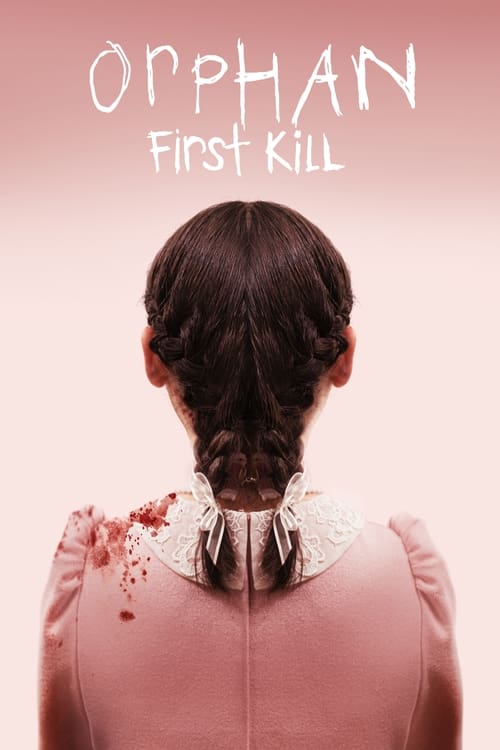
Orphan: First Kill (2022)
Directed by William Brent Bell
No — Orphan: First Kill is not woke, scoring 0 out of 100 on our wokeness meter.
Orphan: First Kill arrives as the second entry in a franchise that began in 2009 with a twist so notorious it became a punchline.
Consciousness Markers
The cast is predominantly white with a few minority actors in supporting roles, but their presence is not commented on or used to make a statement about representation.
No LGBTQ+ characters or themes are present.
While the film features female characters in central roles, it does not advance a feminist agenda or critique patriarchy.
No exploration of race or racial issues.
No environmental or climate themes.
The wealthy family setting is incidental; there is no critique of capitalism or wealth inequality.
The protagonist's physical appearance is a plot device, not a celebration of body diversity.
The villain's psychopathy is portrayed as monstrous, not as neurodivergence to be understood or accepted.
The film is a fictional prequel and does not revise historical events.
The film is a campy horror thriller with no preachy or didactic messaging.
Why it received this score
Orphan: First Kill arrives as the second entry in a franchise that began in 2009 with a twist so notorious it became a punchline. Isabelle Fuhrman returns as Leena Klammer, a thirty-year-old Estonian woman with the proportions of a ten-year-old, who escapes a psychiatric institution and impersonates a missing Connecticut child. The mechanics used to achieve this illusion, forced perspective and platform shoes and two child body doubles, are more interesting than anything the screenplay does with them. What we get is a lean and thoroughly ridiculous thriller in which a fake daughter and a real mother attempt to murder each other across a single weekend. It is camp. It knows it is camp. That is the whole of its ambition.
For those of us who audit motion pictures for contemporary social messaging, this is a barren field. Tricia Albright, played with admirable commitment by Julia Stiles, is a mother willing to bury a body to protect her household. This is not a meditation on maternal power or patriarchal constraint. It is a woman with a corpse in the cellar. The Albrights are wealthy, but their money functions as set dressing. Nobody lectures us about the corrupting influence of capital, because nobody in the film has time. There are too many knives to throw. Ethnicity, sexuality, the climate, and the human body are present the way furniture is present. The script registers them as facts of the room and moves along.
The film's only real thesis is that a mother and a murderous impostor make for a satisfying evening. That is a modest thesis. It is also, in this critic's exhausted estimation, an honest one. Some pictures arrive carrying the weight of a generation's moral instruction. This one arrives carrying a crossbow. We file it accordingly, under horror, under prequel, and under nothing else at all.
We have examined the ledger and found it empty. Ten columns, ten zeroes. A rare and almost restful outcome. The genre has produced stranger artifacts in recent years, films that treat a haunted house as a referendum on housing policy. This one treats a haunted house as a haunted house. There is a certain integrity in that, and I confess I found it easier to sit through than the alternatives. The sequel is already in production. We will sharpen our pencils and wait.
Oscar voters looked elsewhere that year. The box office shrugged. What remains is a tidy piece of franchise maintenance, filmed in Winnipeg in the dead of winter, offering no instruction to anyone about how to live. I have no notes. I have, in fact, nothing at all. It is a fine evening's entertainment and a total failure of cultural ambition, and I mean both of those statements as compliments, which is the most troubling sentence I have written this month. The screening is over. The ledger is closed. Next.
I have watched this picture twice now, once for pleasure and once for duty. The pleasure held up better. There is a scene in which a woman drags a body across a hardwood floor and pauses to fix her hair, and it contains more truth about the American family than most prestige dramas manage in two hours. No lesson is drawn from it. No thesis is offered. The camera simply observes, and then moves on to the roof, where two women cling to shingles and scream for the same man's attention. That is cinema. That is also, apparently, nothing to write a sermon about. We return to our spreadsheets, unfulfilled but rested.
Final observation, offered without enthusiasm. The film is competent, brisk, and entirely unconcerned with improving anyone. It wants to startle you and then end. It succeeds at both. We mark the columns, find them bare, and move to the next screening. There is always a next screening. That is the only certainty this profession affords, and it is enough, barely, to get us through the winter.
{"thematic_tags": ["sequel"]}
Analysis generated by our Consciousness Algorithm


Synopsis
After escaping from an Estonian psychiatric facility, Leena Klammer travels to America by impersonating Esther, the missing daughter of a wealthy family. But when her mask starts to slip, she is put against a mother who will protect her family from the murderous “child” at any cost.
Questions about Orphan: First Kill
Is Orphan: First Kill woke?
No — Orphan: First Kill is not woke, scoring 0 out of 100 on our wokeness meter. That earns it a verdict of Ultra Based.
Does Orphan: First Kill have any woke elements?
No. All 10 markers score zero.
How does Orphan: First Kill compare to other 2022 movies?
It ranks #211 of the 223 films from 2022 we've scored; their average is 22. The wokest is Bros (92).
How is the Woke Score calculated?
An AI-assisted process researches the film and its reception, scores it 0–100 on ten markers, then combines those into one 0–100 Woke Score. It measures a specific set of 2020s cultural themes, not film quality.