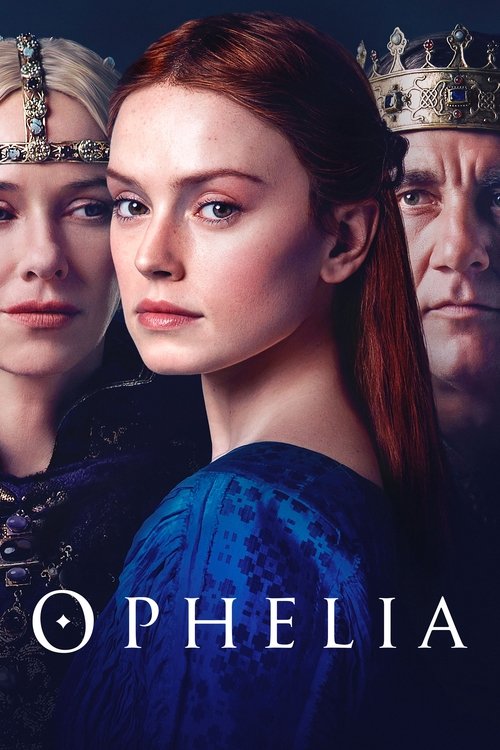
Ophelia (2019)
Directed by Claire McCarthy
Partly — Ophelia is somewhat woke, scoring 43 out of 100 on our wokeness meter.
Ophelia arrives with a thesis taped to its forehead: that the most famous drowning in English literature was a miscarriage of narrative justice, and that the lady in question deserved better than a garland and a grave.
Consciousness Markers
The entire premise is a feminist reclamation, retelling Hamlet from Ophelia's perspective to grant her the agency the original denied her, complete with secret marriage, survival, and a daughter.
The film exists to deliver a thesis about Ophelia's overlooked interiority and agency, though it expresses this through narrative revision rather than explicit preaching.
The film deliberately revises a canonical literary text, rescuing Ophelia from her tragic death and rewriting the ending to let her and Gertrude triumph over Claudius.
The cast is overwhelmingly white, but Devon Terrell is cast as Horatio, a traditionally white Shakespearean role, providing some visible racial diversity.
Casting a Black actor as Horatio is the only racial element; the film never engages with race as a theme in its Danish court setting.
No LGBTQ+ characters or themes appear anywhere in the narrative.
No environmental or climate themes are present.
The film's conflicts are dynastic and romantic, with no economic or class critique.
No body positivity themes are present.
Ophelia feigns madness as a survival tactic and Hamlet's grief-stricken behavior is Shakespearean, not framed through any modern neurodivergence lens.
Why it received this score
Ophelia arrives with a thesis taped to its forehead: that the most famous drowning in English literature was a miscarriage of narrative justice, and that the lady in question deserved better than a garland and a grave. Claire McCarthy's film grants her a secret marriage, a staged death, a dug-up resurrection, and finally a daughter and a quiet exile. Shakespeare's Ophelia gets a funeral. This one gets a whole surviving life. The reclamation is thorough, sincere, and treats the original play as a document in need of correction, which it is.
The cast is almost uniformly white, which suits a Danish court rendered in the usual heritage-cinema palette, and one exception stands out. Devon Terrell plays Horatio, a traditionally white Shakespearean part, and he is good in it. The film never asks us to think about this. Race is not a subject here, and the lone piece of nontraditional casting floats free of any argument, which some will call progress and others will call decoration.
What the film does argue, relentlessly, is that Ophelia had an interior life the play denied her. It makes that case by showing instead of telling, a mercy in an era when so many revisionist projects stop the action to explain themselves. Naomi Watts doubles as Gertrude and the banished twin Mechtild, and the last act hands Gertrude the sword that finishes Claudius, a correction that lands with some force. The enterprise is a literary rescue mission, earnest and occasionally inert, and the less said about the paid-review campaign that briefly turned its Rotten Tomatoes page fresh, the better. It wants to give a dead girl agency. It mostly does, and the effort is legible from the first frame.
Analysis generated by our Consciousness Algorithm


Synopsis
Ophelia comes of age as lady-in-waiting for Queen Gertrude, and her singular spirit captures Hamlet's affections. As lust and betrayal threaten the kingdom, Ophelia finds herself trapped between true love and controlling her own destiny.
Questions about Ophelia
Is Ophelia woke?
Partly — Ophelia is somewhat woke, scoring 43 out of 100 on our wokeness meter. That earns it a verdict of Woke-Adjacent.
What makes Ophelia woke?
4 of the 10 markers register at 30 or above, led by Feminist Agenda (78), Lecture Energy (42) and Revisionist History (38). On Feminist Agenda: The entire premise is a feminist reclamation, retelling Hamlet from Ophelia's perspective to grant her the agency the original denied her, complete with secret marriage, survival, and a daughter.
How does Ophelia compare to other 2019 movies?
It ranks #42 of the 284 films from 2019 we've scored; their average is 22. The wokest is Black Christmas (79).
How is the Woke Score calculated?
An AI-assisted process researches the film and its reception, scores it 0–100 on ten markers, then combines those into one 0–100 Woke Score. It measures a specific set of 2020s cultural themes, not film quality.